

|
As you are aware, there is currently a spreading global boycott of Israeli artists and arts establishments which we, as Palestinian artists, have endorsed. Art, a powerful tool that has influenced the course of history countless times, is not apolitical. Unfortunately in Israeli society art has remained politically apathetic, lamenting Israel's historical and ongoing suffering whilst ignoring Israel's historical and ongoing culpability. Like all Palestinians, as artists we are subject to the daily humiliation of your barrier-points, the random slaughter of your military actions, the denial of travel by your border police, detention without charge or trial in your prisons, closures and curfews of our cities by your army, continuing theft of property by your "settlers", and , as war refugees, the ongoing refusal to return home by your government. Meanwhile you have enjoyed the opportunity to create, rehearse and perform with relative freedom. We suggest that you utilize this freedom more responsibly. The Israeli government and mainstream press has been unwilling to criticize Zionism as an ideology for Israel. As a result of this, Israeli oppression of the indigenous Muslim, Christian and secular inhabitants of this region has become more and more extreme. We expect that you, as Israeli artists, therefore find the moral courage to research and reflect upon the impact of Israeli Zionism far more critically and directly than you have been willing to do thus far. Vague sentiments for peace and against war are as useless as a speech by US President Bush on the topic. If you really are dedicated to creating a peaceful, just future, your commentary needs to directly address the way that political Zionism has effected the non-Jewish residents of this land. Evocatively share with your audiences the way Israel has dispossessed us of our property and held us under a brutal military occupation without civil rights for decades. If you do not wish to present this in your artwork, you may consider alternatives such as public statements that support the return of refugees and the end of the occupation, cancellation of your performances whenever occupied Palestinian regions are placed under curfew by your military, and a refusal to do your own annual service within the Israeli military. It should be obvious to most of you by now that no amount of military force can promise or deliver Zionist domination over this region. Justice, peace and security will require a major shift in Israel's political goals and social conscience- one which recognizes the diversity of peoples inhabiting the region, acknowledges the United Nations Resolutions regarding Israel's duties and obligations, and accepts the damage caused by the quirky nature of Zionism. Such a shift, prompted by boycotts, brought an end to similar oppression in South Africa. As artists you are in a position to lead this shift, but unfortunately your artwork to date has failed to even attempt this. As such your art has become the Israeli government's mute mistress, drawing audiences away from any moral inquiry. So long as you continue to ignore the damage your state is causing therefore, we will continue to endorse the global cultural boycott of your artwork. As Palestinian artists, we envision a future where every person from this region, regardless of religion or ethnicity, has their culture celebrated, just as it has been in centuries past. To reach this point, we must all enjoy equal civil rights. Stop denying ours. Nicholas Rowe, PARA-Culture (Palestinian Artists Resisting Apartheid-Culture) Read More...
By: MIFTAH
Date: 12/02/2026
×
MIFTAH Conference Closing Statement
MIFTAH recently held its conference entitled: “Participation and Complementarity as a Strategy of Governance amid crises”, attended by a wide spectrum of government representatives, local councils, civil society institutions, popular committees, researchers and academics, in addition to representatives from international institutions. The conference addressed how the Palestinian people’s existence is being targeted along with their ability to survive and remain steadfast amid the genocide in the Gaza Strip, escalating settlement policies and forced displacement from the West Bank, including Jerusalem. It showed how these complex crises exposed the diminishing effectiveness of the Palestinian institutional structure, the limitations of a centralized model of governance and its inability to singularly respond to the needs of society and protect the social fabric. The participants reiterated that participation and complementarity between the government, civil society, local councils and popular committees is no longer an administrative option or a procedural improvement, but a national and structural necessity to ensure steadfastness and the ability to manage crises, and preserve social unity and Palestinian geographic integrity in the face of the escalating colonialist onslaught. They indicated that the absence of the Palestinian Legislative Council (PLC) prompted CSO’s to reconsider public policies and contribute to the development of perspectives on governance, provide practical alternatives that promote national unity and reorganize the relationship between the state and society on the basis of participation and complementarity. The participants reiterated that experience in the field in the West Bank and Gaza Strip proved that local councils, popular committees and grassroots organizations, played a pivotal role in protecting citizens and providing basic services during times of government capacity collapse. They stressed that ignoring these roles or administratively confining them exacerbated fragility rather than hinder it. The conference concluded with general agreements over the following points: One: Adopting participation and complementarity as a National Government Policy
Two: Accountability and societal trust
Three: Promoting the role of local players in crisis management
Four: From the concept of governor to the strategy of governorate
The conference closed by emphasizing that confronting the escalating colonialist onslaught cannot be achieved through closed, centralized instruments or top-down approaches. Instead, it requires a model of national governance grounded in participation and complementarity. This model should be based on mutual recognition of roles and the revival of social structures. It must operate within a unifying national framework that protects the unity of society and geography and promotes Palestinian steadfastness. MIFTAH reiterated its commitment to continuing this discussion, based on its interest in contributing to the promotion of national dialogue. In this regard, MIFTAH does not position itself as an alternative to any legislative or executive body, nor does it seek to replace the role of any political player. Nonetheless, given the significance of the current context and dangers facing our causes, MIFTAH is keen on its commitment to a unifying national approach that promotes dialogue between Palestinians. MIFTAH looks forward to building on the outcomes of this conference and turning them into sustainable policy and dialogue pathways. The ultimate goal is for the Palestinian government to adopt a policy of participatory and complementary governance. This would lay the groundwork for a model of local governance that reflects the will of society and protects its unity, at one of the most dangerous and complex stages in contemporary Palestinian history. To view the Full Statement as PDF
By: MIFTAH
Date: 19/08/2025
×
MIFTAH Welcomes Historic UN Resolution on the Situation of Palestinian Women
MIFTAH welcomes the historic resolution adopted on July 30th by the United Nations Economic and Social Council on the situation of Palestinian women under occupation. We extend our deep gratitude to all member states that have voted in favor of this unprecedented and urgently needed resolution. For years, MIFTAH has consistently advocated for the rights of Palestinian women through a decolonial and rights-based lens, urging the international community to do the same. While we continue to address the internal challenges Palestinian women face, through close partnership with civil society organizations and government stakeholders, it remains clear that the single greatest threat to their freedom, safety, and survival is Israel’s ongoing military occupation. Nowhere is this more evident than in Gaza, where Palestinian women are enduring Israel’s relentless genocidal campaign. This resolution arrives at a critical moment, as the world begins to engage more seriously with the Palestinian issue, and as the UN concludes its high level international conference on a peaceful and just settlement, including the implementation of the two state solution. In this context, we must be unequivocal about what justice and peace demand:
While these conditions affect all Palestinians, Palestinian women face distinct and gender-specific harms under Israel’s occupation, realities that MIFTAH has documented extensively. From movement restrictions and political repression, to economic marginalization and targeted violence, the occupation entrenches systemic and multi-layered harm against Palestinian women. We believe that only once these conditions are addressed, can a viable and dignified future begin to emerge for Palestinian women and their communities, after over 77 years of occupation, violations, and aggression. As we celebrate this important step by the United Nations, we echo the call made by the Minister of Women's Affairs: words must now be translated into concrete action. We urge member states and UN bodies to implement the provisions of this resolution and to pursue sustained efforts toward ending the occupation, securing accountability, and upholding the full rights of Palestinian women, including their right to live free from violence, discrimination, and oppression.
By: MIFTAH
Date: 15/01/2025
×
Palestinian civil society condemns Poland’s double standards and failure to uphold international law by granting immunity to Israeli leadership
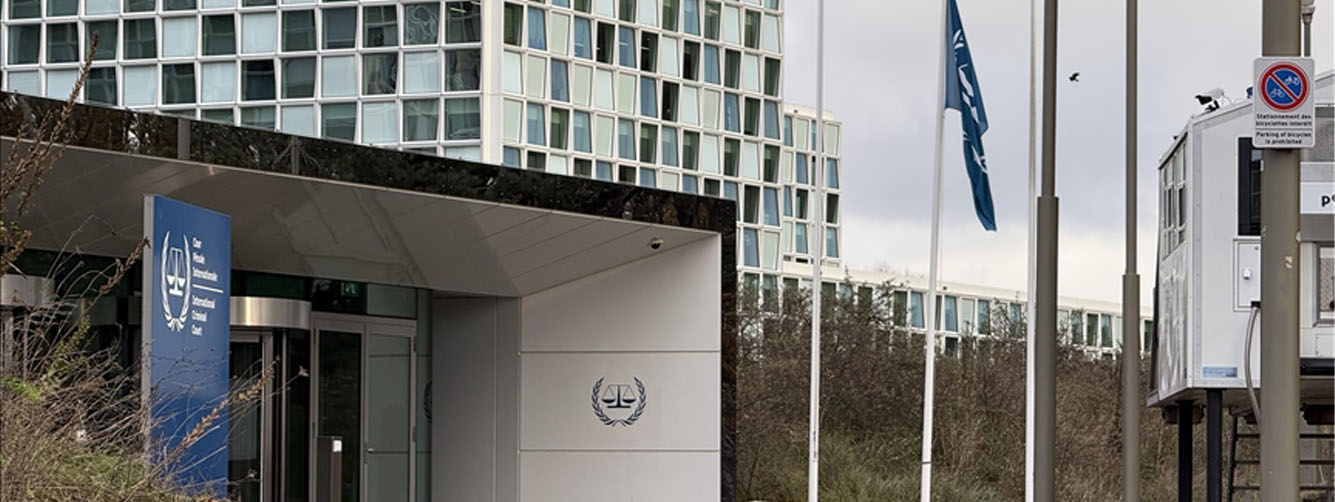
The undersigned Palestinian civil society organizations condemn the resolution passed by the Polish government and signed by Polish Prime Minister Donald Tusk stating that the highest level of the Israeli leadership, including Prime Minister Benjamin Netanyahu, can enter Poland freely. This comes despite the fact that the International Criminal Court (ICC) has issued an arrest warrant for Prime Minister Netanyahu (another arrest warrant has been issued for the former Minister of Defence, Yoav Gallant). Being a signatory to the Rome Statute, the founding document of the International Criminal Court, Poland is legally obligated to respect and abide by the Court’s decisions, including to carry out the arrest warrants for Israeli officials on charges of war crimes and crimes against humanity. The double standards with respect to the ongoing genocide in Gaza are clear as Poland recently protested Mongolia’s decision not to arrest Russian President Vladimir Putin. Respect and ensuring respect of international law and treaties is not a matter of political will. Adherence to the Rome Statute concerns fundamental obligations that must be respected by all State parties. Choosing to politicize international courts and cherry-picking which legal obligations to follow renders international law meaningless and poses a serious threat to the international law-based order. We call on Poland to reverse this decision to fully comply with its obligations under the Rome Statute, implement the arrest warrants issued by the ICC, and abide by the ICJ Advisory Opinion calling on all States to not recognize Israel’s unlawful presence in the occupied Palestinian territory and to not render aid or assistance in maintaining Israel’s illegal occupation, as well as as well as decisions and orders by other international courts and UN resolutions. We further call on the international community as a whole to support the ICC, the ICJ, and uphold the integrity of the international legal system by abiding by their rulings. Signatories:
By the Same Author
Date: 22/10/2002
×
An Open Letter to All Israeli Artists
As you are aware, there is currently a spreading global boycott of Israeli artists and arts establishments which we, as Palestinian artists, have endorsed. Art, a powerful tool that has influenced the course of history countless times, is not apolitical. Unfortunately in Israeli society art has remained politically apathetic, lamenting Israel's historical and ongoing suffering whilst ignoring Israel's historical and ongoing culpability. Like all Palestinians, as artists we are subject to the daily humiliation of your barrier-points, the random slaughter of your military actions, the denial of travel by your border police, detention without charge or trial in your prisons, closures and curfews of our cities by your army, continuing theft of property by your "settlers", and , as war refugees, the ongoing refusal to return home by your government. Meanwhile you have enjoyed the opportunity to create, rehearse and perform with relative freedom. We suggest that you utilize this freedom more responsibly. The Israeli government and mainstream press has been unwilling to criticize Zionism as an ideology for Israel. As a result of this, Israeli oppression of the indigenous Muslim, Christian and secular inhabitants of this region has become more and more extreme. We expect that you, as Israeli artists, therefore find the moral courage to research and reflect upon the impact of Israeli Zionism far more critically and directly than you have been willing to do thus far. Vague sentiments for peace and against war are as useless as a speech by US President Bush on the topic. If you really are dedicated to creating a peaceful, just future, your commentary needs to directly address the way that political Zionism has effected the non-Jewish residents of this land. Evocatively share with your audiences the way Israel has dispossessed us of our property and held us under a brutal military occupation without civil rights for decades. If you do not wish to present this in your artwork, you may consider alternatives such as public statements that support the return of refugees and the end of the occupation, cancellation of your performances whenever occupied Palestinian regions are placed under curfew by your military, and a refusal to do your own annual service within the Israeli military. It should be obvious to most of you by now that no amount of military force can promise or deliver Zionist domination over this region. Justice, peace and security will require a major shift in Israel's political goals and social conscience- one which recognizes the diversity of peoples inhabiting the region, acknowledges the United Nations Resolutions regarding Israel's duties and obligations, and accepts the damage caused by the quirky nature of Zionism. Such a shift, prompted by boycotts, brought an end to similar oppression in South Africa. As artists you are in a position to lead this shift, but unfortunately your artwork to date has failed to even attempt this. As such your art has become the Israeli government's mute mistress, drawing audiences away from any moral inquiry. So long as you continue to ignore the damage your state is causing therefore, we will continue to endorse the global cultural boycott of your artwork. As Palestinian artists, we envision a future where every person from this region, regardless of religion or ethnicity, has their culture celebrated, just as it has been in centuries past. To reach this point, we must all enjoy equal civil rights. Stop denying ours. Nicholas Rowe, PARA-Culture (Palestinian Artists Resisting Apartheid-Culture) Date: 18/10/2002
×
In and Out of the Bubble
It was destined to be a difficult meeting. I had met Yair Vardi only once before, six years earlier in Ankara with Modern Dans Turkey, when he was a visiting choreographer and I was residing as a dancer. We rehearsed together amicably, though my strongest memory of that time remains an unspoken disagreement. "Never let them see your weakness!" he pointed to my hanging stomach in a scene I was performing with a bare torso. The aesthetic beauty of power had impressed him during his own distinguished career with Ballet Rambert in London. I wanted to show my character's heavy exhaustion, but silently edited this idea from the performance and kept my stomach in. This meeting was going to be a very different one, however. Many things had changed. For three years we had been living less than 40 kilometres from each other; Mr.Vardi in Tel-Aviv directing Israel's premiere dance venue, myself in Ramallah in the Occupied Territories working with Palestinian dancers. Despite this proximity, we had not met again, during the years of the intifada or before. It was turning out to be one of the hottest days of the Summer, and my shirt was thick with sweat when I entered the air conditioned offices of the Suzanne Delal Centre for Theatre and Dance. "Is Mr. Vardi in?" I asked a young man sitting at the front desk. "Who shall I say wishes to speak with him?" he smiled back with the effete enthusiasm of a part-time dance student. "Nicholas Rowe" "From?" "Ramallah." His chin raised momentarily as though waiting for the punch-line, then pulled in as he turned and moved wordlessly to the back of the office. The clerk returned a moment later still smiling and asked me to sit and wait for two minutes. The settee in the foyer was very low, soft and suggested a lot of familiarity, so I thanked him but remained standing. He then indicated towards the water cooler and offered some water, which I gratefully drank from. The beating sun had burnt the back of my neck and left a dull ache in my forehead. A few moments later I was told that I could come through, and Yair Vardi met me half way between his office and the reception hall. He extended his hand and asked "Nicholas?" "Yes, thank you for meeting with me. I don't know if you remember, we met once before, with MDT in Turkey, a few years ago." "With Beyhan's group?" "Yes." "That's right, you were the Australian dancer." He smiled. We were winding our way towards his office in the back. He was a little bit shorter than I had remembered him, and his complexion a darker, but he retained the wiry muscular stature of a life-long dancer. "Where are you now? Still in Turkey?" "No, In Ramallah." He paused and looked at me. Perhaps the desk clerk had thought it was a joke after all and decided not to mentioned it. "Ramallah?" "Yes." "There is dancing in Ramallah?" "Not so much these days." "My god! Was it hard to get here from there?" "Some three hours. Most of it at the military barriers." "They must hate us for this. Do they hate us up there? I can understand them for hating us." "Well, there's a lot of indignation, that's for sure." We had reached his office, he moved behind his desk, and we both sat down. "Thank you for seeing me on the spot like this. We never know which days your army will let us out of our houses." He had swayed sideways in the chair, and his clasped hands pressed two index fingers against his lips. "But what are you doing in Ramallah?" Even with a pleasant tone, an Israeli accent with this question carried the echo of suspicious border police. "I've been there a few years now," I said, staring down at Mr. Vardi's desk. "I came to help set up the Palestine National Academy of Dance, but that's on hold since the intifada began. Now I work mostly in the refugee camps, running an arts relief program for children." "But there was dancing there before?" he was leaning back deeply in his chair and eyeing me sideways, his voice curious and incredulous. "Yes, I mainly worked with two groups, who are both trying to evolve a modern... "Men and women dancers?" "Yes, it's mostly an even split, and they are developing their folk dance into-" "Ahhh, folk dance." He visibly relaxed with this information and swung his chair to face me. "Yes, but they have been working for some years on developing a modern dance style based on Palestinian folk dance." "I would be very interested to see the folk dances." He nodded. We stopped talking for a moment, his pause suggesting that this would be the time to bring up the reason for our meeting. I had been clutching a clumsy plastic bag since Ramallah, empty but for a magazine and an empty water bottle, and I shuffled with it under the table. "I hear that you are hosting an international dance festival at the moment..." "Mostly not so international this year, not so many groups from abroad want to risk the security situation, all these bombings, and so on." He sighed, then added quickly "Not that I blame them for not coming." I nodded with him, and went on, "Well, from any of the groups performing, has there been any work that expresses criticism of the Israeli government's action in the Occupied Territories?" Mr. Vardi stiffened a little in his chair, and paused. "Most of the artists here are just struggling hard to put shows together. The economy is terrible. You see this building around us, this centre, it is very nice, but we are really struggling just to hold it all together, financially. You know we are going through a very difficult time here as well, with the security, economically..." "Yes, I can imagine." I tentatively placed one hand on his desk. "But your military is currently violating a lot of international laws. Millions of people are suffering terribly because of this, very nearby. Are any dancers here reflecting this?" Mr.Vardi leant forward and ran his fore finger across the desk "Well, I'm sure that there are many artists who feel very critical of the current government. As director of the Suzanne Delal Centre, I am not in a position to give my opinions on this, there are many people -funders, governing boards- that I must answer to. So I can't present political opinions from this position. I can tell you that we all feel very sad every time innocent people are killed, on either side." He swung his chair sideways again and winced at me through the corners of his eyes, suggesting that if I was just coming down to complain about the political situation and maybe get a response from him, that was it. Leaning forward, I opened the plastic bag below the table and withdrew the magazine. "Actually, the reason I wanted to come and see you is not particularly pleasant." I lifted the magazine and moved it forward, hoping that he might recognise it and understand everything. He showed no recognition however, so I went on. "I have been helping to co-ordinate the international cultural boycott of Israeli artists and arts establishments, like the Suzanne Delal Centre. I wanted to come to you and explain why." Yair Vardi's face did not move, but he kept me in his gaze, which I intermittently tried to return. I placed the magazine awkwardly onto his desk. "This is a copy of the June Issue of Dance Europe. In it there is an article I wrote which includes some interviews with Arab artists from around the region, discussing the boycott. It basically analyses why the boycott exists and what it hopes to achieve." He leant forward across the desk and pulled the magazine towards him, turning it around. Frowning as he stared hard at it, he said softly "I haven't seen this magazine." As he flicked through the pages I moved forward and gently pointed towards the index and the page number of the article. We each mumbled some directions into the magazine as we scanned for the page, a brief respite as Mr. Vardi absorbed the confrontational nature of our meeting. Opening the article, with it's four boxed interviews, he leant back deeply into his chair and began to read it. He looked up after a moment "There are no Israeli artists interviewed here. That's hardly fair?" It came out as a question, and his eyes looked over the pages at me, awaiting a response. "Well, I did try to find an Israeli dance artist who was willing to criticize Zionism, but none were willing to-" "No, none would." "Precisely, and I didn't want to get bogged down on a debate over Zionism. This colonial idea- coming and setting up a state for just one group of people, pushing the rest out -it doesn't really interest me." Mr.Vardi continued to look at me impassively, so I went on. "What I did want to do...what I wanted to keep the discussion focused on, is- what should be done about it? How do we stop this colonizing, these settlements, and solve the problems this segregation has caused." "But not even giving the other side a chance to speak..." He left the sentence hanging. "I don't think that every time a Palestinian speaks about something, fairness demands that an Israeli must also be heard. A Palestinian opinion is valid on it's own, just as an African voice is valid without a European one to counter it. But more importantly, I wanted to look for an answer. Sometimes presenting two polarized opinions in a magazine article just makes the problem seem unsolvable." "And you think a boycott is the best solution?" he asked, his head hanging to the side doubtfully. "Well, you know how Arabs are often shown in the media, only using terrorism to get what they want..." He did not register this either way, so I went on. "This boycott is an example of non-violent protest that Arabs have been supporting for years. That, on it's own, I thought deserved attention." He returned his gaze to the magazine and scanned a bit further. "You don't really say here what you want to achieve with this boycott." His manner was disarmingly patient, that of a school-master examining a student's homework. "I don't really see how stopping communication through the arts is at all helpful." "The problem is that Israeli art itself is not currently helpful. It would be great if some protest art was happening, but Israeli artists have been a mute mistress for their government for too long. Keeping everyone entertained and not questioning the occupation, the refugees-" "So you want only political art?" He countered. "If artists don't want to create political work, they can always make public statements, supporting the Palestinian refugees and a military withdrawal from the Occupied Territories. They can cancel their shows in solidarity whenever Palestinian cities are placed under curfew. At the very least they can refuse to do the annual military service that they all do for the occupying army. So far however, none have." "That's a little harsh." Mr. Vardi pulled his chin back reproachfully. "People here do care, you know. There are many Israeli dance pieces that express a lot of support for peace." "Yes, like Rami Be'er's Aide Memoire." I suggested. Mr. Vardi's eyebrows raised and he nodded to agree that this was a worthy example. "It's very popular, all over the world, a lamentation of war. I first saw it in Finland, of all places. Unfortunately, it doesn't at any point admit that the Kibbutz Contemporary Dance Company created and rehearsed the work in studios they had built over a Palestinian village, once the local population had been cleansed away. The exiled families are still alive, still living in a refugee camp in Lebanon and still want to return to their land. But despite international law, Israel and Kibbutz Ga'aton and even Rami Be'er do not want to let them back. Aide Memoire became a little hollow for me after that." Mr. Vardi breathed slowly and looked up at the ceiling before returning back to me. "These are very complicated issues-" "And so they need to be addressed, not ignored." "Yes, and co-operation through the arts can help bring these problems forward," he went on patiently. "It would be wonderful if we could have more artistic collaboration with the Palestinians, not less." He kept the article open on the desk and drew back from me, satisfied with this point. "Of course it would. Palestinian and Israeli artists can gain a lot from each other. Only some sort of racist would doubt that, or need that proven. But when a soldier and prisoner dance together, you can't call it a collaboration. That's just something to help the soldier sleep better at night. After any show now, the Israeli will return to their home, well-watered garden and military duty, and the Palestinian will be returned to their refugee camp, communal well and military rule." Yair Vardi furrowed his brow. Perhaps he had heard it all before. "I still don't see how having no communication at all is going to help. What do we do then? Just keep bombing each other instead?" I leant forward and touched the edge of the magazine, shaping the corners of it's pages. To my left was a collage of photos of Mr. Vardi with his wife and child. They were very casual, personal photos, from birthdays and holidays and home-life. Between the photos and Mr. Vardi sat his computer screen, and it seemed that he would have to come to my side of the desk to see them. "There is a middle path. Just because we aren't dancing together doesn't mean we can't talk." I looked back at him, wondering how to ever convince him. "Cultural exchange is very normal -but military occupation, home demolitions, deportations, ethnic cleansing- these things aren't. So we have to solve them first. One step forward would be for you, as Israeli artists, to start reflecting these injustices on stage. At least then rest of the world would be able to distinguish you from the problem." Mr. Vardi took me fully in his gaze, which was very patient yet commanding. "The Suzanne Delal Centre is reliant on government funding, and one of our guidelines is that we don't get involved in politics. We can not hold political meetings here. We are here to create art for the Israeli people, that's it. Do you want us to just destroy everything we have worked for? What would that achieve?" He asked the question calmly, and the calmness of our meeting was becoming disquieting. I did not know if it was age, apathy, confidence or just the heat of the day that allowed Mr. Vardi to remain so listless. If he felt any fury or indignation at my charges, he gave no energy to expressing it. Let him rant then leave, I could see him thinking. I looked around his office and felt overwhelmed by how undisturbed it seemed. The walls were covered with posters of Israeli modern dance shows and past festivals, whilst the art centre where I worked had been trashed and looted on a whim by Israeli soldiers. This power imbalance made it so easy for us to slip into the roles of patient father and the zealous son. Did I have to drag him to Ramallah for him to see it? Would even that make a difference? "These times demand some moral courage!" I breathed out hard. "If the Israeli media and government are not willing to question the morality of Zionism, your artists need to start posing some political questions that-" "Any Israeli dancer that starts to get involved in political issues will lose their funding and not get to show their work anywhere." He replied, as though I seemed to have missed the point. "It's not an easy situation." I looked at the dance posters around his office once more. All composed of beautiful bodies and innovative shapes, each trying to stand out more than the other. "I empathize with Israeli artists facing this problem. Really I do. No dancer or choreographer in the world would really want to have to deal with this, everybody just wants to get on with their art. But this military occupation is forcing us all to make sacrifices. For two years nobody in the Occupied Territories, myself included, has been able to choreograph or perform, because of the siege." Perhaps out of pity at my impotent passion, he leant forward and tried to sound optimistic for the first time. "Maybe there is one possibility. We could arrange for a group of Palestinians, artists, students, whoever, to come down to the Suzanne Delal Centre to see a dance show, for free of course. It would be difficult, but we might be able to arrange it." I felt very puzzled as I looked at him "And how would they get here? It took me four hours, and I have a foreign passport. They wouldn't be allowed past the first check points." Feeling more comfortable, he waved his hand at this idea. "That would take some organizing, but I'm sure we could arrange some sort of bus and a pass from the military and..." "It sort of misses the point though, doesn't it?" I cut in. He did not move, so I went on. "No Palestinian is going to want to do this. Be given "special permission" to allow them to leave their homes? For the privilege of being able to see an Israeli dance performance? To then be happily returned back through the curfew by Israeli soldiers?" I thought of how Khaled Qatamish, the director of the El-Funoun dance troupe, would laugh at this. A month earlier he had received a knock on the door in the middle of the night. Before he knew what was happening he had been dragged in his pyjamas to the street and was being beaten by Israeli soldiers. Then, as his children and wife watched from the window, he was held in front and used as a human shield by the Israeli combat unit, as they moved on a house to house search. And of Omar Barghouti, a choreographer with the same company, whose home had been destroyed by a missile from an Israeli tank, and then, a year later, his new apartment had been filled with Israeli soldiers wanting to remove him and his young family and use it as sleeping quarters. And of Khaled Elayan, director of the Sariat Ramallah, who had only just been released from an Israeli prison after three months without charge or trial. Almost every male Palestinian dancer I could think of had, at some point, been imprisoned and tortured. I looked back at Mr. Vardi, who still considered the idea in a positive light. "Some of them may be happy to come down here, but to tell you about human right's violations in the Occupied Territories, not to sit and admire Israeli art." "Well, there could be some sort of after-show discussions between the artists, in which individuals could talk about different things. Very informal of course, we could not say that this will be any sort of Israeli/Palestinian meeting, but maybe, between themselves, after the show the artists might discuss things." "There will be plenty of time for artistic meetings once we have sorted out the political inequality. This boycott is being taken to prompt political action from you, as Israeli citizens and artists." "But we would lose all our funding if we did this!" At last his exasperation was beginning to show as his words became more punctuated. He did not want to have to repeat this last concept. "We would end up in Israel with no art at all, or only art from very pro-government artists." "And perhaps that would be better." I leant back into my chair, breathed deeply and tried to think of how this idea could possibly be palatable to Mr. Vardi. "Sometimes I argue with people in the Occupied Territories who support the suicide bombings. One of the reasons they give is that these bombs at least make Israel remember it is holding millions of Palestinians under military rule in two large prisons called Gaza and the West Bank. They know of the wonderful concerts and shows you enjoy from abroad, the way you tour your shows internationally, and yet you don't even let them travel to the next town to visit a sick mother, let alone have a cultural life. Then you each join the army once a year, but pretend you are not part of the problem." It seemed I had traveled into sacred area by attempting to justify the suicide bombings, as Mr. Vardi's face stiffened. I waved my hand vaguely and tried to return to my original point, to why I had come down here. "Hence, this boycott. Disrupting your cultural life is a non-violent way of gaining your attention. When international artists boycott you, they are at least acknowledging the abnormality of this situation. This takes the despair out of the Palestinians and prompts you, we hope, into some sort of moral inquiry." Mr. Vardi closed his eyes and raised his eyebrows, and nodded slowly. "Actually, one of the good things, possibly the only good thing, to come out of this situation is that more Israeli work is being created, and more audiences are coming to see home grown talent, because there is nothing else for them to see. So local choreography is going through something of a renaissance." Any empathy that Mr. Vardi might have had was ebbing away, and as he stood his stomach drew in and his chest swelled with resilience. The meeting was obviously drawing to a close. "Well, if any of them want to learn about the situation..." I stood sadly, the empty water bottle sagging lightly in the plastic bag. "I would like to meet with them and introduce them to-" "For political meetings, we can't help, but for something artistic like seeing a performance in the festival, that might be possible." He jotted down my phone number and email address for reference, but it was perfunctory. "So long as you know that Palestinians artists are ready to talk about the problem, even if Israeli ones are not yet." I looked at him and this time his eyes moved down and away. As we wordlessly made our way to the foyer, Mr. Vardi's secretary beamed up at me, oblivious to the nature of our meeting. We bid farewell without any expectations, and I stepped back out into the searing heat of Tel-Aviv. The journey up to West Jerusalem was uneventful. Stretched out across two seats, the air-conditioned Israeli bus made me forget about the sun again for forty-five minutes. Walking across to East Jerusalem through the old city was a disconcerting shock however, as though stepping out of a bubble into a much denser world. Within a minute crowds were pressing from all sides and noise accelerated. I soon found myself wedged into a stuffy minivan with a dozen others Palestinians desperate to get home before curfew. At the first military barrier the Israeli soldiers showed no interest in checking ID, so we sped through. Then somebody said Ramallah had been closed early, which set of a babble of sighs, curses and mobile phone calls. The next barrier, at the Qalandia refugee camp, was imbedded in traffic. Palestinian workers stood in several lengthy and haphazard cues between concrete blocks and barbed wire, their shoulders hunched as they shuffled along beneath the gun towers. I joined one line, and felt very thirsty as my head seemed to press against the afternoon sun. After 35 minutes I reached the shaded desk surrounded by Israeli soldiers. A blonde adolescent girl in heavy combat gear curiously thumbed through my Australian passport and passed it over to two of her colleagues, pointing at the emblem on the cover and squealing "Kangaroo!". Slouching under the weight of their M16's, they smiled at it. Looking up at me, one said "Why are you here? Australia is so beautiful!" then looked away. "So, where are you going now?" The female soldier asked, still smiling. One minute before she had barked "Go back! Go back!" in poor Arabic to an elderly Palestinian man. "To Ramallah." "Ramallah is closed now." She replied simply, as though it were a supermarket. "Nobody can go in to Ramallah." "Then I'll stay the night in Semiramis." I lied, referring to an urban area before Ramallah. "But what are you doing in Ramallah?" she pressed on, curiously. "That's where I live...With my wife." "She is Palestinian?" "Yes." "You met her here?" Holding my passport and a gun, she managed to ask this with a cocktail-party tone. "Yes." "So, why did you come here?" "So, why did you come here?" I sighed and smiled, trying to parrot her pleasantness. "I was born here!" she snapped, as though suddenly joining the chorus of a patriotic song. She asked the question again, this time as an Israeli officer "So, why did you come here?" "Don't know," I shrugged. To hell with it, I thought. I'll sleep in a ditch if I need to. But then she flicked her wrist to indicate I should move on, and listlessly called for the next in line. From Qalandia I traveled in another crowded minivan to Semiramis. The sun was now low in the sky and one of the last passengers to disembark explained the safest route to Ramallah. I set off on foot across the hard stony hills, swinging the bag with the empty plastic water bottle and enjoying the pink hue on the small white cliffs. After an hour I reached the centre of town, which was deserted with all the shops shuttered. The sun had gone down, the moon had come up, and from one intersection I could look over dark hills south to the lights of Jerusalem and east to the lights of Jaffa. I snuck along side streets to avoid the patrolling jeeps and tanks, until reaching home. My wife sniffled as I kissed her. She explained that her nose was still running from a tear gas canister that an Israeli patrol had lobbed outside a bookstore earlier in the day. In the background, President George Bush's neolithic gaze pressed out of the television set. She turned up the volume to see if he was explaining why Iraq needed bombing, but CNN were instead running an oddball story on how he is the healthiest president in US history. As he strutted across the Whitehouse lawn, his physical-workout regime was described. Urging young people across America to exercise more, his taut stomach and thick arms helped define for them the aesthetic beauty of power. Contact us
Rimawi Bldg, 3rd floor
14 Emil Touma Street, Al Massayef, Ramallah Postalcode P6058131
Mailing address:
P.O.Box 69647 Jerusalem
Palestine
972-2-298 9490/1 972-2-298 9492 info@miftah.org
All Rights Reserved © Copyright,MIFTAH 2023
Subscribe to MIFTAH's mailing list
|