

|
Amman/Washington, 12 November 2002: The insistence of the international community on reform of Palestinian institutions as a precondition for an Israeli-Palestinian peace settlement is impairing the chances of a settlement being reached. In the coming weeks the Quartet (EU, Russia, UN, U.S.) will discuss a three-phase draft U.S. roadmap for peace which contains details of Palestinian reform plans. It is therefore crucial that misunderstandings about the meaning of reform, and its role in the peace process, are addressed now. A new briefing paper published today by the International Crisis Group (ICG) examines the many interpretations of 'reform' as understood by the international community, regional actors and Palestinians themselves. The Meanings of Palestinian Reform also challenges common claims - principally from the U.S. - about the place of reform in peacemaking. ICG Middle East Program Director Robert Malley said: "Many of these assertions cannot withstand closer scrutiny and most reflect a misunderstanding of domestic Palestinian dynamics". For example, Washington has tended to conclude that the coincidence between President Bush's calls for reform and indigenous Palestinian pressure shows that a reform-first sequence is having the desired effect. Reform pressure is also often viewed in the West as synonymous with the marginalisation of Yasser Arafat and the rise of Palestinians with whom a peace agreement could more easily be reached. ICG points out in "The Meanings of Palestinian Reform" that the notion of a 'Palestinian reform movement' is itself misleading. Reform is being promoted by groups with competing and contradictory agendas that have little in common with one another and even less in common with the reform visions of the U.S. or Israel. Reform pressures are also not new. They have existed since the formation of the PLO and will no doubt outlast the latest calls. And no group has the ability or desire to touch Arafat as a symbol. Most importantly, unless there is a credible peace process in the offing, arguments for the kinds of institutional reform sought by the United States and others will be eclipsed by those advocating continued resistance, including by uniting with the radical Islamic opposition. The Palestinians' overarching goal is to end the Israeli occupation. Mouin Rabbani, ICG Senior Middle East analyst, said: "Israeli and U.S. involvement in the process during recent months has been, at best, counterproductive, and the continued political stalemate has led to a virtual suspension of reform. The most effective mechanism currently available to the international community in terms of encouraging reform is to foster genuine progress on the political front."
MEDIA CONTACTS
Read More...
By: MIFTAH
Date: 12/02/2026
×
MIFTAH Conference Closing Statement
MIFTAH recently held its conference entitled: “Participation and Complementarity as a Strategy of Governance amid crises”, attended by a wide spectrum of government representatives, local councils, civil society institutions, popular committees, researchers and academics, in addition to representatives from international institutions. The conference addressed how the Palestinian people’s existence is being targeted along with their ability to survive and remain steadfast amid the genocide in the Gaza Strip, escalating settlement policies and forced displacement from the West Bank, including Jerusalem. It showed how these complex crises exposed the diminishing effectiveness of the Palestinian institutional structure, the limitations of a centralized model of governance and its inability to singularly respond to the needs of society and protect the social fabric. The participants reiterated that participation and complementarity between the government, civil society, local councils and popular committees is no longer an administrative option or a procedural improvement, but a national and structural necessity to ensure steadfastness and the ability to manage crises, and preserve social unity and Palestinian geographic integrity in the face of the escalating colonialist onslaught. They indicated that the absence of the Palestinian Legislative Council (PLC) prompted CSO’s to reconsider public policies and contribute to the development of perspectives on governance, provide practical alternatives that promote national unity and reorganize the relationship between the state and society on the basis of participation and complementarity. The participants reiterated that experience in the field in the West Bank and Gaza Strip proved that local councils, popular committees and grassroots organizations, played a pivotal role in protecting citizens and providing basic services during times of government capacity collapse. They stressed that ignoring these roles or administratively confining them exacerbated fragility rather than hinder it. The conference concluded with general agreements over the following points: One: Adopting participation and complementarity as a National Government Policy
Two: Accountability and societal trust
Three: Promoting the role of local players in crisis management
Four: From the concept of governor to the strategy of governorate
The conference closed by emphasizing that confronting the escalating colonialist onslaught cannot be achieved through closed, centralized instruments or top-down approaches. Instead, it requires a model of national governance grounded in participation and complementarity. This model should be based on mutual recognition of roles and the revival of social structures. It must operate within a unifying national framework that protects the unity of society and geography and promotes Palestinian steadfastness. MIFTAH reiterated its commitment to continuing this discussion, based on its interest in contributing to the promotion of national dialogue. In this regard, MIFTAH does not position itself as an alternative to any legislative or executive body, nor does it seek to replace the role of any political player. Nonetheless, given the significance of the current context and dangers facing our causes, MIFTAH is keen on its commitment to a unifying national approach that promotes dialogue between Palestinians. MIFTAH looks forward to building on the outcomes of this conference and turning them into sustainable policy and dialogue pathways. The ultimate goal is for the Palestinian government to adopt a policy of participatory and complementary governance. This would lay the groundwork for a model of local governance that reflects the will of society and protects its unity, at one of the most dangerous and complex stages in contemporary Palestinian history. To view the Full Statement as PDF
By: MIFTAH
Date: 19/08/2025
×
MIFTAH Welcomes Historic UN Resolution on the Situation of Palestinian Women
MIFTAH welcomes the historic resolution adopted on July 30th by the United Nations Economic and Social Council on the situation of Palestinian women under occupation. We extend our deep gratitude to all member states that have voted in favor of this unprecedented and urgently needed resolution. For years, MIFTAH has consistently advocated for the rights of Palestinian women through a decolonial and rights-based lens, urging the international community to do the same. While we continue to address the internal challenges Palestinian women face, through close partnership with civil society organizations and government stakeholders, it remains clear that the single greatest threat to their freedom, safety, and survival is Israel’s ongoing military occupation. Nowhere is this more evident than in Gaza, where Palestinian women are enduring Israel’s relentless genocidal campaign. This resolution arrives at a critical moment, as the world begins to engage more seriously with the Palestinian issue, and as the UN concludes its high level international conference on a peaceful and just settlement, including the implementation of the two state solution. In this context, we must be unequivocal about what justice and peace demand:
While these conditions affect all Palestinians, Palestinian women face distinct and gender-specific harms under Israel’s occupation, realities that MIFTAH has documented extensively. From movement restrictions and political repression, to economic marginalization and targeted violence, the occupation entrenches systemic and multi-layered harm against Palestinian women. We believe that only once these conditions are addressed, can a viable and dignified future begin to emerge for Palestinian women and their communities, after over 77 years of occupation, violations, and aggression. As we celebrate this important step by the United Nations, we echo the call made by the Minister of Women's Affairs: words must now be translated into concrete action. We urge member states and UN bodies to implement the provisions of this resolution and to pursue sustained efforts toward ending the occupation, securing accountability, and upholding the full rights of Palestinian women, including their right to live free from violence, discrimination, and oppression.
By: MIFTAH
Date: 15/01/2025
×
Palestinian civil society condemns Poland’s double standards and failure to uphold international law by granting immunity to Israeli leadership
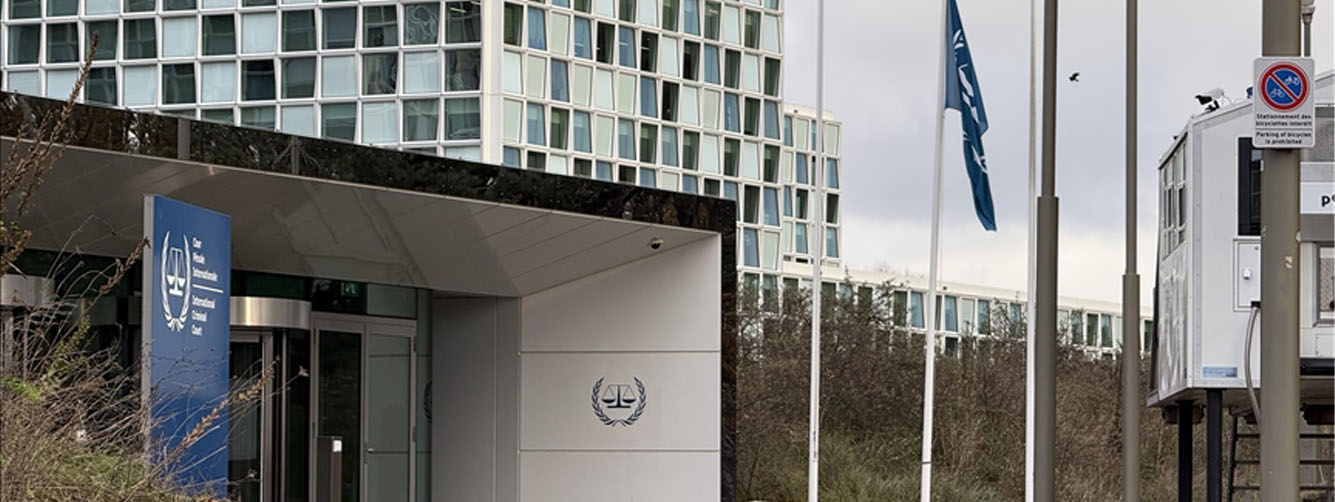
The undersigned Palestinian civil society organizations condemn the resolution passed by the Polish government and signed by Polish Prime Minister Donald Tusk stating that the highest level of the Israeli leadership, including Prime Minister Benjamin Netanyahu, can enter Poland freely. This comes despite the fact that the International Criminal Court (ICC) has issued an arrest warrant for Prime Minister Netanyahu (another arrest warrant has been issued for the former Minister of Defence, Yoav Gallant). Being a signatory to the Rome Statute, the founding document of the International Criminal Court, Poland is legally obligated to respect and abide by the Court’s decisions, including to carry out the arrest warrants for Israeli officials on charges of war crimes and crimes against humanity. The double standards with respect to the ongoing genocide in Gaza are clear as Poland recently protested Mongolia’s decision not to arrest Russian President Vladimir Putin. Respect and ensuring respect of international law and treaties is not a matter of political will. Adherence to the Rome Statute concerns fundamental obligations that must be respected by all State parties. Choosing to politicize international courts and cherry-picking which legal obligations to follow renders international law meaningless and poses a serious threat to the international law-based order. We call on Poland to reverse this decision to fully comply with its obligations under the Rome Statute, implement the arrest warrants issued by the ICC, and abide by the ICJ Advisory Opinion calling on all States to not recognize Israel’s unlawful presence in the occupied Palestinian territory and to not render aid or assistance in maintaining Israel’s illegal occupation, as well as as well as decisions and orders by other international courts and UN resolutions. We further call on the international community as a whole to support the ICC, the ICJ, and uphold the integrity of the international legal system by abiding by their rulings. Signatories:
By the Same Author
Date: 24/12/2007
×
Inside Gaza: The Challenge of Clans and Families
Middle East Report N°71 EXECUTIVE SUMMARY Throughout Gaza’s history, its powerful clans and families have played a part whose importance has fluctuated with the nature of central authority but never disappeared. As the Palestinian Authority (PA) gradually collapsed under the weight of almost a decade of renewed confrontation with Israel, they, along with political movements and militias, filled the void. Today they are one of the most significant obstacles Hamas faces in trying to consolidate its authority and reinstate stability in the territory it seized control of in June 2007. Although they probably lack the unity or motivation to become a consistent and effective opposition, either on their own or in alliance with Fatah, they could become more effective should popular dissatisfaction with the situation in Gaza grow. There are some, as yet inconclusive, indications that Hamas understands this and is moderating its approach in an attempt to reach an accommodation. It has been six months since Hamas took control of Gaza, and, despite recent suggestions of possible reconciliation talks with Fatah, the geographic split of Palestinian territories risks enduring. Israel’s tightening siege and continued conflict between Hamas and the Ramallah-based government have imposed exceptional hardship on Gazans, seriously crippling the Islamists’ ability to govern and fostering popular dissatisfaction. As a result, Hamas is focused on more achievable priorities, including restoring law and order after a period of tremendous chaos. The role of clans and families is central to this task. Over recent years, their growing influence has been a double-edged sword. By providing a social safety net to numerous needy Gazans in a time of uncertainty, they helped prevent a total collapse, yet they simultaneously contributed to the mounting disorder. Although they have filled the void resulting from the judiciary’s breakdown, they have done more than most to promote lawlessness. Many observers have likened Gaza to a failed state. A number of powerful clans have formed militias, and some of their leaders have become warlords. The symbiotic relationship between clans and rival movements (Fatah, Hamas and the Popular Resistance Committees) escalated conflict among the latter by adding the dimension of family vendetta. In the final years of Fatah’s rule and during the turbulent national unity government from March to June 2007, such clans established near autonomous zones with their own militias and informal justice and welfare systems – a process facilitated by Israel’s unilateral withdrawal in 2005. Since its takeover, Hamas has dramatically reduced the chaos. It introduced measures designed to restore stability, banning guns, masks and roadblocks. Those steps won praise from much of the population and, under different political circumstances, might even have garnered international support, since donors had strongly urged many of them in the past. The belief by some that the siege somehow will lead to Hamas’s overthrow is an illusion. The Islamists in many ways have consolidated their rule, and the collapse of the private sector has increased dependence on them. They also benefit from a substantial reservoir of popular support. Still, economic deprivation, Hamas’s virtual monopoly on power and its harsh methods have generated discontent, which, in the absence of alternatives, finds a principal and natural focal point in the clans and families. They provide sustenance, protection, power and patronage and have shown the capacity to resist central authority whenever necessary and fuel conflict whenever needed. In recent months, they have lowered their profile but they have also established red lines: they will neither be disarmed by Hamas nor lose control over their neighbourhoods without putting up a fight. For Hamas, this presents a straightforward dilemma. Determined to impose order and consolidate its rule, it has sought to crack down on unruly clan- and family-based networks – all the more so since some have rallied to Fatah’s side. But facing popular dissatisfaction as well as an effective boycott from other international, regional and local forces, it cannot afford to risk blowback by pushing core Gazan constituencies to the sidelines. There are signs – early and insufficient – that Hamas is getting the message, recognising it has alienated important segments of the population and acknowledging that families, with arms, numbers and loyalty, are there to stay. Ultimately, effective governance and any sustainable resolution of the crisis in Gaza will require political reconciliation between Fatah and Hamas and territorial unity with the West Bank, as well as a ceasefire with Israel (including an end to the firing of rockets from Gaza and Israeli military operations) and an end to the siege. In the meantime, however, Hamas could do much to preserve order and improve ultimate prospects for stability by taking steps to cease brutal measures, broaden participation in its rule and – beginning by compensating for their losses in vendettas and factional warfare – reach a workable arrangement with Gaza’s families. Gaza/Jerusalem/Brussels, 20 December 2007 To View the Full Report as PDF (500 KB)
Date: 09/10/2006
×
The Arab-Israeli Conflict: To Reach a Lasting Peace
EXECUTIVE SUMMARY AND RECOMMENDATIONS If there is a silver lining in the recent succession of catastrophic developments in the Middle East, it is that they may impart renewed momentum to the search for a comprehensive settlement of the Arab-Israeli conflict. It is, admittedly, a slender hope. Since the collapse of the peace process in late 2000, none of the region’s parties has displayed the requisite capacity or willingness to reach an acceptable compromise, while the international community has shown more fecklessness than resolve. But the Lebanon war must serve as a wake-up call: so long as the political roots of the Arab-Israeli conflict are not addressed, it will remain a bottomless source and pretext for repression, radicalisation and bloodletting, both in the region and beyond. Now is the time for an international push to launch a new peace initiative. Reasons for scepticism abound. Six years after the last genuine peace effort, whatever modicum of trust existed between the parties has collapsed. The Palestinian polity, battered from without and within and increasingly fragmented, verges on outright disintegration. It is hard to imagine which political forces could negotiate effectively with Israel, with what mandate, and with what capacity to translate any eventual agreement into new realities on the ground. Israel, fresh from its Lebanese trauma, still struggling in Gaza and shaken by a perceived growing trend in the Muslim world that rejects its very existence, hardly seems in the mood for political concessions. Instead, its political class appears torn between a desire to revive Israel’s power of deterrence, which it believes has been seriously eroded, and the inevitable finger-pointing following the war, which threatens to bring the government down. Neither is conducive to grand peace moves. Israeli-Syrian negotiations came to a grinding halt in 2000, with anticipated ripple effects in Lebanon, Palestine, and elsewhere in the region. Today, Syria is isolated, ostracised by key international players and intent on waiting out the Bush and Chirac presidencies. Arab regimes allied to Washington, many of whom had banked on a quick Israeli victory over Hizbollah and hoped to mobilise their citizens against a so-called Shiite crescent led by Tehran, were doubly wrong: Hizbollah held on, and their Sunni publics rallied around the Shiite Islamist movement, not against it. Today, these regimes’ legitimacy deficit stands as plain as ever. Arab advocates of a diplomatic option increasingly are on the defensive, promoters of armed resistance on the ascent. The U.S. administration, preoccupied by Iraq and Iran, is giving scant sign of reconsidering its approach: no dealings with Hamas until it meets the Quartet conditions; no serious engagement with Syria; and a general lack of interest in the Arab-Israeli conflict. Indeed, with its regional legitimacy and credibility in tatters, some question whether the U.S. would be in a position to lead a renewed effort even if it wanted to. And yet this desultory state of affairs is an important reason why an urgent, ambitious international effort is required. Years of culpable neglect have crippled forces of pragmatism throughout the region and made the achievement of peace immeasurably more difficult. Another several years of waiting would only make it harder still. Some promising ingredients exist: the possibility of a Palestinian national unity government, Syria’s repeated call for a resumption of negotiations, increased eagerness on the part of Arab regimes for a renewed peace process and even Israel’s search for an alternative way forward after the collapse of its unilateralist experiment. Moreover, the absence of initiative is itself a policy choice that inevitably will have a significant negative effect. Perpetuation of the Arab-Israeli conflict, with all the anger it generates, fuels extremist, jihadi movements in the Muslim world; intensifies animosity toward the West and the U.S. in particular; radicalises Muslim populations in Western Europe; discredits pro-Western governments; deepens the damaging divide between the Islamic and Western worlds; and, as both Syrian and Israeli officials have warned, sows the seeds of the next Arab-Israeli war. Resolving the conflict clearly would not be a sufficient condition to tackle such deep-seated problems; but it is, on all available evidence, a necessary one. American and Israeli reluctance to move, coupled with the extreme fragility of the situation, means that others – the UN, EU and Arab world – must now step forward with fresh ideas and initiatives, optimally to persuade Washington to act, at a minimum not to be held fully hostage to its passivity. The challenge is to devise an initiative or series of initiatives bold enough to alter regional perceptions and realities, yet not so audacious as to provoke U.S. or Israeli obstruction. Many have advanced the notion of an international peace conference; the Arab League has called on the UN Security Council to take the lead in shepherding a comprehensive settlement. Both ideas have merit; at this point, however, neither is likely to materialise due to opposition from Washington and Israel. A conference coinciding with the fifteenth anniversary of the Madrid peace conference and attended by all relevant current players could well be the most visible launching pad for renewed negotiations. The idea is worth pursuing but it could take months to organise and reach agreement on invitees and terms of reference; substantive progress, not a procedural battle, is what the region desperately needs. In devising a new mechanism, principal lessons of the past must be kept in mind: the need to define early on the endgame, i.e., the shape of a settlement; the importance of an active third party to oversee negotiations and compliance with whatever interim agreements are reached; and the necessity to avoid a discrepancy between lofty talks at the negotiating table and destructive developments on the ground. More concretely, a new mechanism should:
The Middle East is immersed in its worst crisis in years with no stable resolution in sight. Observers and analysts are quick to point out that circumstances are far from ideal for an Arab-Israeli initiative. They are right. But time for a negotiated settlement is quickly running out. RECOMMENDATIONS To the United Nations Security Council:
To View the Full Report As PDF (540 KB)
Date: 19/01/2006
×
Enter Hamas: The Challenges of Political Integration
EXECUTIVE SUMMARY AND RECOMMENDATIONS Hamas, the Islamist movement designated a terrorist organisation by the U.S. and EU and considered a mortal enemy by Israel, will soon join the Palestinian legislature. Riding an unprecedented wave of popularity and having exceeded virtually all expectations in recent municipal contests, it could end up sitting at the Palestinian Authority’s (PA) cabinet table. Consequences would likely be far-reaching: Palestinians are hugely dependent on the West and Israel, and both have threatened to cut ties should Hamas join the PA. So far, the U.S. and EU essentially have opted to ignore the Islamists rather than deal with them upfront – the end result being a movement that feels stronger, more emboldened, and over which the West has precious little leverage. With the prospect as remote as ever of a renewed peace process or a weakened PA cracking down on a strengthened Hamas, the international community’s best remaining option is to maximise the Islamist movement’s incentives to move in a political direction through a policy of gradual, conditional engagement. Hamas’s electoral participation results from a convergence of disparate interests. For President Abbas, securing the ceasefire, rehabilitating the Palestinians’ international standing, and putting the domestic house in order required a deal with Hamas. In exchange for cooperation, he offered power-sharing through political integration. Abbas’s gambit coincided with Hamas’s calculations: it had experienced a surge in popular support during the uprising, was eager for a respite from Israeli military assaults, and, with both Fatah and the PA in disarray, saw an opportunity to translate its success into institutional power. Though originally scheduled for July 2005, parliamentary elections were postponed by Fatah leaders concerned about Hamas’s strength and convinced that with more time they would recover lost ground. Fatah’s concerns were not misplaced but its response was plainly misguided. Strong half a year ago, Hamas appears far stronger now. In the intervening months, Fatah has continued to fray, consumed by internal divisions, while Hamas has come of age. Municipal elections, in which they handily won control of most urban areas, including traditional Fatah bastions like Nablus, suggest the Islamists are establishing themselves as the alternative of choice to a PA discredited by corruption, chaos and a failure to realise its political agenda. Today, hundreds of thousands of Palestinians live in localities ruled by Hamas. The record of the last several months, as Hamas rubbed elbows with issues of local governance and campaigned for national office, offers a preliminary, mixed picture of how political integration might affect its outlook and conduct. In its pragmatism, and even willingness to deal with Israel on day-to-day operational affairs, Hamas rule at the local level has been almost boringly similar to its predecessor. Local politicians emphasise themes of good governance, economic development, and personal and social security, leaving specifically religious issues and the conflict with Israel to the background. With only scant exceptions, they have yet to try to impose their vision of an Islamist society. Nationally, too, signs of pragmatism can be detected. Far more than Fatah, Hamas has proved a disciplined adherent to the ceasefire, and Israeli military officers readily credit this for the sharp decline in violence. In recent statements, Hamas leaders have not ruled out changing their movement’s charter, negotiating with Israel, or accepting a long-term truce on the basis of an Israeli withdrawal to the 1967 lines. Today, their electoral platform is in these respects closer to Fatah’s outlook than to Hamas’s founding principles. There is a less encouraging side. Hamas continues to straddle its public and clandestine wings, subject to competing views from different leadership elements, and at least partially susceptible to Syrian and Iranian pressures. Most Israelis, and not a few Palestinians, are worried about its armed potential, and there is widespread suspicion in Israel that the organisation simply is biding its time, waiting for the post-electoral period to launch a new wave of attacks with a replenished and improved arsenal. Perhaps most significantly, it has neither renounced violence, nor accepted Israel’s existence. All this suggests that integration is a work in progress, neither a sure thing nor the safest of bets. But what is the alternative? The PA is not in a military, let alone a political, position forcibly to disarm Hamas. Since taking office, Abbas has been paralysed by a sclerotic political system, and he has more than once staked his political future on successful, inclusive elections. Without the prospect of political incorporation, and in the absence of a credible diplomatic process, Hamas – and, along with it, most other armed organisations – is likely to resume sustained attacks against Israel. What remains, for now, is the possibility that by incorporating Hamas more deeply into local and national governance, its stake in overall stability and the political costs of a breakdown gradually will steer it away from the military path. Confronted with the challenge of a newly emerging Palestinian reality, the international community has, for the most part, taken a pass. While there are important differences in policy, both the U.S. and EU avoid (and in the American case, bar) contacts with the Islamist organisation, deny funding to projects with Hamas-run municipalities, and have threatened to halt assistance to the PA if Hamas joins it. This attitude has had several, essentially negative, results: estranging Palestinians from Western donors; losing touch with an increasingly large segment of the population; jeopardising project sustainability; and reducing accountability. Meanwhile, Hamas has gained strength from a nationalist backlash against perceived foreign interference and is participating in elections without having to fulfil any prior condition. Western countries have not done the one thing that might have had a positive impact: try to shape Hamas’s policies by exploiting its clear desire for international recognition and legitimacy. There is every reason for the West to withhold formal dealings at a national level, at least until it renounces attacks against civilians and drops its opposition to a two-state solution, but the current confused approach – boycotting Hamas while facilitating its electoral participation; facilitating its participation without seeking through some engagement reciprocal concessions – makes no sense at all. Without conferring immediate legitimacy on Hamas, engaging its national officials or removing it from the terrorism list, the EU in particular – which has more flexibility than the U.S. in this regard – should encourage the Islamists to focus on day-to-day matters and facilitate a process of potential political integration and gradual military decommissioning. With Prime Minister Sharon’s sudden incapacitation, an already impossibly perplexing situation has become more confused still. Using Western economic and political leverage to try to stabilise the Palestinian arena would be far from the worst possible investment. RECOMMENDATIONS To the Palestinian Authority: 1. Within 100 days of the formation of the next cabinet, submit the draft Political Parties Law to the Palestinian Legislative Council (PLC) for ratification, providing for the formal registration of all political organisations that pursue their objectives through lawful and peaceful means. 2. Within 100 days of the formation of the next government, submit a Basic Security Law to the PLC, providing for:
3. Ensure the equitable distribution of municipal and reconstruction funds, including donor funds disbursed to PA accounts, so that local authorities are not the subject of discrimination on the basis of the political composition of their governing councils. To the Islamic Resistance Movement (Hamas): 4. Renew the unilateral ceasefire (tahdi’a) for six months, and respond positively to efforts by Egypt, the Quartet, and other third parties to achieve a comprehensive Israeli-Palestinian ceasefire. 5. Support ratification by the Palestinian Legislative Council (PLC) of the Political Parties Law, and register the Reform and Change Bloc as a distinct and separate political party. 6. Participate in the drafting and support ratification by the PLC of a Basic Security Law, and declare readiness to cooperate with a newly formed decommissioning authority on gradual implementation of the following measures, in the case of (c) – (e) subject to a comprehensive Israeli-Palestinian ceasefire and independent international verification:
7. State that it will accept and honour a negotiated two-state settlement that is properly endorsed by Palestinian national institutions and the Palestinian people. To the Government of Israel: 8. Reciprocate an extension of the tahdi’a by Palestinian armed groups by:
9. Respond positively to efforts by third parties to achieve a comprehensive ceasefire. To the European Union and its Member States: 10. Subject to Hamas extending the tahdi’a,
11. If Hamas violates the truce, suspend contacts both with its parliamentary faction and local officials, and if Hamas-affiliated politicians are part of the cabinet at the time, also suspend contacts with and assistance to the PA. 12. Remove Hamas from their list of proscribed terrorist organisations, subject to Hamas formally renouncing all violence against civilians and taking initial steps in a verifiable process of decommissioning. 13. Undertake normal dialogue with the organisation subject to Hamas dropping its opposition to a two-state solution and indicating it will honour a properly endorsed Israeli-Palestinian agreement. To the Government of the United States: 14. Give serious consideration to adopting policy responses toward Hamas recommended for the European Union and its member states if they prove effective. Amman/Brussels, 18 January 2006 To View the Full Report as PDF (526 KB)
Date: 02/08/2005
×
The Jerusalem Powder Keg
EXECUTIVE SUMMARY AND RECOMMENDATIONS While the world focuses on Gaza, the future of Israeli- Palestinian relations in fact may be playing itself out away from the spotlight, in Jerusalem. With recent steps, Israel is attempting to solidify its hold over a wide area in and around the city, creating a far broader Jerusalem. If the international community and specifically the U.S. are serious about preserving and promoting a viable two-state solution, they need to speak far more clearly and insistently to halt actions that directly and immediately jeopardise that goal. And if that solution is ever to be reached, they will need to be clear that changes that have occurred since Israelis and Palestinians last sat down to negotiate in 2000-2001 will have to be reversed. Since the onset of the Arab-Israeli conflict, control over Jerusalem has fluctuated, as have the city's contours. Speaking of the city today, one refers to substantial areas, some Jewish, others Arab, that were part of the West Bank and that no one would have recognised as Jerusalem prior to 1967. Stretching municipal boundaries, annexing Palestinian land and building new Jewish neighbourhoods/settlements, Israel gradually created a municipal area several times its earlier size. It also established new urban settlements outside the municipal boundary to surround the city, break contiguity between East Jerusalem and the West Bank, and strengthen links between these settlements, West Jerusalem and the rest of Israel. To View The Full Report as PDF File (1.01) MB
Contact us
Rimawi Bldg, 3rd floor
14 Emil Touma Street, Al Massayef, Ramallah Postalcode P6058131
Mailing address:
P.O.Box 69647 Jerusalem
Palestine
972-2-298 9490/1 972-2-298 9492 info@miftah.org
All Rights Reserved © Copyright,MIFTAH 2023
Subscribe to MIFTAH's mailing list
|