

The Israeli army reblocked the main north-south road in the Gaza Strip Thursday morning, after saying that a rocket attack on a Jewish settlement violated a truce, a Palestinian official told AFP.
Three Palestinians were wounded by live bullets when Israeli troops posted near the road opened fire on cars piling up at a checkpoint, Palestinian security sources and witnesses said.
"The Israeli army informed Palestinian officials of the closure of the southern part of this road. Two barricades were set up near the Israeli settlement of Kfar Darom and the Gush Katif settlement bloc following the firing of rockets overnight in this area," the official said.
Israel earlier formally protested to the Palestinians over a violation of a truce recently announced by Palestinian militant groups, following the firing of three rockets on Kfar Darom in an attack which slightly wounded three people.
Israeli troops stationed near Gush Katif further south then fired on angry drivers blocked at the al-Matahen checkpoint, Palestinian security sources said.
Three of them were wounded, hospital sources in the nearby city of Khan Yunis said.
Following the incident, Israeli troops dragged concrete blocks on the road at the Abu Gholi and al-Matahen checkpoints, respectively in the central and southern Gaza Strip, trapping cars between the two, witnesses said.
MIFTAH Conference Closing Statement
'Calling for Participatory and Complementary Governance as Public Policy'
Date posted: February 12, 2026
By MIFTAH

MIFTAH recently held its conference entitled: “Participation and Complementarity as a Strategy of Governance amid crises”, attended by a wide spectrum of government representatives, local councils, civil society institutions, popular committees, researchers and academics, in addition to representatives from international institutions.
The conference addressed how the Palestinian people’s existence is being targeted along with their ability to survive and remain steadfast amid the genocide in the Gaza Strip, escalating settlement policies and forced displacement from the West Bank, including Jerusalem. It showed how these complex crises exposed the diminishing effectiveness of the Palestinian institutional structure, the limitations of a centralized model of governance and its inability to singularly respond to the needs of society and protect the social fabric.
The participants reiterated that participation and complementarity between the government, civil society, local councils and popular committees is no longer an administrative option or a procedural improvement, but a national and structural necessity to ensure steadfastness and the ability to manage crises, and preserve social unity and Palestinian geographic integrity in the face of the escalating colonialist onslaught.
They indicated that the absence of the Palestinian Legislative Council (PLC) prompted CSO’s to reconsider public policies and contribute to the development of perspectives on governance, provide practical alternatives that promote national unity and reorganize the relationship between the state and society on the basis of participation and complementarity.
The participants reiterated that experience in the field in the West Bank and Gaza Strip proved that local councils, popular committees and grassroots organizations, played a pivotal role in protecting citizens and providing basic services during times of government capacity collapse. They stressed that ignoring these roles or administratively confining them exacerbated fragility rather than hinder it.
The conference concluded with general agreements over the following points:
One: Adopting participation and complementarity as a National Government Policy
- Adopting the principle of “complementary participatory governance” as a public policy for this stage: a unifying national framework, not a closed executive plan.
- Reaffirming the institutional and legislative structural unity between the West Bank and Gaza Strip as a fundamental and legal reference, and the rejection of any permanent formula of fragmentation.
- Complementarity calls for the adoption of official- civil partnership in planning emergency priorities and ensuring services and societal oversight, while respecting roles and not replacing them.
- Considering social protection and preventing expulsion as a central government function, managed at the official/civil level and according to a clear rights-based logic.
- Establishing permanent national red lines, the right to self-determination and statehood, the right to protection of society, refusal to depoliticize the cause and rejection of any arrangements that cancel out or fragment national representation, while strengthening international solidarity on this basis.
Two: Accountability and societal trust
- Promoting the mechanisms of societal accountability as a complementary element of participation, ensures justice in the distribution of resources, protects civil action from politicization and polarization and contributes to rebuilding trust between society and institutions of governance.
- Adopting a declared and binding policy that determines the framework and shape of partnership between CSOs and public institutions, reaffirming the role of civil society in contributing to the formulation of public policies and decisions pertaining to public affairs.
- Empowering and building the capacities of CSOs in public policies and rules of good governance, and promoting and developing tools for societal accountability.
Three: Promoting the role of local players in crisis management
- Recognizing the pivotal role of local councils and popular committees in refugee camps, especially in emergency contexts, and developing the experiences of the Gaza Municipality and popular committees in the Jenin camp as two national models that can be evaluated, developed and circulated.
- Moving from impromptu responses to sustainable and participatory crisis management, based on planning, resource integration and linking social interventions with fair and transparent spending plans.
Four: From the concept of governor to the strategy of governorate
- Calling to redefine the role of governor and move from a model of “governor” as an individual central authority to a modal of ‘governorate” as an institutional, participatory and complementary body that constitutes a platform for coordination between government and community.
- Adopting the model of governorate councils as a unifying institutional framework that includes elected representatives of local councils, CSOs, popular committees and the private sector, to promote popular participation and protect Palestinian geographic unity from fragmentation.
- Organizing the relationship between central and local levels on the basis of functional complementarity and the distribution of authorities, to prevent placing the burdens of the state on society. At the same time, this prevents decentralization to be used as an instrument of fragmentation, in the service of the colonialist project.
The conference closed by emphasizing that confronting the escalating colonialist onslaught cannot be achieved through closed, centralized instruments or top-down approaches. Instead, it requires a model of national governance grounded in participation and complementarity. This model should be based on mutual recognition of roles and the revival of social structures. It must operate within a unifying national framework that protects the unity of society and geography and promotes Palestinian steadfastness.
MIFTAH reiterated its commitment to continuing this discussion, based on its interest in contributing to the promotion of national dialogue. In this regard, MIFTAH does not position itself as an alternative to any legislative or executive body, nor does it seek to replace the role of any political player. Nonetheless, given the significance of the current context and dangers facing our causes, MIFTAH is keen on its commitment to a unifying national approach that promotes dialogue between Palestinians.
MIFTAH looks forward to building on the outcomes of this conference and turning them into sustainable policy and dialogue pathways. The ultimate goal is for the Palestinian government to adopt a policy of participatory and complementary governance. This would lay the groundwork for a model of local governance that reflects the will of society and protects its unity, at one of the most dangerous and complex stages in contemporary Palestinian history.
To view the Full Statement as PDF
MIFTAH Welcomes Historic UN Resolution on the Situation of Palestinian Women
Date posted: August 19, 2025
By MIFTAH

MIFTAH welcomes the historic resolution adopted on July 30th by the United Nations Economic and Social Council on the situation of Palestinian women under occupation. We extend our deep gratitude to all member states that have voted in favor of this unprecedented and urgently needed resolution.
For years, MIFTAH has consistently advocated for the rights of Palestinian women through a decolonial and rights-based lens, urging the international community to do the same.
While we continue to address the internal challenges Palestinian women face, through close partnership with civil society organizations and government stakeholders, it remains clear that the single greatest threat to their freedom, safety, and survival is Israel’s ongoing military occupation.
Nowhere is this more evident than in Gaza, where Palestinian women are enduring Israel’s relentless genocidal campaign.
This resolution arrives at a critical moment, as the world begins to engage more seriously with the Palestinian issue, and as the UN concludes its high level international conference on a peaceful and just settlement, including the implementation of the two state solution.
In this context, we must be unequivocal about what justice and peace demand:
- An end to the genocide in Gaza;
- The unconditional and immediate entry of humanitarian aid and supplies into the Gaza Strip;
- The right of return for all Palestinian refugees displaced by Israel;
- A complete end to Israel’s illegal settlement enterprise, which continues to expand across the occupied West Bank; the evacuation of all settlers from occupied Palestinian land; and full accountability for settler terror, including prosecution of those responsible for killings and acts of terror against Palestinians;
- The full withdrawal of Israeli military forces and governing authorities from the occupied West Bank. This includes the dismantling of all infrastructure that upholds the occupation: checkpoints, the apartheid wall, military bases, interrogation and detention centers, police stations, and prisons, in full compliance with the International Court of Justice’s July 2024 ruling.
- An immediate end to all forms of economic, military, and political support that sustain Israel’s occupation and apartheid regime, including the suspension of cooperation agreements and the termination of free trade deals.
While these conditions affect all Palestinians, Palestinian women face distinct and gender-specific harms under Israel’s occupation, realities that MIFTAH has documented extensively. From movement restrictions and political repression, to economic marginalization and targeted violence, the occupation entrenches systemic and multi-layered harm against Palestinian women.
We believe that only once these conditions are addressed, can a viable and dignified future begin to emerge for Palestinian women and their communities, after over 77 years of occupation, violations, and aggression.
As we celebrate this important step by the United Nations, we echo the call made by the Minister of Women's Affairs: words must now be translated into concrete action. We urge member states and UN bodies to implement the provisions of this resolution and to pursue sustained efforts toward ending the occupation, securing accountability, and upholding the full rights of Palestinian women, including their right to live free from violence, discrimination, and oppression.
Palestinian civil society condemns Poland’s double standards and failure to uphold international law by granting immunity to Israeli leadership
Date posted: January 15, 2025
By MIFTAH
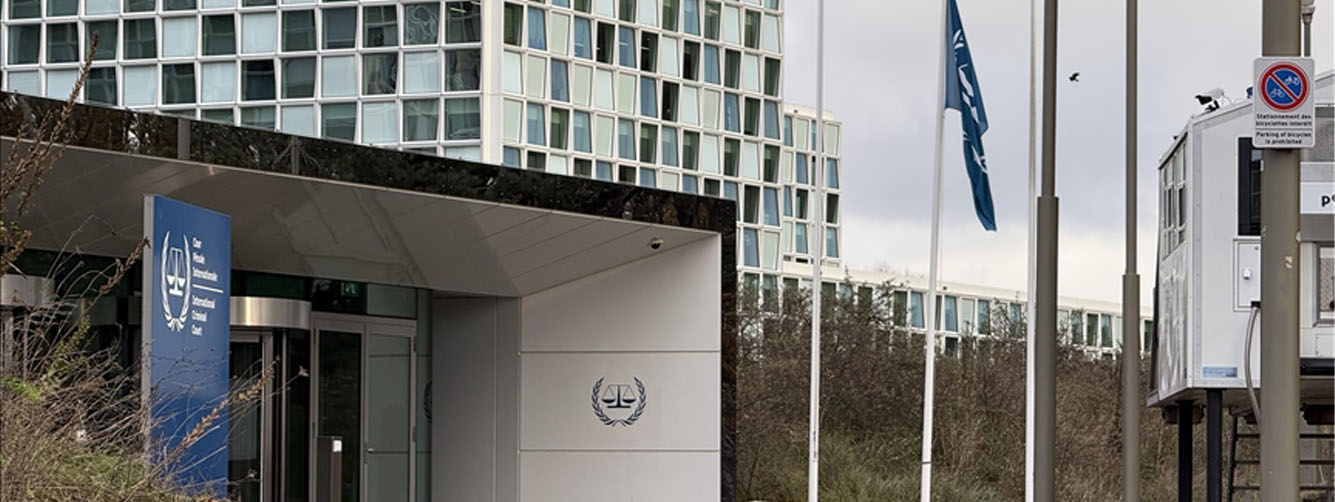
The undersigned Palestinian civil society organizations condemn the resolution passed by the Polish government and signed by Polish Prime Minister Donald Tusk stating that the highest level of the Israeli leadership, including Prime Minister Benjamin Netanyahu, can enter Poland freely. This comes despite the fact that the International Criminal Court (ICC) has issued an arrest warrant for Prime Minister Netanyahu (another arrest warrant has been issued for the former Minister of Defence, Yoav Gallant).
Being a signatory to the Rome Statute, the founding document of the International Criminal Court, Poland is legally obligated to respect and abide by the Court’s decisions, including to carry out the arrest warrants for Israeli officials on charges of war crimes and crimes against humanity. The double standards with respect to the ongoing genocide in Gaza are clear as Poland recently protested Mongolia’s decision not to arrest Russian President Vladimir Putin.
Respect and ensuring respect of international law and treaties is not a matter of political will. Adherence to the Rome Statute concerns fundamental obligations that must be respected by all State parties. Choosing to politicize international courts and cherry-picking which legal obligations to follow renders international law meaningless and poses a serious threat to the international law-based order.
We call on Poland to reverse this decision to fully comply with its obligations under the Rome Statute, implement the arrest warrants issued by the ICC, and abide by the ICJ Advisory Opinion calling on all States to not recognize Israel’s unlawful presence in the occupied Palestinian territory and to not render aid or assistance in maintaining Israel’s illegal occupation, as well as as well as decisions and orders by other international courts and UN resolutions. We further call on the international community as a whole to support the ICC, the ICJ, and uphold the integrity of the international legal system by abiding by their rulings.
Signatories:
- The Palestinian Initiative for the Promotion of Global Dialogue and Democracy - MIFTAH
- Al-Haq
- Addameer Prisoner Support and Human Rights Association
- The Jerusalem Legal Aid and Human Rights Center (JLAC)
- Defence for Children International - Palestine
- Union of Agricultural Work Committees (UAWC)
- Bisan Center for Research and Development
- Palestinian Centre for Human Rights (PCHR)
- Al Mezan Center for Human Rights