
During this reporting period, the Israeli Army has continued to violate International Humanitarian Law and Fundamental Human Rights, by restricting freedom of movement to Palestine Red Crescent Society (PRCS) ambulances and its medical teams. Delays of access and arbitrary searches had a negative impact on the sick in Nablus and Gaza Strip.
|
PRCS Branch |
Date |
Checkpoint |
Delay of access (unless indicated 'denied access') |
|
|
11/12/2004 |
Burin |
120 minutes |
|
|
15/12/2004 |
Al Tuffah |
120 minutes |
|
16/12/2004 |
Al Matahin |
150 minutes |
During this reporting period, a total of 17 deaths and 37 injuries were reported in the West Bank and Gaza Strip.
These practices constitute a breach of the Fourth Geneva Convention and the First Additional Protocol of the Geneva conventions, which are legally applied to the occupied Palestinian territories. In particular, they violate articles 20 of the Fourth Geneva Convention which guarantees the protection and respect of persons who engage in the search for, removal and transport of and caring for wounded and sick civilians, and article 63 which stresses that ” Subject to temporary and exceptional measures imposed for urgent reasons of security by the Occupied Power, recognized National red cross and red crescent societies shall be able to pursue their activities in accordance with Red Cross principles, as defined by the international Red Cross Conferences…”. In addition to articles 12 and 15 of the First Additional Protocol of the Geneva conventions which guarantees that “ Medical units shall be respected and protected at all times and shall not be the object of attack and shall have access to any place where their services are essential” and article 16 which stresses that, “Under no circumstances shall any person be punished for carrying out medical activities compatible with medical ethics, regardless of the person benefiting there from.”, in addition to article 21, which stresses that,” Medical vehicles shall be respected and protected in the same way as mobile medical units under the Conventions and this Protocol.”
Urgent Appeal to stop the ongoing Israeli Genocide and Sexual Violence in Gaza
Date posted: March 26, 2024
By MIFTAH
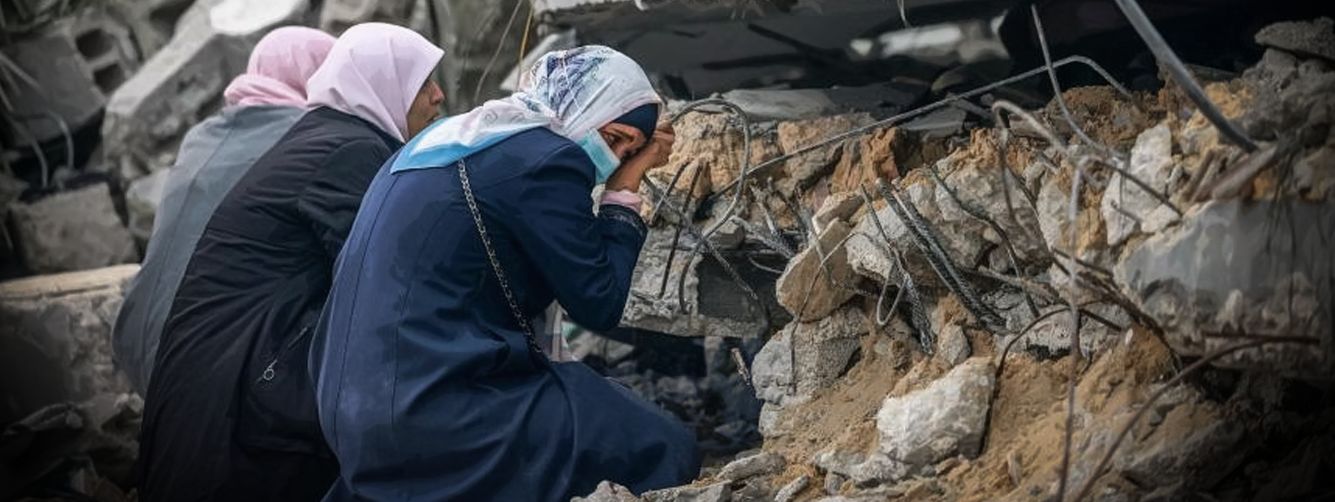
This is an urgent and repeated appeal to the world to immediately intervene, in light of the recent stories of rape and sexual violence against Palestinian women by Israeli occupation forces during Israel’s genocide in Gaza. Palestinian women are being displaced, tortured, killed and forcibly disappeared, while the world sits idle. Silence and inaction in the wake of these horrifying crimes amount to complicity.
Over the past few days, more horrifying testimonies and stories have emerged from Gaza of sadistic acts by Israeli soldiers, including torture, rape, and mass field executions at hospitals where civilians are seeking shelter, medical treatment and refuge.
Palestinian civil society and UN experts have sounded the alarm multiple times and reported cases of rape and sexual violence before and during this genocide. These reports continue to be deliberately and inexcusably ignored, including by prominent and otherwise vocal feminist organizations and figures.
The deafening silence of “Western” feminists and mainstream media in particular is deliberate and inexcusable, as opposed to their earlier outrage over Israeli allegations and misinformation, used to justify this genocide.
Many Palestinian women and girls who are survivors of rape and sexual violence are hesitant to come forward, due to the social stigma in a conservative society and the belief that Israel will not be held accountable for such crimes.
Israel is committing the most horrific war crimes, and weaponizing rape and sexual violence against Palestinians as part of its genocide in Gaza and assault on the Palestinian people as a whole, throughout all of Palestine. This is the result of decades of impunity, preferential treatment and lack of international accountability by the international community. Words are not enough to describe or stop this horror; action is needed.
We conclude this SOS appeal by reminding our sisters and allies around the world that our rights, our dignity, and our humanity are indivisible. Forsaking Palestinian victims now for political convenience would be an unforgivable betrayal to decades of sacrifice and feminist struggle.
We call for:
- The international community must employ all available tools of international accountability, including political and economic sanctions, to bring an immediate and lasting ceasefire and provision of unconditional humanitarian aid.
- States must immediately impose an arms embargo on Israel and honor their moral and legal obligations, including those pronounced in the Genocide Convention.
- States need to investigate and prosecute Israeli soldiers with dual citizenship implicated in these atrocities.
- The Special Representative of the Secretary General on Sexual Violence in Conflict must honor her mandate and launch an immediate investigation into the ongoing atrocities.
- Feminists around the world must sound the alarm globally on the unspeakable human rights violations taking place in Gaza, namely the sexual abuse and rape of Palestinian women and girls.
- Journalists and media outlets must do their due diligence in reporting on these stories through fair and unbiased coverage.
Signatories:
- American Federation of Ramallah Palestine
- Association of women’s Action
- AWMR Italia - Donne della Regione Mediterranea
- Bisan Center for Research and Development
- Community Development and Media Center
- Cultura è libertà una campagna per la Palestina
- Enjaz Foundation for development
- Filastiniyat
- Human Rights and Democracy Media Center SHAMS
- Institute of Women's Studies
- Not to forget women society
- Palestinian Center for Development and Media Freedoms (MADA)
- Palestinian Women's Action committee
- Rete Femminista Marche Molto+di194
- Rural Women Development Society
- Sinal do Vale
- Singola
- Teaching Palestine: Pedagogical Praxis and the Indivisibility of Justice
- The center for defense of liberties and civil rights “Hurryyat”
- The Palestinian Initiative for the Promotion of Global Dialogue and Democracy - MIFTAH
- The Palestinian Working Woman Society for Development-PWWSD
- The Regional Coalition for Women Human Rights Defenders in Southwest Asia and North Africa (WHRDMENA)
- Union of Palestinian Women Committees
- Wattan media network
- Women Media and Development
- Women's International League for Peace and Freedom
- رابطة المرأة العراقية
- شبكة المستقبل الديمقراطية العراقية
Where are the rights of Palestinian Women on International Women’s Day?
Date posted: March 07, 2024
By Palestinian NGO Forum to Combat Violence against Women
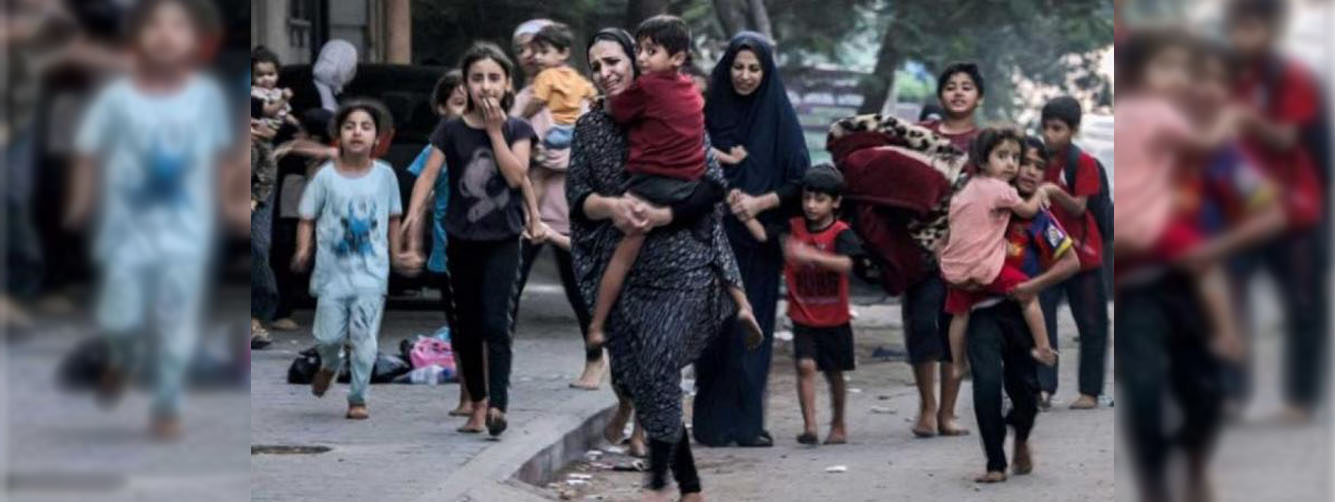
We, at the Palestinian NGO Forum to Combat Violence against Women and all Arab women’s and rights organizations raise our voices loud and clear on the eve of March 8, to say: “Stop the onslaught and crimes against women and children in Gaza. Stop the crime of genocide, the crime of starvation and forced displacement”. So far, this aggression has resulted in the killing of 31,000 Palestinians, over 70% of whom are women and children. Two women are killed every hour , in addition to many others still under the rubble. There are women whose fate is unknown, after being taken away by occupation forces.
Who will restore normalcy for us Palestinian women after these atrocities?
We have always held activities on March 8. We had a long list of rights we demanded and others we were able to achieve. However today, as the women of Gaza are being annihilated, we stand the length and breadth of our homeland and our Arab nations, angry, in a state of revolution and in deep mourning. Our demand today is to halt the genocide in the Gaza Strip and to halt the reproductive genocide against our women. We declare this day the day of Palestinian women, as they stand hungry in long queues, waiting for insufficient aid, terrified of the skies above them, filled with missiles of death. This is for the women whose bodies are exhausted, in camps for the displaced and in shelter centers, for those raped in prison and for their naked bodies stripped at checkpoints. It is for the menstruating women who cannot find sanitary products and for those with high-risk pregnancies who are starving, displaced and bombed. It is for the women whose wombs may be removed for the simplest of medical complications and those whose privacy has been violated because of overcrowded tents and displacement. It is for the mothers who could die at any moment and for all women whose Palestinianism has crucified humanity at the altar, amid deafening Arab silence, boundless American support and the complicity of several European countries.
Nevertheless, we continue to appreciate all forms of Arab and international support and solidarity with the Palestinian cause, which shows respect for our people’s dignity. Widening this solidarity will further reaffirm the justness of our cause. Hence, we await more action and movements in solidarity of our right to demand an immediate end to the genocide in the Gaza Strip, the West Bank and Jerusalem, to forge our way forward towards freedom, self-determination and the establishment of an independent and fully-sovereign Palestinian state.
Today, we Palestinian and Arab women, reaffirm the following on March 8 and every day forward:
- To put pressure on Israel to immediately halt its aggression and to hold its leaders accountable for their crimes in violation of international law, the Fourth Geneva Convention and all international laws and treaties, towards delegitimizing this occupying entity.
- To open the Rafah Crossing and all crossings to allow aid in and the wounded out for treatment
- To dismantle the land corridor linking Israel with some Arab countries supplying it with goods
Long Live Palestinian Women, who stand steadfast and resistant in the face of the Zionist aggression We speak in the voices of Gaza’s women and say:
Halt the genocide…halt the onslaught immediately!
MIFTAH calls for international accountability for heinous Israeli crimes
Date posted: February 22, 2024
By MIFTAH
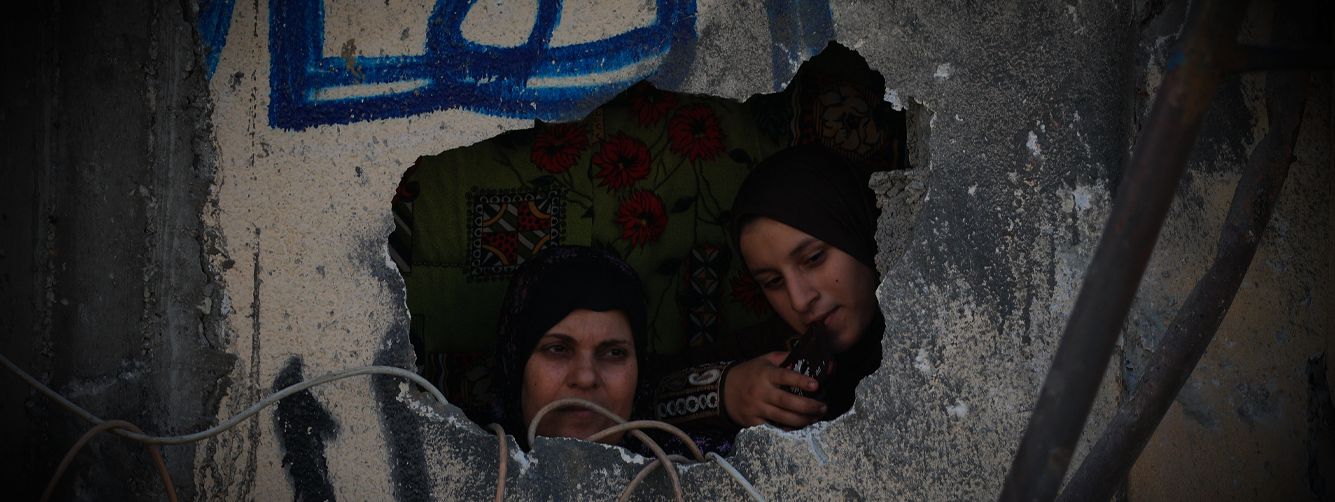
In a recent statement, nearly five months into the Israeli genocide in Gaza, several UN experts confirmed the various reports and testimonies that have been coming from Palestinian women and human rights organizations for months now. In Gaza, women have been kidnapped and forcibly disappeared and placed in dire conditions in undisclosed locations. In the occupied West Bank, released prisoners testified on the horrific realities inside Israeli prisons and the widespread torture and ill-treatment where sexual violence is used as a weapon employed against both women and men. The targeting of women and girls with such atrocious crimes is targeting the most vulnerable, in an attempt to break and degrade the society as a whole.
The inaction and failure of the international community to stop Israeli crimes, namely the ongoing genocide in Gaza, and other heinous crimes all across Palestine for decades now has emboldened Israel to act with impunity. This allows Israel to continue committing horrific crimes against Palestinian women and girls, namely rape and other forms of sexual violence and torture.
The silence of “Western” feminists has also been appalling, given their earlier outrage about unsubstantiated Israeli allegations which were used to justify and commit the ongoing genocide in Gaza.
First and foremost, we demand an immediate ceasefire and the unconditional provision of humanitarian aid. In order to put an end to such heinous crimes and impunity, we reiterate the need for an independent international investigation into all crimes, especially sexual violence, followed by international accountability for the perpetrators.