
If you don't understand the Middle East crisis it might be because you are watching it on TV news. This scores high on images of fighting, violence and drama but is low on explanation.
The Glasgow University Media Group interviewed twelve small audience groups (a total of eighty five people) with a cross-section of ages and backgrounds. They were asked a series of questions about the conflict and what they had understood from TV news. The same questions were then put to 300 young people (aged between 17 and 22) who filled in a questionnaire. We asked what came to their mind when they heard the words 'Israeli/Palestinian conflict' and then what was the source of whatever it was. Most (82%) listed TV news as their source and these replies showed that they had absorbed the 'main' message of the news, of conflict, violence and tragedy, but that many people had little understanding of the reasons for the conflict and its origins. Explanations were rarely given on the news and when they were, journalists often spoke obliquely, almost in a form of short-hand. For example, in a news bulletin which featured the progress of peace talks, a journalist made a series of very brief comments on the issues which underpinned the conflict:
Journalist: The basic raw disagreements remain - the future, for example, of this city Jerusalem, the future of Jewish settlements and the returning refugees. (ITN 18.30 16.10.2001)
Such a statement requires background knowledge to be understood. 'Refugees' are cited as a key issue. Our main audience sample of 300 young people were asked where these Palestinian refugees had come from and how they had become refugees? Just 8% knew that the refugees were displaced from their homes and land when Israel was established in 1948. This was, in the words of the Israeli historian Avi Shlaim, the result of a 'Jewish Military Offensive' designed to 'clear the interior of the future Israeli state' and involved the 'forcible expulsion of Arab civilians' (2000:30). Very few knew of this or that shortly after these events a major war broke out between Israel and its Arab neighbours which occasioned more people to flee. Many of the refugees moved to Gaza (which came under the control of Egypt) and to the West Bank of the Jordan river (under Jordanian control). To understand the journalist statement the viewer would need to know that in 1967 Israel fought a further war with its Arab neighbours and in the process of this, occupied Gaza and the West Bank, thus bringing the Palestinian refugees under its military control. East Jerusalem, which has great religious and cultural significance for both Israelis and Palestinians was also occupied (taken from Jordan). These military occupations were bitterly resisted by the Palestinians, not least because Israel built 'settlements' all across the militarily occupied territories. This was much more than simply building houses and farms. As Avi Shlaim suggests they were part of a policy of exerting strategic and military control, by for example 'surrounding the huge greater Jerusalem area with two concentric circles of settlements with access roads and military positions' (2000: 582). The settlements were also built so that they could exploit the crucial resource of water in the occupied territories. It would not have taken long on the news to say that much of the Palestinian economy depended on water and that each Israeli now consumed three times as much water as a Palastinian. Our interviewees knew very little of such matters.
We analysed TV news coverage of the major 'intifada' (or uprising) by the Palestinians, which began in September 2000. We focused on the lunchtime, early evening and late night news on BBC1 and ITN, since these attract very large audiences. The bulletins from 28th September until 16th October 2000 (total of 89 bulletins) were transcribed and the number of lines of text which were devoted to different themes were counted (e.g. how many described fighting / violence, or peace negotiations or explanations of the conflict etc). Of 3536 lines of text in total, only 17 explained the history of the conflict. The key issue of water was barely mentioned. It was apparent that many people did not understand that the Palestinians were subject to a military occupation and did not know who was 'occupying' the occupied territories. On TV news, journalists sometimes used the word 'occupied' but did not explain that the Israelis were involved in a military occupation. It is perhaps not surprising then that many in the audience did not understand the nature of the 'occupation'. In the sample of 300 young people, 71% did not know that it was the Israelis who were occupying the territories. Only 9% knew that it was the Israelis and that the settlers were Israeli. There were actually more people (11%) who believed that the Palestinians were occupying the territories and that the settlers were Palestinian.
So why does the news not give proper explanations of the history and context of events?
One reason is that the news, exists in a very commercial market concerned with audience ratings. Pictures and action dominate and it is better to have great pictures of being in the middle of a riot with journalists ducking stones than to explain what the conflict is about. There is a second perhaps more crucial reason why the TV newsrooms do not dwell on history and origins of the Israeli/Palestinian conflict. This is that to refer to them as under-lying the violence could be very controversial. Israel is closely allied to the United States and there are very strong pro- Israel lobbies in the US and to some extent in Britain. It is clear that a lack of discussion on the news of the origins of the conflict and the controversial aspects of the occupation would operate in favour of Israel. For example, Israel prefers to stress the attacks and bombings made upon it and the anti-semitism of some Islamic groups, rather than to have the legality of its own actions subject to public debate. The settlement policy is widely regarded as illegal in International Law and this has certainly been the view of the British Government. Some newspaper reports consistently refer to the settlements as 'illegal' but this is not done routinely on television news. Without the discussion of origins and causes, we are left with accounts on the news of day to day events, in which it can appear that the 'normal' world is disrupted only when the Palestinians riot or bomb. This is of course the view of the Israeli government and the news tended to oscillate between this and the view that violence was perpetrated by both sides in a 'cycle' of 'tit for tat' killings. The Palestinians believe that they are resisting an illegal and violent occupation. From the Israeli Government view the Palestinian militants are merely terrorists to whom they are 'responding'. There were many examples of the Israeli viewpoint being actively adopted by journalists and built into the structure of coverage. Palestinian bombings were frequently presented as 'starting' a sequence of events which involved an Israeli 'response', as in:
"Dozens of Palestinians and Israelis have been killed in a relentless round of suicide bombings and Israeli counter-attacks." (BBC2 Newsnight 22:30 13/12/01)
On Radio 4 it was reported that "Five Palestinians have been killed when the Israeli army launched new attacks on the Gaza Strip in retaliation for recent acts of terrorism." (07:30 06/03/02)
In another extraordinary exchange on BBC Radio 4, David Wiltshire MP, was asked "What can the Egyptians do to stop the suicide bombers - because that in the end is what is cranking up the violence at present?" He replies, "Well that is one view, the Israeli view?" (17:00 01/04/02)
On Channel Four News a journalist reports that: "the Israelis had carried out this demolition in retaliation for the murder of four soldiers." (10/01/02)
The extent to which some journalism simply assumes the Israeli perspective can be seen if the statements are 'reversed ' and presented as Palestinian actions. The group did not find any reports stating that 'The Palestinian attacks were in retaliation for the murder of those resisting the illegal Israeli occupation.' The incursions by Israeli forces into Palestinian towns in April 02, occasioned heavy loss of life and much International criticism. On BBC Radio 4 news they were described using the phrase 'there is a determination to carry on until the job is done' (9/4/02). Would Palestinian attacks be described in this fashion? A news journalism which seeks nuetrality should not endorse any point of view, but there were many departures from this principle.
The analysis found other differences in the manner in which Palestinians and Israelis were described in news reporting. Words such as 'murder', 'atrocity', 'lynching' and 'savage cold-blooded killing' were only used to describe Israeli deaths but not those of Palestinians. Terrible fates befell both Israelis and Palestinians but there was a clear difference in the language used to describe them. This was so even when the events being described had strong similarities. For example, on 10th of October 2000 it was reported that Arab residents of Tel Aviv had been chased and stabbed. This was described on ITN as "angry Jews looking for Arab victims" (ITN 18.30 10.10.2000) In the Guardian (10.10.2000), these events were described as a pogrom. The reports on television news were extremely brief but two days later when two Israeli soldiers were killed by a crowd of Palestinians there was very extensive coverage and the words "lynching" and "lynch mob" were very widely used. This difference in the use of language is note-worthy. This is especially so since in this period, at the beginning of the intifada, nearly ten times as many Palestinians had in fact been killed as Israelis. The news, on the occasions when it did give figures, stated that more Palestinians had died than Israelis, but only 30% of our sample of 300 young people believed this to be so. The same number believed either that the Israelis had the most casualties or that casualties were equal for both sides.
There were a number of other imbalances in the way in which the two sides were reported. Israelis spoke twice as much on television news as Palestinians and there were three times as many headlines that expressed the Israeli view as that of the Palestinians. The TV news did feature some criticism of Israel particularly for using 'excessive force', but it was clear from our work that such criticism was sometimes muted e.g. a lethal attack by a helicopter gun ship was described using the phrase 'Israel wielded a big stick' (BBC1 1800 4/10/00). More severe criticism emerged from Israel itself, when Shimon Perez, the Israeli Foreign Minister was reported in October 2001 as trying to 'reign in' the Israeli Army which was accused of deliberately seeking to wreck a ceasefire by opening fire on protesters.
The notion that there are powerful forces within Israel who do not wish there to be any peace settlement was rarely explored on television news. This seems also to have forgotten how the present intifada began when Ariel Sharon walked through the most holy Muslim sights, producing wide spread protests. On the first day four Palestinians were reported as shot dead and 150 wounded.
In our research in October 2000, we found that some television news did report that Israeli soldiers were 'showing absolutely no restraint, firing live ammunition into crowds from twenty metres' (ITN 18.00 22.10.2000). But it was not suggested at this time that the actions of the army might be linked to a political agenda (i.e. to stop the peace process). In contrast the view put forward by the Israeli Government at the time that Yasser Arafat was encouraging violence for political ends - was widely reported and discussed on TV news.
The lack of explanation on the news about the origins of the conflict plus the differences in the manner in which both 'sides' were presented had measurable effects on some public understanding. As one eighteen year old in a focus group commented:
"You always think of the Palestinians as being really aggressive because of the stories you hear on the news. I always put the blame on them in my own head." (25/05/01)
Protection of Women from Violence in Times of Armed Conflict: Palestinian Women as a Case Study
Date posted: August 18, 2020
By Tamara Tamimi
Abstract
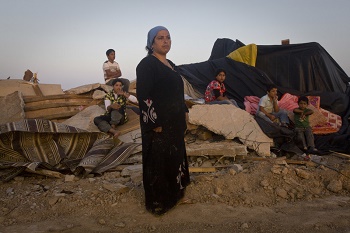
Violence against women in Palestine at the hands of Israeli occupation forces and settlers is part and parcel of the wider framework of violence against the Palestinian people. Violence by occupation forces takes many different forms, some are evident and clear such as targeted killing and injury, as well as imprisonment. Other forms of violence are less pronounced but equally important as they pertain to the forcible displacement of Palestinians; these include house demolitions, house evictions, revocation of residency, land and property confiscation and imposition of restrictions on the registration of newborns.
While this violence is targeted against the entirety of the Palestinian people, including women, children and the elderly, it has a disproportionate impact on women due to reinforcement of patriarchy, traditional gender roles and stereotypes, as well as the reproduction of the cycle of violence by the stronger social group against the weaker social group, and signifying diminishing acceptance and tolerance to diversity and difference.
Violence against the Palestinian people as a whole has persisted for over fifty years despite the multitude of instruments and mechanisms to protect from violence in times of armed conflict. This includes instruments within the framework of international humanitarian law, international human rights law and international criminal law, as well as the women, peace and security agenda. Notwithstanding the multitude of instruments and mechanisms, their effectiveness remains constricted by a large number of factors including the absence of enforcement mechanisms due to the alleged primacy of state sovereignty, provided that this does not contravene the economic and geopolitical interests of a few select states. Another important factor is that these instruments are not designed to appreciate the impact of protracted occupation, and are instead tailored to armed conflicts that do not give rise to protracted military occupation and that are time-bound even if they persist for a long period of time, such as the wars in Yugoslavia and Rwanda. This paper seeks to highlight forms of Israeli violence against the Palestinian people, describe their disproportionate impact on women, analyse why violence persists against women in times of armed conflict, and identify stakeholders and recommendations to increase protection of women from violence in times of armed conflict.
Israeli violations during the Coronavirus pandemic
Date posted: April 18, 2020
By MIFTAH
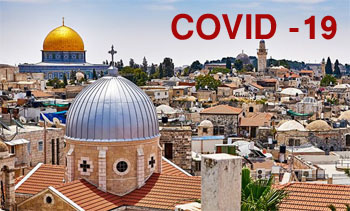
The following report illustrates Israeli violations during the Coronavirus pandemic sweeping the world. Since the beginning of the pandemic, Israeli occupation forces continued their violations against the Palestinian people in every part of Palestine and in Jerusalem in particular. They did not halt raids into cities, villages and camps, conducting arrests, confiscating land, closing institutions and targeting official Palestinian figures.
It is clear that the violations Israel perpetrated in Jerusalem stem from a permanent and systematic policy based on two focal points:
First: resistance and rejection of any show of Palestinian national sovereignty in occupied Jerusalem through every means possible, under the pretext of ”breaching Israeli sovereignty”. Israeli authorities also accuse Palestinians of violating the so-called “interim agreement” in reference to the Oslo Accords, which prohibits the PA from holding any activity in the city without an Israeli permit.
Second: the Israelization and Judaization of every aspect of life in Jerusalem through disrupting the demographic balance in order to impose a new reality on the ground.
Throughout the Coronavirus pandemic, Israel escalated these policies and the following measures taken against Jerusalemites.
Arrests:
During this period, arrests were focused on curtailing any efforts in Jerusalem aimed at protecting Palestinian residents from the dangers of the epidemic. Israel considers such efforts a violation of Israeli law, which culminated in the arrest of over 20 activists from various parts of Jerusalem. Some were put under house arrest and prohibited from contacting Palestinian officials in the city. Arrests included Palestinian Minister of Jerusalem Affairs, Fadi Hidmi and Jerusalem Governor Adnan Ghaith. These are two of the most prominent national Palestinian symbols in Jerusalem, which prompted Israel to use an iron fist with them, humiliating and mistreating them during their arrest. Hidmi, for example mistreated during his arrest and later said he had been violently assaulted at the detention facility. The two officials were arrested on charges of being responsible for aid distribution to needy Jerusalemite families.
According to the Wadi Helwa Information Center, throughout March until the date of this report (April 9) a total of 193 arrests were made by Israeli authorities, including four women and 33 minors. A total of 73 arrests were made in the Old City and inside and around the Aqsa Mosque Compound; 57 Palestinians were arrested in Essawiyeh, 35 in Silwan and several others in various parts of the city.
Furthermore, Israeli intelligence services summoned Jerusalem governor Adnan Ghaith, Aqsa Mosque Director Sheikh Omar Kiswani and Deputy Director Sheikh Najeh Bkeirat for questioning. They also summoned and arrested several Fatah members under the pretext of ”violating Israeli sovereignty in Jerusalem” and arrested three Jerusalemite activists at the Allenby Bridge en route to Jordan.
Attorney Mohammed Mahmoud, who is handling the detentions in Israeli courts, says there has been a noticeable escalation in Israeli measures against youth in Jerusalem during the pandemic. “Several preventative measures have been taken in courts since mid-March against the virus. Courts are conducted via Skype where the prisoner is connected by a phone and monitor in a special room in the prisons. There are some prisons that do not have television monitors and the sessions are conducted only by phone. This makes communication difficult between the prisoner and defense team. It is hard to fully explain what is going on in the session to the prisoner. These sessions also lack the confidentiality and immunity between lawyer and client. However, the lawyers try as much as possible to clarify certain rights and points to the prisoner. What more, the glass partition in front of the judge is another impediment in terms of hearing what he is saying,” Mahmoud said.
He also mentioned how difficult these procedures were for the families waiting outside the courtroom since only one person is allowed in and the families are barred from speaking to their imprisoned children. He accused Israeli authorities of taking advantage of the Coronavirus crisis and their preventative measures to further oppress Palestinians, maintaining that several cases of abuse and arrest were recorded for supposedly violating these measures. A number of fines were also imposed, ranging from NIS500-NIS5000.
Confiscation of food packages and relief assistance:
Another aspect of Israel’s policy against Palestinians is focusing on measures against them instead of measures to combat the virus. Israeli authorities have actively pursued Palestinians, including volunteers and institutions which provide relief aid and food packages to poor families. They assaulted many of the volunteers, arrested them and confiscated the aid. In Sur Baher at the end of March, Israeli soldiers assaulted six volunteers, beating them and throwing teargas at them before confiscating a truckload of relief and food assistance.
Prior to this, Israeli forces arrested three teams disinfecting Silwan, Suwwana and the Old City and confiscated the cleaning products being used to disinfect public and vital facilities in these areas. They also arrested four others for distributing and hanging up posters to raise awareness about the coronavirus, barring them entry into the Old City.
Violation and desecration of places of worship This was apparent from the closure of the Aqsa Mosque Compound and barring entry to Muslim worshippers, including its guards and caretakers. At the same time, it assumed a much more relaxed policy with Jews in synagogues. They were able to move freely in their places of residence contrary to the policy imposed against Jerusalemites whose movement was much more limited. What’s more, Palestinians were heavily fined, ranging from NIS500 to NIS5000.
By targeting the Aqsa Mosque, Islamic Waqf officials say Israeli occupation authorities are attempting to interfere and impose Israeli sovereignty under the pretext of preventing the spread of the virus. In this regard, Israeli authorities closed the doors to Al Aqsa with the exception of “Hutta” and “Chain” Gates and kept “Dung Gate” open, the keys to which Israel has held since its occupation of Jerusalem in 1967, and which allows in settlers to the compound.
On March 20, Israeli authorities closed the gates to Al Aqsa and prevented anyone from entering both the mosque and the Old City just before Friday prayers. They claimed this was a preventative measure against the coronavirus. That day, according to Waqf estimates, only 500 Muslim worshippers prayed at the mosque even though Waqf authorities had taken the necessary measures and precautions against the epidemic. They had fully sanitized and disinfected the grounds and mosques and distributed instructions to worshippers before Friday. In addition, there were employees sanitizing worshippers’ hands inside the compound.
Meanwhile, Israeli occupation forces cracked down on worshippers who tried to pray in the streets and allies of the Old City, firing stun grenades, striking them with nightsticks and pushing them away from the Aqsa gates. Similar incidents occurred in other areas of the city, especially Wadi Joz, Musrara, Ras Al Amoud/Silwan and outside of Dung Gate.
Israeli police also issued penalties to worshippers for praying outside of the Aqsa’s gates and to youths as they walked in the city on claims they ”were not abiding by preventative measures.”
Israeli authorities took their policies up a notch when they raided the home of President of the Islamic Waqf Council, Sheikh Abdel Atheem Salham and issued him a penalty of NIS5000 on claims he ”did not abide by police orders and allowed more than the permitted number of people to enter the Aqsa grounds.” They also summoned Aqsa Mosque Director Sheikh Omar Kiswani and Aqsa Mosque Imam Amer Abdeen for questioning.
Furthermore, Israeli forces stormed the Bab Al Rahmeh prayer site and threatened to impose fines on the worshippers for ”not adhering to health ministry instructions”, also threatening worshippers that they would be fined if they gathered in the Aqsa courtyard for prayer.
Israeli authorities continued to issue orders banning Palestinians from entering the Old City and the Aqsa Mosque Compound. Eight Palestinian youths were banned from the Aqsa and seven from the Old City and travel ban orders were issued against four other Jerusalemites.
In order to avoid any further interference into Aqsa affairs by Israeli authorities, the Islamic Waqf , which is the caretaker of the Aqsa Mosque, closed the compound until further notice as a protective measure against the novel coronavirus. The same was applied to the Church of the Holy Sepulcher with only members of the clergy allowed entry.
Isolating the Old City:
Under the pretext of responding to the coronavirus pandemic, Israeli occupation authorities isolated the Old City from its surroundings. Approximately 40,000 Jerusalemites live in the Old City of Jerusalem and were suddenly cut off from the rest of East Jerusalem, whose Palestinian population is around 360,000. Only those who live within the Old City walls were allowed entrance while Jewish settlers living in settlement enclaves inside or outside it were allowed to enter and exit freely. This policy of isolation led to huge losses for shops owned by Jerusalemites many of whom could not reach their stores.
Figures provided by the Jerusalem Center for Social and Economic Rights and the Jerusalem Merchants Committee indicate that this constrictive Israeli policy, which has been implemented for the past three years, has led to the closure of an increasing number of shops in the Old City. Today around 300 shops are shuttered, a number which is likely to grow with this recent isolation.
Expansion and acceleration of settlements
It is clear that Israeli authorities have been exploiting this pandemic to continue settlement projects in Jerusalem and in the rest of the occupied Palestinian territories. This includes approval for the construction of tens of thousands of housing units in the settlement of “Atarot, north of Jerusalem, approval to start construction in the “E1” settlement project in Tur, Zaayem, Essawiyeh and Ezzariyeh where over 10,000 housing units will be built, approval for the construction of hundreds of thousands of settlement units in “Givat Hamatos” south of Jerusalem and the establishment of a new settlement neighborhood in Beit Hanina. Plans have also been put in place to build a wall separating the village of Sheikh Saad from Jabal Mukkaber. Meanwhile, Israeli authorities are floating a plan to push Shufat camp and Kufr Aqab out of Jerusalem’s municipal borders as a means of dealing with the concerning ”demographic problem” in the city.
Impeding the work of health centers
While Israel rushed to stymie coronavirus outbreaks in its own residential and settlement centers in Jerusalem, it assumed a policy of discrimination when it came to Palestinian Jerusalemites. Israeli forces purposely delayed the opening of Covid-19 testing centers in Palestinian areas. Furthermore, the majority of Jerusalemites do not speak Hebrew, the language spoken in the various Israeli health insurance funds, not to mention that over 40,000 Jerusalemites do not have access to Israeli health care services under the pretext that they live outside of the unilaterally-designated Jerusalem municipal borders.
This policy came in tandem with the crisis already felt by the Palestinian health sector in Jerusalem, reflected in the lack of necessary equipment and medical supplies in the six East Jerusalem hospitals, making them incapable of accommodating dozens of potential Covid-19 patients. The current patients have been distributed in nearby hotels for monitoring while hospitals only have 60 beds available, not to mention the lack in medicines and medical staff they suffer from.
Discriminatory measures against the prisoner movement The medical negligence towards Palestinian prisoners during the pandemic is evident by how prison services failed to take the necessary precautionary measures in response to the coronavirus. What’s more, they continued to prohibit anyone from being informed about the conditions of quarantined prisoners in the Megiddo Prison. Israeli prisoner services also banned the entry of over 140 products from the prison commissary, including basic food products such as meat, vegetables, fruit and spices. Cleaning products and disinfectants necessary for prisoners to protect themselves from Covid-19 infection were also banned.
Mistreatment of Palestinian laborers
There have been several testimonies about Israel’s mistreatment of Palestinian workers inside the Green Line, including returning workers to the Palestinian territories after suspecting they contracted Covid-19. Last month, Israeli soldiers dumped a Palestinian laborer showing symptoms of Covid-19 at the Beit Sira checkpoint without providing him with any treatment. This behavior was repeated at the Hizma military checkpoint, north of Jerusalem. Laborers are returned to the Palestinian territories on an almost daily basis without being tested, which has resulted in the spread of the virus in Palestine. At the same time, Israel unofficially opened its crossings to workers as a way to circumvent Palestinian preventative measures. They offered laborers incentives such as higher daily wages, thus exploiting their difficult living conditions and avoiding any legal obligations towards them.
Uprooting residents from their land and homes
At the height of the Coronavirus crisis, the Israeli ”civil administration” continued with its policy of confiscating Palestinian land, homes and tents. Some of these facilities were being used as emergency clinics to meet the needs of locals. On March 26, Israeli occupation forces raided Khirbet Ibzeiq in the northern Jordan Valley, confiscating steel rods and canopies designed for setting up eight tents, two equipped as clinics and four as emergency shelters for residents who were forced out of their homes. Two other tents were to be used as a mosque. Israeli forces also confiscated a corrugated-iron trailer that had been in the area for over two years, an electric generator, sand and cement bags and four loads of brick to lay the ground inside the tents.
In Ein Diyouk, west of Jericho, Israeli forces demolished three buildings which Jerusalemite farmers use as seasonal residences.
In Hebron, Israeli forces tore down a wall separating Wadi Haseen from Wadi Nasara in preparation for closing the entire area and in Deir Ballout in the Salfeet area, they demolished a farm room and water well.
It should be noted that in contrast to its measures taken in the occupied Palestinian territories, the Israeli government suspended all demolitions inside Israel during the state of emergency.
To View the Full Report as PDF