

Since September 2004, MIFTAH and KESHEV (The Centre for the Protection of Democracy in Israel) have been engaged in a unique and original project, which aims to improve media discourse in both Palestinian and Israeli media through monitoring, research, advocacy and lobbying activities. This project hopes to facilitate the development of an independent media and a culture of moderation, tolerance, and understanding between the two peoples, and implementation of the anti-incitement provisions in the Road Map, as well as previous agreements between Israelis and Palestinians, all of which will assist in the re-launching of a genuine peace process.
The Three Newspapers’ Coverage of the Executions Carried Out in Gaza
Date posted: July 22, 2010
By MIFTAH's Media Monitoring Unit
On April 15, 2010, the interior ministry of the deposed government in Gaza carried out the first executions issued by the higher military court in the Strip against two people charged with collaboration with the Israeli occupation. Another execution was carried out on the 18th of May against three men convicted of murder.
The executions, which took place without ratification by Palestinian President Mahmoud Abbas, generated varying reactions from Palestinian factions, especially Fateh and also from human rights organizations working in Gaza.
These two incidents received varying coverage in the three newspapers. The editorial lines were clear for each newspaper towards internal events linked in one way or the other to the internal political split and the ramifications of this split on the local media.
In its coverage of the first execution, Al Ayyam gave it the lead headline (three lines) in its April 16, 2010 edition, appearing as the following:
To View the Full Report as PDF (4.5 MB)
The Life Line Convoy [Viva Palestina] and Clashes at the Palestinian-Egyptian Border
Date posted: May 15, 2010
By MIFTAH's Media Monitoring Unit
Introduction
In January, 2010, on the eve of the Viva Palestina Life Line convoy's arrival, which was carrying humanitarian aid to the Gaza Strip from 17 countries, the Palestinian-Egyptian border became the scene of clashes and confrontations between the Egyptian security forces and Palestinian protestors. The Palestinians were protesting the ban on the convoy entering the Strip, which at the time resulted in the death of one Egyptian soldier and the injury of dozens of protesters. The two sides exchanged accusations over responsibility for the death of the Egyptian soldier and the ensuing clashes and injuries on the Palestinian side. At the time and until today, it has remained unclear which side was responsible for the unrest and the ensuing repercussions, especially the soldier's death. This event was chosen for its significance and its impact on the Palestinian arena including its ramifications regarding the Palestinian-Israeli conflict, especially the Israeli siege on the Gaza Strip.
How did the three Palestinian papers cover this event?
There was a clear discrepancy between the three newspapers in their coverage of this event, whether in terms of where on the front page of each newspaper the news item about the event was placed and the choice of headline. There were also differences in the content and accuracy of the news material. The largest discrepancy was between Al Ayyam on the one hand and Al Hayat Al Jadida and Al Quds on the other.
In Al Ayyam, for example, the news item was the lead headline, placed on the right hand side of the front page, since it was the most significant event of the day. Its headline was comprised of three lines:
To View the Full Report as PDF (5.4 MB)
Reading Between the Lines - A Palestinian-Israeli Guide to Critical Media Consumption
Date posted: December 20, 2009
By MIFTAH's Media Monitoring Unit
Introduction
Nations embroiled in nationalist conflicts tend to adopt narratives that support the righteousness of their struggle and which accentuate the negative traits and intentions of the other side, as well as its responsibility for the ongoing suffering and for the absence of a solution. This is how the Palestinian-Israeli conflict is covered by media outlets on both sides, often in mirror images, with each side presenting an opposite story. For example, the Palestinian media narrative emphasizes the occupation—whose victims are the Palestinians—and paints the government of Israel as aggressive, opposed to peace and responsible for violent events in the region. On the other side, Israeli media outlets emphasize the violent and terrorist foundations of the Palestinians’ conduct and their unwillingness or inability to reach a solution. The Israelis, in this telling, are the victims of a conflict in which they are not to blame. Beyond these different perceptions and interpretations of reality, essentially similar patterns of coverage can be found on both sides, which de-legitimize and dehumanize the other. These patterns of coverage heighten mutual suspicions in both nations, fan the flames of the conflict and make it harder to find a solution.
Recognition of the media’s profound influence on the conflict has led the Israeli organization Keshev and the Palestinian organization MIFTAH to work together from both sides of the conflict in order to try to change how the conflict is depicted in the media discourse in both nations. This is done in the hope that such cooperation may lead to more balanced, fair and comprehensive coverage and, perhaps, as a result, a better reality.
This practical guide to teaching critical reading of news materials arises from a unique cooperative project that has been carried out continuously since 2004. In this joint project Keshev and MIFTAH each analyze news coverage in the major media outlets on their “own side” and attempt to influence journalists and editors to change patterns of coverage that are problematic and biased.
Two parallel goals have guided the creation of this guide. First, it is designed to instill skills for critical reading, in general. A second goal is to promote critical media consumption in the specific context of the Israeli-Arab conflict. As mentioned above, over the years media on both sides have played a complicated and not always positive role in the conflict’s development. The media has had a central role in defining the conflict and its significance for the Israeli and Palestinian public. Critically reading the messages contained in news coverage can neutralize to some extent the media's ability to shape consumers' perspectives according to short-term media interests and can also neutralize the influence of those elements that exert pressure on the media. It is our hope that this guide will enable media professionals to develop new means of self-criticism that will allow them, in time, to create news coverage that does not perpetuate the conflict, but which might actually contribute to its resolution.
The methodology1 that underlies this guide makes it possible to clearly present the systematic failings in news coverage on both sides. It is based on a distinction between two principal stages in the news-making process – writing and editing.
At the first stage reporters and columnists compose their texts and send them to their news editors. The editors receive other texts as well, from press agencies, public relations firms, and so on.
At the second stage, the editors produce the final product: They determine which texts will appear in the newspaper or broadcast. The editors determine the placement of the text (on the front page or on page 17, at the beginning of the broadcast or after a commercial break); they select the photographs that go with each item; they design the layout of the pages and determine the sequence of items in the broadcast; and they compose headlines (including sub-headlines and photo captions in newspapers, the headlines of television news broadcasts and the words spoken by the anchor).
In the view of most news producers and news consumers the second stage, the editing stage, is mainly technical. According to popular perceptions, the truly important work is done in gathering and writing news material. Editors merely "prepare" this material for print or broadcast. This perception is wrong, for two complementary reasons: First, editorial work determines news messages no less than the work of the reporters, and in some ways even more so. Second, in reading the news media consumers rely on material produced by editors much more than on material produced by reporters. The fact that an article appears on the front page and not on page 17; the specific phrasing of a particular headline; the appearance of a photo beside an article; the words spoken by a news anchor before an item is broadcast – all of these factors have a decisive influence on consumers' understanding of the news. Furthermore, many studies show that media consumers often limit themselves to reading headlines (or viewing the headlines of a news broadcast) and in many cases they do not even get to the texts of the news items (or the rest of the broadcast edition). In such cases, the perception of the news is determined almost exclusively by the work of the editors. This fact has far-reaching significance, since a meticulous review of news material at both stages of the process, writing and editing, reveals that the materials produced at each stage are not parallel. The headlines of newspapers and news broadcasts are not merely short neutral summaries of the news. In most cases, the headlines tell a very different story than that which is told by the reporters. Along with the placement of an item, its graphic saliency, the accompanying visuals, and so on, the headlines tell a story of their own and this significantly influences news consumers.
To be clear – the problem is not limited to the fact that once in a while the results of editorial work do not reflect the contents of the articles themselves. The point is that the discrepancies between headlines and texts are systematic. A meticulous review of newspapers and television news broadcasts reveals that certain components of reality, which appear in the articles themselves, are systematically marginalized by editors, while others are systematically highlighted.
The techniques that appear in this guide reveal these systematic discrepancies through attention to a series of key criteria.
Further in this guide each criterion will be explained through the use of examples culled from actual media coverage in Israel and in the Palestinian Authority. It is important to note that becoming familiar with these criteria is just a first step toward learning to read media items more critically. The research method employed here is based on attention to a combination of criteria in ways that reveal recurring editing patterns that bias the coverage.
This guide aims to help users identify the tell-tale signs of these patterns, to understand their significance and to learn from them how to read the news in a more profound way; in other words, how to "read between the lines".
To View the Full Text as PDF (4.11 MB)
Israeli Prime Minister Benjamin Netanyahu's Speech at Bar Ilan University
Date posted: July 15, 2009
By MIFTAH's Media Monitoring Unit
Introduction:
The speech delivered by Israeli Prime Minister Benjamin Netanyahu on Sunday, June 14 at Bar Ilan University's Begin–Sadat Center in Tel Aviv, came in the context of his attempt to respond and deal with a new political situation created by the new US administration and the EU. This new policy is aimed at aborting previous double-standard approaches for dealing with certain aspects of the Palestinian-Israeli conflict. On the one hand, the US Administration has always demanded that Palestinians fully commit to the Road Map and its conditions, while it did not request the same level of commitment from Israel. It left Israel to behave according to its own convictions regarding settlements, borders, the wall and checkpoints. This has helped to justify the subjugation of Palestinians through imposing new realities in their daily life. From the US administration's first day in office, the differences in policy from George Bush's Republican administration were apparent. Statements from the new US officials began to address the danger of continuing with settlements in the Palestinian territories, mentioning Palestinians' right to self-determination and the establishment of a Palestinian state. This change in American policy reached its climax during the speech delivered by US President Barak Obama entitled ''A New Beginning'' for reconciliation with the Arab and Muslim world at Cairo University in Egypt on June 4. President Obama publicly made defined and clear demands for halting settlements and recognizing the two-state solution, demands which mean a compliance with the Road Map.
Prime Minister Netanyahu's speech was more of an attempt at deceit and maneuvering. It was a desperate endeavor to please the US administration and the international community on the one hand and an attempt to preserve his narrow right-wing government, on the other. This was very clear by Netanyahu's many difficult if not impossible conditions which he set as prerequisites for his consent to the idea of establishing a Palestinian state. These conditions will effectively kill any prospect for negotiations on several issues. For example, demanding that the Palestinians recognize the Jewish identity of the state of Israel, the declaration that Jerusalem would remain the unified capital of Israel, the demilitarization of the future Palestinian state and monitoring of its borders, in addition to his total rejection of the right of return, leaves nothing left to negotiate over between the two parties.
Palestinian papers' coverage of Prime Minister Benjamin Netanyahu's speech
The three Palestinian papers gave a lot of space on their front pages to Netanyahu's speech as main news items, in addition to local and international reactions to the speech which, as we mentioned before, was full of political pitfalls. The three papers also allocated their regular columns and cartoons to commenting on the speech. As expected, the three papers focused on four issues raised by Netanyahu. From a Palestinian perspective, these issues are the most difficult and dangerous, which are the recognition of Israel as a Jewish state, rejection of a settlement freeze, Jerusalem as the unified capital of Israel and rejection of the refugee right of return.
To View the Full Report as PDF (3.29 MB)
The First Day Between 'Cast Lead' and 'Oil Spot'
Date posted: January 21, 2009
By MIFTAH's Media Monitoring Unit
Introduction:
The truce between Hamas and Israel was given broad coverage in the Palestinian media. It lasted for six months starting from June 19, 2008 until December 19, 2009 and included many violations and accusations on who was trying to break it. By the end of the truce, the countdown had begun for the Israeli operation, which many analysts noted was in its advanced stages and had reached the point of no return. Eventually, it took place on December 27, 2008 when Israeli war planes began bombing the Gaza Strip in what was later considered the harshest Israeli aggression against the Palestinian people since the Nakba (Catastrophe). The Israeli government dubbed the operation “Cast Lead” while Palestinian resistance factions coined the term “Oil Spot” for their campaign of rockets launching from Gaza.
The three Palestinian papers dedicated their entire front pages to the Gaza incident. All the news on these pages was related to the Israeli bombing of Gaza, in addition to statements and efforts by Palestinian leaders including President Mahmoud Abbas and the government to halt the Israeli aggression. Furthermore, the statements made by Hamas leaders inside and abroad and by the deposed government, appeared on the inside pages. Devoting the entire front page to news and special reports about what was taking place in Gaza was a sound option in that it reflected the gravity of the situation and the magnitude of the disaster in the Strip.
To view the Full Report as PDF (5 MB)
Annapolis: The Coverage of the Three Palestinian Newspapers and Palestine Television of the Conference
Date posted: September 01, 2008
By MIFTAH's Media Monitoring Unit
Introduction
The peace conference held on 27 November 2007 in Annapolis, U.S.A., received special coverage by the three Palestinian daily newspapers: Al-Quds, Al-Ayyam and Al-Hayat Al-Jadidah as well as the Palestinian Television (PBC). The coverage was comprehensive, diversified in terms of sources, and included news follow-up and analyses, in addition to the preceding preparations and political action.
This report monitors the coverage of the Conference in the three newspapers and PBC during the period 12 November-12 December 2007. The report consists of monitoring the means by which the Palestinian media addressed the statements of proponents and opponents, the positions of different parties, the nature and scale of coverage of the Conference itself and the field and political developments that accompanied and followed the Conference in news reports, cartoons, opinion columns and in monitoring the opinions of Israeli columnists.
To View the Full Report as PDF (240 KB)
The 'Bulldozer Operation' in Jerusalem: A Balanced Media Coverage
Date posted: August 30, 2008
By MIFTAH's Media Monitoring Unit
The Bulldozer Operation a young Palestinian from Sour Baher/south Jerusalem implemented on 2 July 2008 in West Jerusalem received special coverage in the three Palestinian newspapers Al-Quds, Al-Ayyam and Al-Hayat Al-Jadidah, as well as in Palestine Television (PBC).
The operation killed three Israelis in addition to the implementer, Husam Tayseer Dwayyat, injured tens, and triggered wide Israeli reactions because of its nature and means.
First: The three newspapers
News of the operation occupied the headlines of the three newspapers, unanimously describing it as an "attack" and describing the victims as "killed," including the implementer, without mentioning his motives that remained unknown even to Israeli security services, unlike other attacks for which a certain party usually assumes responsibility.
The three headlines were balanced, neutral and not instigating, as they were based on international news agencies. The three headlines were close, as Al-Ayyam had the following headline on its front page:
To View the Full Report as PDF (113 KB)
Palestine Investment Conference
Date posted: August 01, 2008
By MIFTAH's Media Monitoring Unit
Unprecedented Media Coverage
The three Palestinian newspapers Al-Quds, Al-Ayyam and Al-Hayat AL-Jadidah thoroughly followed up the Palestine Investment Conference (PIC) held in Bethlehem, West Bank May on 21-23, 2008, with Arab and international participation.
The preparations and activities that preceded convening the Palestine Investment Conference (PIC) received special and wide coverage on all pages, focusing particularly on its economic benefits and on the signed cooperation and partnership agreements, especially in the financial and real estate sectors.
This report monitors the main political and economic headlines about the conference during the period in which it was held, and how each newspaper addressed PIC activities and outcome, both through the reports of its local correspondents and international news agencies, such as Reuters, Agence France Presse (AFP) and the German Press Agency (DPA).
To View the Full Report as PDF (1.25 MB)
“Dimona Operation: The Coverage of the Three Newspapers and Palestine Satellite Television”
Date posted: May 13, 2008
By MIFTAH's Media Monitoring Unit
Introduction
On 4 February 2008, a Palestinian blew himself up at a commercial center in Dimona, a town in south Israel, killing himself and an Israeli woman, and wounding several others. The Israeli security shot another Palestinian to death in the same town, who according to Israeli Police, was wearing an explosive belt that he intended to detonate after the security and paramedics gathered to rescue the casualties of the first explosion.
Israeli television channels broadcast footage of the wounded Palestinian before the security shot him to death, as he was trying to detonate the explosive belt, Israelis said.
This event was covered in the Palestinian media, particularly in the three newspapers: Al-Quds, Al-Hayat Al-Jadidah and Al-Ayyam, as well as in the Palestinian Television (PBC), in varying magnitude, style and location of the news item among news coverage of the Palestinian-Israeli conflict and local developments.
The confused description of this event and the relatively conflicting phrasing between headlines and body, particularly on the identity of the implementer and even the operation itself, was a common characteristic of this media coverage.
To View the Full Report as PDF (117 KB)
Media Coverage at 'Palestine Television (PBC)' and 'Al-Aqsa Satellite Channel' Following Hamas’ Military Takeover of Gaza
Date posted: May 01, 2008
By MIFTAH's Media Monitoring Unit
Introduction
This report monitors the coverage of the events that followed Hamas’ military takeover of Gaza Strip at the Palestinian Television Channel (PBC) and Al-Aqsa Satellite Television during the period from June 18, 2007 to July18, 2007.
The Report examines the coverage of events during that period on a daily basis through five hours between 6:00 -11:00 pm, a total of 145 hours of prime time broadcasting, and the richest in news bulletins, news programs and talk shows.
This Report comes in the context of the Palestinian-Israeli monitoring project, launched by the Palestinian Initiative for the Promotion of Global Dialogue and Democracy -MIFTAH, in cooperation with the Center for the Protection of Democracy in Israel “KESHEV,” with the aim of monitoring the professionalism of the media, and how it covered the conflict on both sides, and whether it contributed to an independent, professional and bold media that spreads a culture of indulgence, moderation and understanding between the two peoples through monitoring, research and analysis, and attempting at influencing the media and the legislature without infringing on its freedom and its right of expression.
We also took into consideration the difficult conditions under which PBC worked following Hamas’ takeover of Gaza Strip, as their headquarters were shut down, the staff failed to attend to work, and broadcasting surprisingly moved to Ramallah studios, and hence the Ramallah staff was not fully prepared to cover the events of that period, particularly that their correspondents in Gaza were not capable of covering news and facts of what had been going on in Gaza, unlike Al-Aqsa Satellite Television, which was working under much more stable conditions and with better resources than those of PBC.
Since PBC is the only official national TV station that reflects the public concern, as it defined itself, the criteria used to analyze its media coverage were different from those used with Al-Aqsa, a partisan media channel that reflects a clear partisan message, but whose coverage was not objective, and just like PBC, which did not maintain neutrality as an official national television station.
This report on the coverage of PBC and Al-Aqsa of the events of a whole month following Hamas’ takeover of Gaza Strip is a continuation of Phase II of the Media Monitoring Project.
The report aims at monitoring the events during a period where the media played an extremely active and effective role. PBC and Al-Aqsa played a role as grave as the period itself, and this report attempts at diagnosing the performance of both channels and the degree of professionalism and objectivity of each during that period.
The report presents the media discourse of each of PBC and Al-Aqsa in an internal rift that was ultimately resolved by force. The media discourse was oriented towards an internal issue, utilized similar tools as those used in the Palestinian-Israeli conflict, but was even more heated and biased.
To View the Full Report as PDF (311 KB)
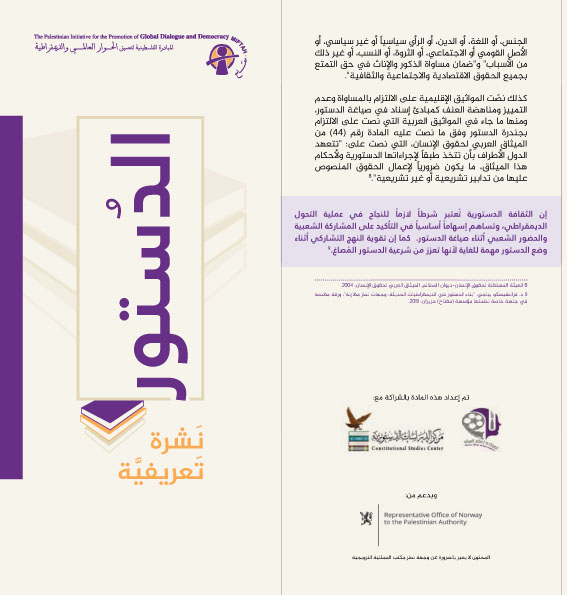
Introductory Bulletin
14 Emil Touma Street,
Al Massayef, Ramallah
Postalcode P6058131
P.O.Box 69647
Jerusalem
972-2-298 9490/1
972-2-298 9492
info@miftah.org