
What is divestment?
Divestment is the opposite of investment. In this case, it is the withdrawal of capital from Israeli or non-Israeli companies profiting from unlawful and unethical situations, in the Occupied Palestinian Territories, as well as among Palestinians with Israeli citizenship and Palestinian refugees.
By withdrawing capital, or threatening to withdraw capital, shareholders and individuals can make a difference by pressuring companies to invest elsewhere. Divestment is a form of non-violent resistance to illegal governmental and corporate practices, such as the Israeli occupation of Palestine and discrimination against Palestinians. It is usually distinguished from boycotts; yet, divestment from Israel also means proactive consumer behavior, i.e. boycotting commodities and services sold by companies profiting from unlawful and unethical situations in Israel and the Occupied Palestinian Territories, especially Israeli commodities. By boycotting commodities, consumers will contribute to divestment by narrowing profit margins for the targeted companies so that less capital remains with the targeted company at the end of the day.
United States weapons manufacturers are also commonly targeted in both divestment and boycott campaigns, including, for example, Caterpillar, which makes bulldozers that are used by the Israeli occupation forces to illegally destroy Palestinian homes and occasionally to kill their inhabitants as well. Thus, it is impossible to draw a sharp distinction between divestment and boycotts.
Sanctions, on the other hand, must be imposed by governments, or by regional or global intergovernmental bodies such as the European Union or the United Nations. Sanctions, divestment and boycotts can be selective or blanket measures. To date, divestment as a kind of non-violent resistance against Israeli aggression and abuses has been selective, rather than blanket.
Who or what are the main targets of divestment?
Israeli companies, state institutions and individuals particularly profit from the illegal occupation and discriminatory domestic Israeli laws and practices, but so do companies, institutions and individuals around the world. Although Israel receives more aid, both military and non-military, from the U.S. than from any other source, the EU is Israel’s biggest trading partner. Taken together, European companies therefore represent a bigger target in monetary terms; although, it should be added that the EU does not deliver as many products and services that are directly lethal to the Palestinians suffering from the illegal occupation as the U.S. does. Nonetheless, the largest weapons exporters to Israel after the U.S. are Germany, France, Britain, the Netherlands and Ireland – all EU members.
Arab, Muslim and even Palestinian trading partners that profit from the illegal Israeli occupation are also subject to divestment. Although Palestinians are almost forced to buy Israeli products and services due to a combination of Israeli state measures, there is no moral or legal excuse for profiting from the occupation, which is illegal under international law. Thus, Palestinian cement companies could be targeted for their material contributions to the Annexation Wall that Israel is now constructing on seized Palestinian territory. [Note: The Wall was ruled illegal by the International Court of Justice in 2004.]
Who is campaigning for divestment?
Palestinians, first and foremost, but many other groups and individuals have called for divestment. The movement for divestment goes back a long time. Recently, it gained momentum when the former Archbishop of the Anglican Church of South Africa, Nobel Peace Laureate Desmond Tutu, called for divestment from Israel in a mainstream opinion article, ‘Build Moral Pressure to End the Occupation: An International Campaign’, International Herald Tribune, June 14, 2002, which served as a clarion call to campaigners for justice and peace in the Holy Land. Human rights groups, such as Amnesty International and Human Rights Watch, have also called for sanctions against companies that contribute to war crimes and crimes against humanity perpetrated by the state of Israel. Many Jewish and Israeli organizations and individuals also support the idea of selective sanctions on Israel, including European Jews for a Just Peace (a coalition of 16 Jewish groups from eight European countries); Not in My Name (U.S.); Matzpun (Israel/International); Jews Against the Occupation (NYC Chapter); the petition of South African government minister Ronnie Kasrils and legislator Max Ozinsky, which has gathered more than 500 signatories from South African Jews; Jewish Voices Against the Occupation (U.S.); Jewish Women for Justice in Israel and Palestine (U.S.); Gush Shalom (Israel); Jews for Global Justice (U.S.); and Visions of Peace With Justice (U.S.), among others.
Although academic and cultural boycotts against Israel have been stronger in Europe, divestment campaigns in the U.S. have been gaining momentum with many larger universities and churches, supporting the movement.
Could divestment and boycotts hurt Palestinians both within Israel and in the West Bank and Gaza who rely on salaries or who rely on maintaining a decent economy to live?
In South Africa, Blacks in general supported the divestment and boycott campaigns even though some of their jobs were being lost. Both Palestinians and Israelis welcome boycotts because the evil of what the Israeli government is doing is harming many more people than the harm done by any boycott or divestment campaign. For Palestinians, with 30% unemployment mainly due to the Israeli occupation, removing this occupation is definitely worth the temporary sacrifice of a few remaining jobs dependent on the Israeli economy. Similar motivation exists for many Israeli Jews who see their country slipping further and further into racism and violence. Many welcome the divestment as a wise and eminently moral form of resisting Israeli aggression and ethnic discrimination.
Who is already divesting or considering divesting and from whom? Are any commodities or companies being targeted more than others by divestment campaigners?
Obviously, weapons manufacturers that supply the Israeli armed forces are the prime targets. For example, the Association of University of Wisconsin Professionals (TAUWP) adopted a resolution on April 23, 2005, that calls on the University of Wisconsin’s Board of Regents to divest from companies that provide the Israeli army with weapons, equipment and supporting systems. Citing the precedent set by the University of Wisconsin’s elimination of investments in apartheid-era South Africa, the resolution urged divestment from Boeing, Caterpillar, General Dynamics, General Electric, Lockheed Martin, Northrop-Grumman, and Raytheon “based on evidence of the active role these companies play in enabling Israeli forces to engage in practices that violate international law and the human rights of the Palestinian people”. The University of Wisconsin Trust Fund’s investments in the companies specified by the resolution exceeded $3.8 million.
Many other U.S. universities have seen divestment campaigns against Israel during the last four years. They include Columbia University, Princeton, Harvard, Berkeley, Yale, Cornell, the Massachusetts Institute of Technology, the universities of California and Pennsylvania, and others.
In Britain, the Association of University Teachers (AUT) voted in its Council meeting on April 22, 2005, to boycott Haifa and Bar-Ilan Universities, for failing to respect academic freedom for researchers uncovering Israeli atrocities, and for setting up a college in an illegal settlement, respectively. One month later, the boycott was lifted by the AUT, but activism continues among British academics.
The Presbyterian Church U.S.A., which has 2.5 million followers, has also resolved to divest its portfolio from companies aiding Israel’s occupation of Palestinian lands. Similarly, the World Council of Churches, the Geneva-based association of mainstream Protestant churches, recently recommended that its 347 member churches and denominations follow the example of the U.S. Presbyterians. Other churches such as the Anglican Church, United Methodist Church, Episcopal Church and United Church of Christ are currently considering divesting their investment portfolios from companies with links to Israel. Several U.S.-based labor unions and organizations, such as the National Lawyers Guild, have endorsed divestment from Israel.
Protests against Caterpillar’s support for Israeli human rights violations were held on April 13 in over thirty cities around the world. The International Day of Action Against Caterpillar was organized in the U.S. by Jewish Voice for Peace, The U.S. Campaign to End the Israeli Occupation and the Stop Caterpillar Coalition. On the same day, in Chicago, a shareholder resolution calling for Caterpillar to investigate whether their sale of bulldozers to Israel violates Caterpillar’s own “good global citizen” code of conduct was defeated, receiving a 3% vote at the annual shareholder meeting. The shareholder resolution was filed by Jewish Voice for Peace with the support of Sisters of Loretto, Mercy Investment Program, Sisters of Mercy, Maryknoll Sisters, and Sisters of St. Francis of Philadelphia. Jewish Voice for Peace member Sara Norman said: “Since shareholder resolutions are non-binding, our primary goal was to put this issue front and center in the minds of the Caterpillar board. By that standard, today was a remarkable success. The issue of Caterpillar’s role in demolishing homes of Palestinian families, and the use of Caterpillar D-9s to violate various human rights laws, completely dominated the discussion in the shareholder meeting.”
The first municipality in the U.S. to publicly be asked to divest its funds from Israel was Somerville, Massachusetts, near Boston. In November 2004, the Somerville town council voted against divestment, but an important precedent may have been set.
Queers Undermining Israeli Terrorism (QUIT!) premiered 'Eternally Mine', "a stench beyond occupation", from ‘Estee Slaughter’ at its Valentine’s Day Extravaganza at Macy’s Union Square in San Francisco in 2005. 'Eternally Mine' joined Estee’s signature scent 'Occupation' and 'Apartheid For Men' in the group’s killer product line. Also on hand were special editions of 'Atrocity Cover Up', 'Bloody Hand Cream', 'Take It Away Total Village Remover' and the classic condom, 'The Wall' (nothing gets past it). QUIT! targets cosmetics giant Estee Lauder, because heir Ron Lauder is president of the Jewish National Fund (JNF), which maintains and implements Israel’s discriminatory land policies. Two weeks earlier, Israel’s attorney general had determined that all land managed by the Israel Lands Administration, including land owned by the JNF, must be marketed without discrimination or limits including to non-Jews. The state prosecutor’s office believed it would not be able to defend the policy of allocating JNF land to Jews only before the High Court. Days later, news agencies reported, “The Jewish National Fund and the Finance Ministry are discussing ways to separate the JNF from the state, to allow it to continue selling land to Jews only.” Lauder has publicly declared his support for maintaining Israeli settlements in the Occupied Palestinian Territories, which are illegal under international law.
Florida U.S. Senate candidate Andy Martin launched a worldwide boycott against McDonald’s, the worldwide restaurant chain, to show solidarity with Palestinians who are being discriminated against by McDonald’s in Israel. Martin held a news conference on March 23, 2004 in New York to ask diners to avoid eating at McDonald’s restaurant in order to “help fight racism in Israel.” Martin began a boycott of McDonald’s after the firm fired an Arabic-speaking employee for speaking Arabic at work. McDonald’s Israeli management demands that all McDonald’s Israeli employees speak Hebrew at work. Arabic, however, is an official language of Israel. Martin also helped launch a successful 2002 boycott of Microsoft after the firm placed prominent billboards in Israel supporting Israeli Defense Forces massacres. Microsoft withdrew the billboards.
Any commodities that stem from the illegal Israeli settlements, now housing more than 420,000 illegal settlers on Palestinian land, are also being targeted. Although very little and very late, the EU decision in 2004 to slap punitive taxes on Israeli-made products imported to EU member states from the Israeli-occupied Palestinian territories could signal the beginning of a focused and potentially successful, if modest, divestment/sanctions campaign. Goods worth around $200 million are exported from the illegal Jewish settlements every year, but they enjoy preferential tariff terms because they are labeled “Made in Israel.” Since the EU does not recognize the illegal settlements as part of Israel, the EU has lost nearly $10 million in income each year in this way, and, more importantly, Israeli occupation and repopulation of the Palestinian territories gain indirect respectability and de facto legitimacy. On August 5, 2004, a compromise was reached whereby Israel is allowed to call its illegal settlements ‘Israel,’ whereas the EU will charge tariffs on all settlement exports provided Israelis declare them honestly. (One might conclude that money is still more important than human rights to the EU, but this is, nevertheless, a beginning.)
There is also an initiative by the Belgian aid group, Oxfam Wereldwinkels, along with the country’s Green Party, to boycott all agricultural products from Israel, at least until an independent Palestinian state has been established. This initiative, moreover, involves seeking preferential treatment for Palestinian products.
In April 2002, after repeated refusals by Israel to withdraw its military forces from occupied territories previously under the Palestinian National Authority, the European Parliament called on the EU to suspend the six-year-old Association Treaty under which Israel enjoyed preferential trade terms with the then 15-nation bloc. No action was seriously considered, but it was at least potentially harmful to business confidence in Israel, whose main trading partner is the EU.
In August 2004, finally, the 115-member Non-Aligned Movement, consisting mainly of developing countries, announced it would ban Israeli settlers from visiting their countries and boycott firms involved in building the illegal Annexation Wall. Israeli commentators, as well as outsiders, drew parallels with the international sanctions against South Africa towards the end of apartheid in that country.
Are there any precedents?
South Africa under apartheid was targeted by comprehensive international sanctions, as were any governments or companies that made profits from apartheid conditions illegal under international law. Sanctions-busters, including the Israeli and U.S. governments, as well as large transnational corporations who made use of the giant black South African work force with little or no rights, abounded. In response, anti-apartheid commodity boycotts started with comprehensive boycotts against South African fruit companies, such as Cape and Outspan. In a second wave of measures 605 transnational corporations disinvested from South Africa between August 1985 and August 1989. By 1991 some 28 states, 25 counties and 91 cities (in the U.S.) had taken economic action against corporations with investments in South Africa at a cost of around U.S. $20 billion.
Since international law still has little or no executive power to ensure that it is respected, private lawsuits amounting to several billion U.S. dollars have been filed beginning in 2002 against the main apartheid exploiters during the sanctions, i.e. against those who broke international law.
U.S. lawyer Edward Fagan, who initiated court proceedings for $5 billion on behalf of victims of South African apartheid in 2002, had previously helped win $6.75 billion from German, Austrian, Swiss, and other institutions in two much-publicized class action cases over profits made due to Nazi atrocities, including forced expulsion, genocide and slave labor, prior to and during World War II.
‘Legal’ profits made from human rights violations were quite successfully targeted by divestment campaigns against apartheid South Africa in the U.S., which, along with Israel, Taiwan and Britain, was one of the last countries to impose comprehensive sanctions against the apartheid regime. Due to the feet-dragging policies of consecutive U.S. governments, who viewed apartheid South Africa, a formidable military power with a nuclear arsenal, as a guarantee against the spread of Communism during the Cold War, U.S. civil society took decisive action in solidarity with the wishes of the victims of South African apartheid, with global public opinion, and in accordance with international law. And this is exactly what has started happening in the U.S. with regard to Israel now.
Sanctions, divestment and boycotts against Israel could be even more effective than those against South Africa for two reasons: firstly, Israel is a small country, which makes it more dependent on trade and other kinds of exchange than South Africa, which possessed all essential natural resources except for oil (to their credit, Arab oil producers were some of the first countries to start sanctioning South Africa for that very reason); secondly, the world economy is even more globalized today than when South African apartheid lost its battle for survival. The globalized capitalist economy demands less state intervention and increasing freedom of movement for companies, people, goods, services and information. And Israel, by erecting walls and enforcing closures and curfews, is anti-business at a time when business is perhaps more powerful than ever before in history.
Are divestment campaigns likely to have any effect at all on Israel’s occupation or on any other of its racially discriminatory laws and practices?
It is hard to say, but it seems that divestment had a positive effect in the struggle against South African apartheid, and this raises hopes that a comparable scenario could develop for Israel’s similar form of oppression against Palestinians. It is, admittedly, a long road to comprehensive international sanctions against Israel, but the first steps down that road have now been taken. Furthermore, Israeli government agencies and business elites, at the very least, seem worried about the wider consequences of divestment, including what international sanctions could bring for the future of their country.
What other consequences could divestment from Israel have?
Finally, as Will Youmans wrote with regard to divestment from Israel: “Uncritical support of Israel damages America’s international stature. Nearly every decent position the United States takes on human rights, refugees, militarism, nuclear proliferation, and minority rights is easily deemed an agenda-driven farce due to its contradictory support for Israel. For example, the international community instantly recognized the emptiness of President George Bush’s citation of UN resolution violations by Iraq as a justification for war. Israel undermines far more. . . This is not just about ending Israel’s apartheidesque oppression of the Palestinians, it is about importing respectability and consistency into American foreign policy. To do that, we must change it where it is needed the most. The United States will never be an honest broker for peace between Israel and the Palestinians so long as its public and private sectors have so much invested in Israel. Israel must be isolated to be vulnerable to international pressure.”
The U.S. Congress should also take steps against Israel since Israel’s use of American weapons against civilian populations violates the human rights provisions of the U.S. Arms Control Exports Act. But since Congress miserably fails to enforce its own laws as well as international law in this regard, it is up to civil society to act.
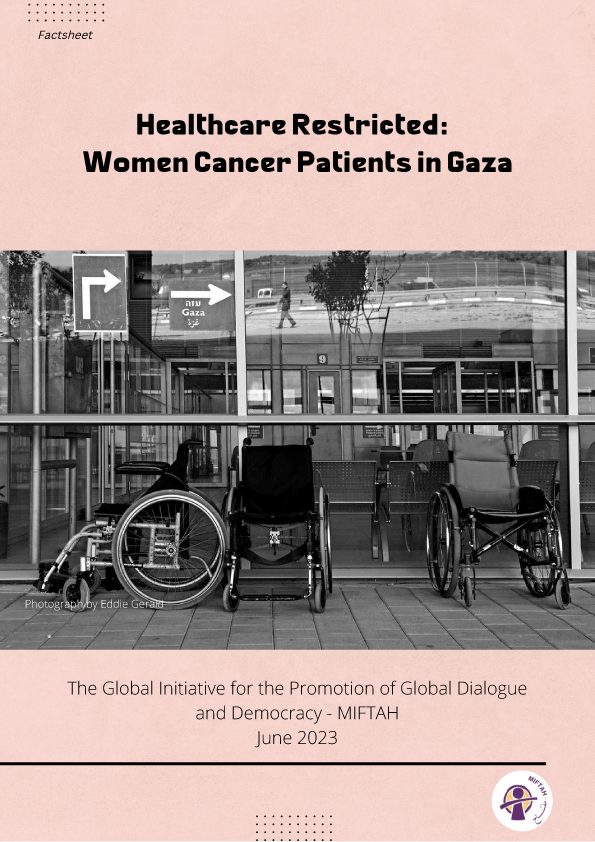
Healthcare Restricted: Female Cancer Patients in Gaza
Date posted: June 07, 2023
By MIFTAH
Background:
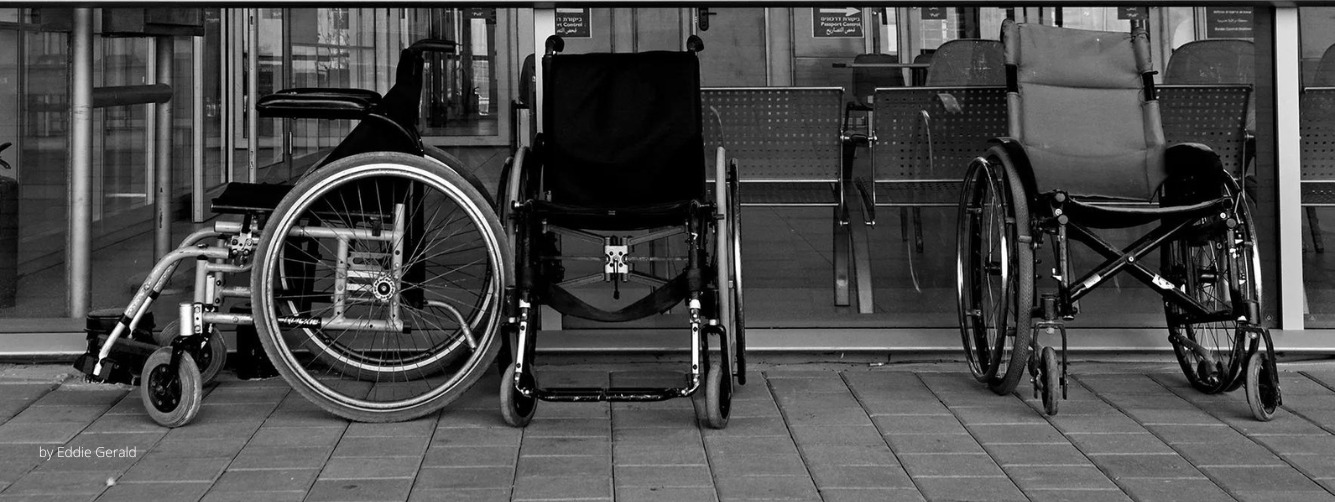
The Israeli-imposed siege and the frequent aggressions targeting medical facilities in Gaza have debilitated the health sector and its capacity to provide proper medical services. This is exacerbated in cases of chronic diseases, which gives rise to a need to leave the Gaza Strip to receive medical treatment in the occupied West Bank, including Jerusalem, or elsewhere. However, Israel imposes a strict and discriminatory permit regime, which has a disproportionate impact on medical patients given their conditions, and it is not unusual for these permits to be significantly delayed or ultimately refused by Israel.
The Palestinian Initiative for the Promotion of Global Dialogue and Democracy (MIFTAH) collected questionnaires from 102 women diagnosed with cancer in the Gaza Strip to assess the quality of the treatment, availability of equipment, accessibility, and referral process.
The full report is accessible here.
Conclusion and recommendations:
The 16-year-long Israeli-imposed blockade and closure on Gaza have had detrimental impacts on the health sector in the besieged Strip. Specifically, the siege has compromised the ability of the healthcare sector to deliver proper medical services due to the absence of crucial medication, equipment, and supplies under flimsy security pretexts. Ultimately, frequent aggressions and targeting of health facilities and the Israeli-imposed siege on Gaza compromise the availability, accessibility, and quality of healthcare services available to Palestinians in Gaza.
MIFTAH urges the international community to:
- Put an end to Israel’s impunity and hold it accountable for its persistent crimes, including the crime against humanity of apartheid, through the adoption of effective and concrete measures;
- Exert pressure to lift the blockade on the Gaza Strip and allow for the free movement of people and goods;
- Ensure the urgent implementation of UNSCR 1325 to provide immediate protection for Palestinian women and to put an end to Israel’s impunity;
- Support the UN Special Rapporteur in the oPt, the International Court of Justice’s advisory opinion, the ICC investigation and the UN Commission of Inquiry.
The summary factsheet is accessible here.
Financial indicators for the Family Protection Bill
Date posted: May 17, 2023
By MIFTAH
The legislation of the family protection bill is aimed at the protection of the family itself as an institution, and to guarantee its preservation. Palestinian legislators are aware of the importance of this bill, which is why all ministries and official institutions committed to developing its relevant programs, policies and plans, each according to their field of expertise. Their goal is to contribute to the promotion of a culture that combats domestic violence and encourages the response of public policies to this objective, through education, health, legislation and the media. Another objective is to track the bill’s impact and periodically assess it in cooperation with other civil societies. This paper focuses on some of the financial indicators pertaining to this bill.
All family members in Palestine are subjected to violence, including children, minors, women and men. However, married women remain the sector most vulnerable to domestic violence according to a 2019 Palestinian Central Bureau of Statistics survey. It said 29.4% of married women had been subjected to at least one type of violence by their husbands as opposed to 13% of men who had been subjected to violence by their wives, by their own confession. A total of 44.7% of individuals who have never been married have been subjected toviolence;7.6% of the elderly and 44.2% of children(12-17yearsold) were the victims of violence at the hands of one of their parents. Although a high percentage of women have been victims of violence from their spouse, a considerable percentage of these women, around 60.3% preferred to stay silent about the assault. Only a small percentage of women asked for help through official avenues; 2.9% went to a defence lawyer to file a lawsuit against their husbands, 1.3% went to the police or a family protection unit and 1.4% went to the centres for mental, social and legal aid.
Financial indicators for the Family Protection Bill
| Article of Bill/Law by Decree | Relevant party | Estimated cost |
| Article(4) specialization of Ministry of Social Development: The Ministry, in cooperation with government and civil society organizations, provide the following services to victims of domestic violence: 1.Protection and fulfilment of needs of the victim; economically and socially empowering her and reintegrating her in society in order to preserve the family fabric, while ensuring not to equate the victim with the perpetrator. 2.Appointing protection counsellors in all directorates and qualifying them to deal with domestic violence cases 3.Providingsocial, psychological and legal experts to provide victim support 4.Ensuringthe provision of social, psychological, health and legal services to domestic violence victims in coordination with relevant parties. 5.Preparing rehabilitation programs for perpetrators of domestic violence crimes 6.Coordination and cooperation with government and civil society organizations to provide the necessary training for the enforcers of this law by decree. Preparing the necessary preventative plans and programs against domestic violence |
Ministry of Social Development | ILS12 million over 3 years on average of ILS4 million year, based on a study prepared by the Ministry of Social Development |
| Article 6: Family and Minors Protection Police: In accordance with the provisions of this bill/law by decree, a family and minor protection police will be established, with branches set up in all districts of the homeland. It’s specializations are the following: 1.Goingtothe place of the domestic violence incident when the informer states that the violence has occurred, is about to occur is ongoing; or in case of violation of a restraining order, even if the informer is not the victim 2.Providingfree 24-hourhotlinestohelp victims |
Palestinian police and Family and Minors Protection Department
Reform and Rehabilitation Centres Department |
ILS7.3 million/year (the study is based on the number of those working in the family and minors protection department and their mean salary)
ILS1.3 million/year (the study is based on the number of those working in reform and rehabilitation enters, which includes special sections for women boarders) |
| Article7: Family Protection Prosecution 1.In accordance with the provision of this bill/law by decree, a prosecution’s office will be established to follow up on domestic violence cases in all districts and will operate under the supervision of the Attorney General in accordance with penal measures in force. 2. This family protection prosecution office will promptly investigate domestic violence incidents while also preserving the privacy and dignity of the victim |
Family Protection Prosecution | ILS1.7 million, based on the number of relevant prosecution agents and their mean salaries |
| Article10: parties qualified to issue restraining orders 1.Restrainingorders will be issued by the following parties of their own accord: a. Family Protection Prosecution b. The presiding judge |
Presiding judges | ILS1.9 million, based on the number of judges and their mean salaries |
| Total expected estimated cost | ILS16.2 million |
The table above shows that the estimated and main additional cost of the Ministry of Social Development to be around ILS4 million a year, considering that the other parties (police, prosecution and courts) are currently carrying out their roles without fully allocating specialized departments for protection from violence. However, if these parties do allot specialized departments for protection from violence, overall costs will reach approximately ILS16.2 million. Nonetheless, even if this cost is incurred, it still only comprises a small part of public expenditures, approximately 0.1%. Overall public expenditures for 2022 amount to approximately ILS16.2 billion, which means the cost of passing this bill and implementing its provisions will not constitute financial burden on the general budget and will not be an obstacle to ratifying the law by decree.
Furthermore, it should be noted that while it is imperative to calculate some of the costs resulting from violence against women, the reaerate the high costs as well. The secret social costs, which impact society as a whole. Data from the Ministry of Social Development showed (see graph), that violence exercised against women has prompted around 60% of them to flee their homes. Also, 18% of them attempted suicide in addition to suffering from mental and physical illnesses, unwanted pregnancies or others. Calculating expenses incurred from violence is not an easy process and there are no national data or figures that can measure the impact violence has on the state’s general budget due to the prevalent mentality towards violence as an issue associated only with women. This is especially true when the conversation is about the indirect and intangible effects of violence, including:
Violations of human rights; negative social, economic and political impacts; working women who get sick and need to take sick leave; lack of focus and productivity; impact of violence on children and academic failure; the rise in the percentage of school dropouts among children; the rise in long-term unemployment rates; the percentage of homeless children who become a burden on society; government expenditures for medical treatment; safehouses; therapy; monitoring cases of violence against women; individual expenses for following up on legal cases and lawyer fees; loss of income because of repeated absence from work or inefficacy; social expenses resulting from the breakup of the family; expenses of training individuals on how to deal with cases of violence; expenses for issuing laws and legislation on the protection of women from violence.
Confirmation of the above is that the UN believes the economic, social and health costs of violence against women are, to a large extent, undocumented and unrecognized. However, these remain colossal, according to researchers, specialists and defenders of women’s rights.
To view the full factsheet as PDF
Israeli state-sanctioned settler terrorism: A gendered lens
Date posted: April 26, 2023
By MIFTAH
Background:
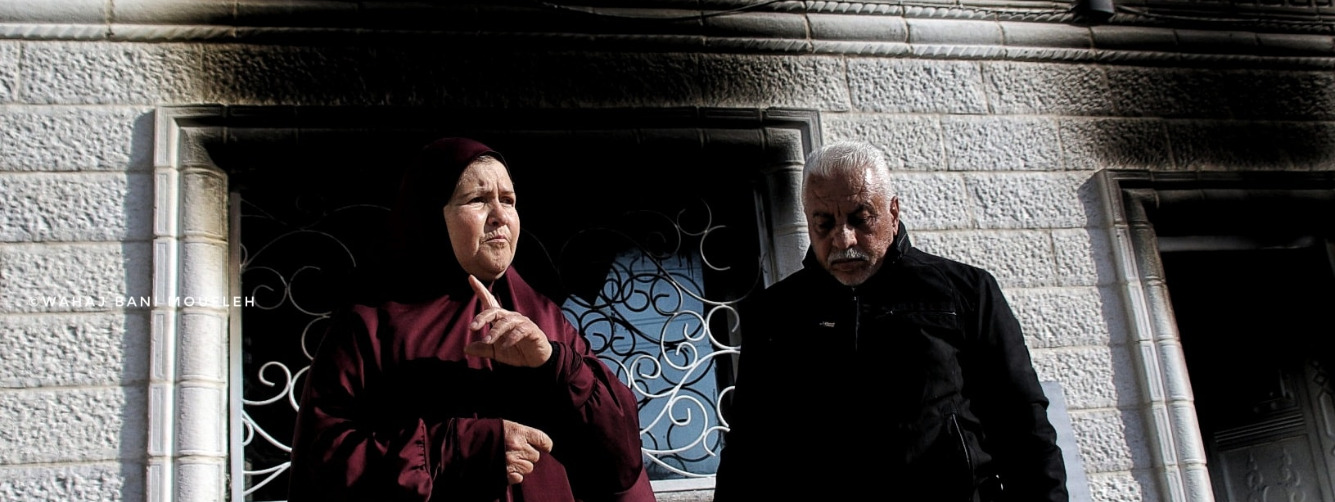
The illegal Israeli settlement project, including settler-only bypass roads, military checkpoints, and the annexation wall, continues to expand and steal more Palestinian land and resources. As of today, the number of illegal Israeli settlements in the occupied West Bank, including Jerusalem, is close to 300, with around 750,000 Jewish settlers residing in them.
Israeli state-sanctioned settler terrorism against Palestinian civilians and property is prevalent and has been on the rise in recent years. Violence takes the form of psychological, physical, and verbal violence, including beating, throwing stones or sharp tools, intimidation, shooting, verbal assaults, and assaults on agricultural lands, cars, and homes. Such attacks are committed in the presence of Israeli occupation forces who often join them.
The high frequency of these forms of violence and their persistence give rise to psychological, physical, and material harm. Palestinian survivors of settler terrorism seldom press charges and file complaints against Israeli settlers given the complicity of the Israeli law enforcement system.
The Palestinian Initiative for the Promotion of Global Dialogue and Democracy (MIFTAH) and the Women’s Center for Legal and Counseling (WCLAC) collected questionnaires from 229 Palestinian women covering settler violence in the occupied West Bank governorates of Al-Khalil/Hebron, Bethlehem, and Jerusalem.
MIFTAH calls on the international community to:
Put an end to Israel’s impunity and hold it accountable for its persistent crimes, including the crime against humanity of apartheid, through the adoption of effective and concrete measures;
Stop all relations and trade with illegal Israeli settlements including international companies that profit from them;
Criminalize and blacklist Israeli settler groups that engage in terrorist activities and hold those with dual citizenship accountable in their respective states;
Ensure the urgent implementation of UNSCR 1325 to provide immediate protection for Palestinian women and to put an end to Israel’s impunity;
Support the UN Special Rapporteur in the oPt, the International Court of Justice’s advisory opinion, the ICC investigation and the UN Commission of Inquiry.