

As the chair of Friends of Sabeel—North America I am aware that Sabeel and its director, The Rev. Canon Naim Ateek, have received heightened press coverage in recent months, mainly on the internet but also in major newspapers. While allowing us to get our message out, regrettably some of the coverage has willfully distorted and twisted the message of Sabeel. At the Sabeel conference in Toronto, Canada, in October 2005, Canon Ateek made an appeal for the articulation of truth with respect to Sabeel’s position as a reflection of the need for justice.
The media interest seems to have been spawned by the document Sabeel published at Easter 2005 entitled Morally Responsible Investment: A Nonviolent Response to the Occupation in response to the global movement, particularly among the churches, to divest from corporations profiting from the state of Israel’s illegal occupation.
In its document, Sabeel makes the point that churches and individuals need to look at their investments to determine if they support corporations profiting from occupation of the West Bank and Gaza. It states that those companies need to be challenged. That challenge may include positive engagement with the companies at stockholder meetings and at annual corporate meetings to demand accountability. It can include withdrawing investments if companies fail to comply with investors’ sense of moral responsibility.
The Sabeel document does not call for divestment from the state of Israel or for a blanket disinvestment from companies doing business inside Israel. It specifically targets the occupation and addresses the fact that after 38 years of various failed attempts by the churches toward ending the occupation that the churches themselves must enact their own moral responsibility, demonstrate accountability to the Palestinian people and not add to their burden by supporting the occupation through their investments.
For example, Caterpillar has become a target of some churches and other organizations because that company provides bulldozers to Israel that are weaponized and used for demolishing Palestinian homes and for building the separation wall around and within the West Bank.
It is important that the only actions which Sabeel supports are non-violent, with the goal of ending the continuing illegal occupation of the West Bank and Gaza Strip. Using economic leverage is a form of nonviolent resistance to the occupation.
In violation of the Fourth Geneva Convention, Israel’s occupation is violating the human rights of Palestinians by systematically confiscating their land, water resources and olive groves in the illegal process of settlement expansion.
Many pro-Israel apologists deny that the state of Israel is doing wrong, even though for the last 55 years it continues to violate international law and UN resolutions and even ignores the strong criticism of Israeli human rights groups like B’tselem.
Many pro state of Israel apologists claim that Sabeel either supports terrorism or fails to condemn violent acts against Israeli citizens. They seem not to have read-- or have misread—our publications. In all our defining documents we clearly condemn all forms of violence. The Jerusalem Sabeel Document: Principles for a Just Peace in Palestine-Israel explains the theology of Sabeel, and our booklet on Suicide Bombers provides a Christian perspective on what is theologically and morally wrong with violence.
I have known Naim Ateek for 40 years and have always admired his interpretation of nonviolence as a solution to the problems of the Middle East. One of my own learnings is that the cause of the violence in the region is the violence of the occupation. Israel is the powerful party. Israel has overwhelming military power, it is the fourth largest military in the world protecting a nation only the size of New Jersey and its small population of only 8 million. The US is Israel’s primary arms supplier. The claim that Israel is threatened with extinction by Palestinian violence is spurious.
End the occupation and the violence will end.
Sabeel and Canon Ateek have been accused of being anti-Semitic even though Sabeel consistently condemns anti-Semitism in all its ugly forms. Sabeel is accused of being anti-Semitic because we dare to criticize the policies of the state of Israel. The Episcopal Church made clear the difference between the two in its 1990 General Convention, which states: “Resolved that the 70th General Convention of the Episcopal Church recognizes that a distinction exists between the propriety of legitimate criticism of Israeli governmental policy and action, and the impropriety of anti-Jewish prejudice. And be it further resolved that the 70th General Convention of the Episcopal Church deplores the expression of anti-Jewish prejudices, sometimes referred to as the imprecise word anti-Semitism in whatever form and whatever occasion and urge its total elimination from the deliberations of the Episcopal Church members and its various units.”
Naim Ateek, an Episcopal priest, and many others who criticize the policies of the state of Israel, are falsely accused of being anti-Semitic. The state of Israel is not above criticism and needs to be challenged when its policies are wrong. And its policy of occupation is wrong.
Sabeel uses the language of liberation theology. That theology speaks with words such as oppressed and oppressor; it speaks of suffering and crucifixion—biblical images that relate to the experience of brutality and the misuse of power. Those who do not want the state of Israel to be criticized deny these accusations and label liberation theology as anti-Semitic. They deny the violence of the occupation and all of its ugly ramifications—settlements, land confiscations, demolition of homes, state violence against civilians.
In Denver at our Sabeel conference in October, the Allied Jewish Federation of Colorado published a letter of accusations against Sabeel mailed to 40 co-sponsors of the Sabeel conference, asking them to withdraw their co-sponsorship. To their credit, not one withdrew. It has been a fact that many supporters of the state of Israel think anyone who disagrees with them must be painted with a brush of anti-Semitism. This is especially true of Israel’s supporters in the United States. But by trying to silence people, supporters of Israel are only hurting the Jewish state and the Jewish people by allowing it to continue with policies that are increasingly seen by the peoples of the world to be in conflict with traditional Jewish values of justice.
Our work with Palestinian Christians reflects their long-standing perception of being abandoned by Christians and their churches around the world. Fundamentalist Christians, and particularly a subset referred to as Christian Zionists, who interpret scripture literally and support the state of Israel unconditionally, have preferred friendship with the Israeli government while totally ignoring the indigenous Christians of the land—the Palestinian Christians. These are the living stones who have carried the faith in the Holy Land for two millennia. These are the descendants of Christians who lived in first-century Palestine, who partook of bread and salt with the apostles, and who have been faithful stewards of the land where Jesus lived and the holy places where he walked, taught, and died. They are a small minority whose presence is threatened by the hardships of occupation. From 1948 to 2005 the percentage of Christians in the Holy Land has declined from 15% to less than 2%. Yet, many Christian supporters of Israel have done nothing to support these brothers and sisters in Christ.
On the subject of Christian Zionism and its support of Israel I would remind everyone of the extreme anti-Semitism of Christian Zionists . They believe that by getting Jews back to Israel Armageddon can then happen and those Jews who don’t finally convert to Christianity will be killed in that final conflict.
We have a strong statement against Christian Zionism on our website. We see it as a distortion of biblical theology and an aberration—a very dangerous and false theology.
The birthplace of Jesus is under siege right now with the separation wall. Not only does this wall separate Palestinians from their land but also leads to the destruction of homes, separation of families from each other, from their jobs, children from schools, patients in nursing homes from their families and from getting medical help in general.
The Bible can be such a dangerous book when interpreted literally and according to an extremist ideology. I fear it is being misused in this way by fundamentalist Christians as well as well as by Jewish fundamentalists. And of course we know there are those within Islam who have hijacked the Islamic faith with their vision of violence and this has added to the burdens of the region.
I would encourage our members and others who are not familiar with our publications to visit our website www.fosna.org. I also request that you please forward this open letter to your respective lists.
The Rev. Canon Dr. Richard K. Toll
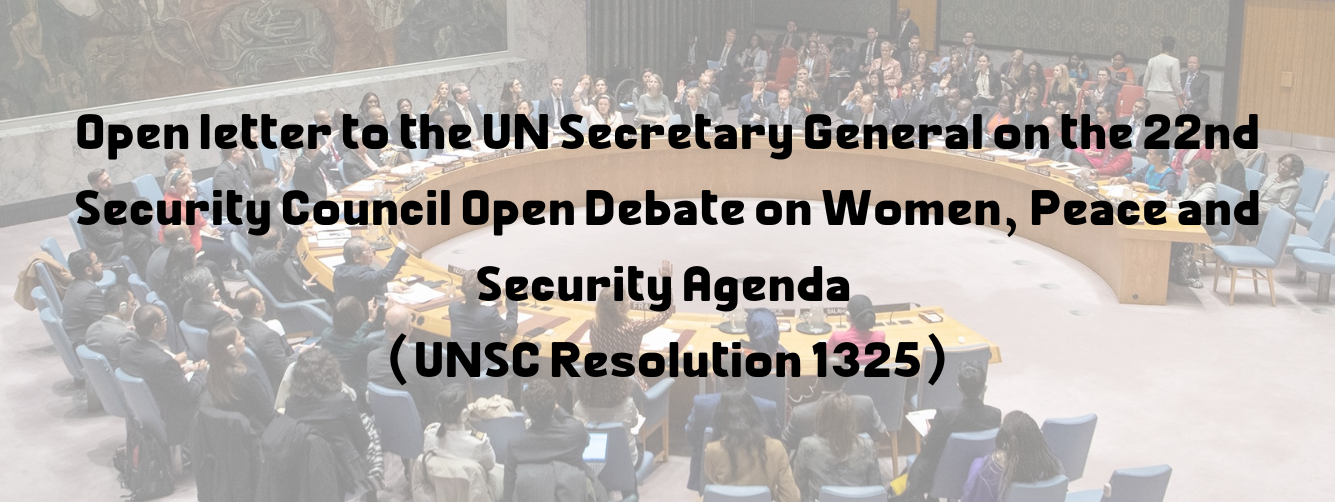
Open letter to the UN Secretary General on the 22nd Security Council Open Debate on Women, Peace and Security Agenda (UNSC Resolution 1325)
Date posted: October 26, 2022
By Palestinian Women’s Civil Coalition for the Implementation of UNSCR1325
Your Excellency Secretary General
Mr, Antonio Guterres,
On the 22nd anniversary of UNSC Resolution 1325 and the annual open discussion at the Security Council for the advancement of the Women, Peace and Security Agenda, the Palestinian Women’s Civil Coalition for the Implementation of UNSC Resolution 1325 would like to bring your attention to the fact that the suffering of Palestinian women living in the Occupied Palestinian Territory (OPT) has unprecedentedly escalated since this resolution was passed, due to the Israeli occupation’s ongoing, hostile policies, systematic violations of human rights and grave breaches of international humanitarian law that are disproportionally impacting women and girls in the OPT. These violations include extra-judicial killings, arbitrary arrests, restriction on movement, military blockades, house demolitions, land confiscation and illegal de-facto and de-juri annexation, in addition to the ongoing isolation of areas of the OPT from one another. This has had both individual and collective impact on the lives of women, impeding their access to resources, compounded by the deteriorating economic situation due to the occupation’s control and dominance over land and resources. Added to this is the rise in poverty levels due to unemployment, military blockade on the Gaza Strip for over 15 years and the occupation’s exercise of systematic long-term violence against the Palestinian protected population in the OPT, settlement expansion combined with settlers’ violence and vandalism
The Palestinian Women’s Civil Coalition strongly believes that 22 years since the passage of UNSC Resolution 1325 has not resulted in concrete measures for the advancement of the women, peace and security agenda to Palestinian women living under Israeli prolonged military occupation. A lot still need yet to be made by the Security Council to maintain peace and security for Palestinian women living under military occupation. To the contrary, complications and challenges to Palestinian women have increased in terms of implementing the WPS agenda, due to Israeli impediments to its implementation. Israel, the occupying power, has also placed enormous obstacles before Palestinian women who seek to implement this resolution, given its continued occupation of the OPT and the absence of a just and durable solution to end this prolonged belligerent occupation. No concrete measures were taken by the international community to implement UN resolutions related to the question of Palestine, namely UN Resolutions 242, 338, 194 and 2334. Instead, Israel is intent on confiscating and annexing more land to build settlements, which has severed any path to the establishment of an independent and contiguous Palestinian state. Instead, OPT has been transformed into isolated islands more like the Bantustans of apartheid South Africa, as indicated in the most recent evidence based-report by Amnesty International, describing Israel as an apartheid regime, where one racial group is discriminating against other racial groups.
The Palestinian Women’s Civil Coalition, would also like to point out to the remarkable conclusions of a UN independent Commission of Inquiry (CoI) in its recent to the UN General Assembly in New York on 20/10/2022, which considered the Israeli occupation as unlawful according to international law. The report called on the UN General Assembly to ask the International Court of Justice for an urgent advisory opinion on the illegality of this prolonged military occupation, and the impacts of the Israeli illegal measures and violations against the Palestinian civilian population in the 1967 OPT.
Your Excellency UN Secretary General,
As the UNSC is meeting to discuss the advancement of the WPS agenda, we would like to draw to their attention the double standards employed by the United Nations in dealing with its own resolutions, especially when it comes to Israeli-Palestinian conflict and the practices of Israel, the occupying power against Palestinian civilian population. Israeli illegal policies in the OPT , has not only curtailed Resolution 1325 from guaranteeing protection for women and involving her in security and peacemaking, it has also thwarted all international tools and mechanisms for the protection of civilians in times of war and under occupation. This is due to the failure of the international human rights and humanitarian law especially the provisions of the Fourth Geneva Convention Relative to the Protections of Civilians at time of War and under occupation. The reason for this is that the UN itself is discriminatory and has double standards in its handling conflicts, and peoples’ causes due to the huge imbalance in justice and the policy of impunity, which Israeli, the occupying power enjoys. These policies have allowed Israel to escape from accountability or any punitive measures in accordance to UN Charter and more specifically Article 11 of UNSC Resolution 1325, which demands that perpetrators of crimes and violations during war are not afforded impunity. The fact that Israel is treated as a country above the law, and the absence of any form of accountability has only encouraged it to commit more crimes and violations. A case in point is the recent murdering of Palestinian Journalist Shirine Abu Akleh, where no one has been held accountable thus far, although the incident was caught on tape and there is hard evidence proving that her death was the result of premeditated and extrajudicial killing by the Israeli army.
During its evaluation and review of its action plan, the Palestinian Women’s Civil Coalition noted that Resolution 1325 and the nine subsequent resolutions, pinpointed the reasons for the outbreak and development of conflicts in various regions of the world to racial, religious and ethnic disputes. However, it excluded women under racist, colonialist occupation, which is the case of Palestinian women under Israeli occupation in the West Bank and Gaza Strip, including occupied East Jerusalem. Thus, it has disregarded all international resolutions pertaining to the rights of the Palestinian people, over and above Israel’s disregard for its responsibilities as an occupying power. This necessitates a special resolution addressing the status of Palestinian women under racist, colonialist occupation, and addressing the root causes of the suffering of Palestinian women and the major obstacle they face in meaningful political participation, and in moving forward in the advancement of the women, peace and security agenda.
Mr. Secretary General,
Finally, we in the Palestinian Women’s Civil Coalition for the implementation of Resolution 1325, thank your Excellency for your understanding, and for conveying our concerns to all nation states during the open debate on WPS in the Security Council this year. We call on you to dedicate ample attention to the status of Palestinian women during the 22nd Security Council meeting on Resolution 1325, with the objective to develop and push forth the WPS agenda and put into action the role of international tools of accountability. We ask you to provide the necessary protection for Palestinian women under occupation, by closely overseeing the implementation of this resolution and the party responsible for impeding its application on the ground, namely, the Israeli occupying power that has exacerbated the suffering of Palestinian women at all levels and increased discriminatory measures against them.
With our sincere thanks and appreciation,
The Palestinian Women’s Civil Coalition for the Implementation of UNSCR1325
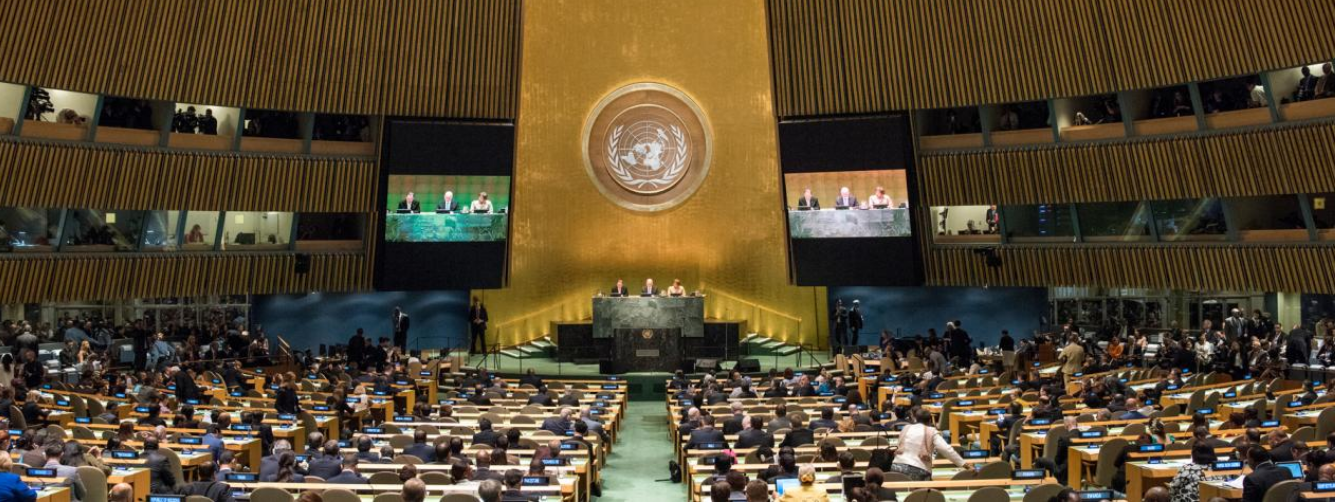
Statement to the United Nations Security Council, Quarterly Open Debate on the Situation in the Middle East, including the Palestine Question
Date posted: October 19, 2021
By Dr. Hanan Ashrawi
Mr. President, Esteemed Members of the Security Council,
I am deeply grateful for the opportunity to address you today, especially thankful to H.E. Ambassador Macharia Kamau, Foreign Affairs Principal Secretary and the Republic of Kenya for the kind invitation.
For over 70 years, the UN and its various bodies have been seized of the Palestine question; repeatedly reviewing conditions, adopting resolutions, and dispatching fact-finding missions, to no avail. Sadly, this Council has been unable to assert authority, allowing this injustice to become a perpetual tragic human, moral, political and legal travesty.
So it would be disingenuous of me to come before you assuming I could inform you of something you do not already know. Nevertheless, I do appreciate the opportunity to communicate in a candid manner, not to recite endless statistics, nor to reiterate the ongoing pain of a people, deprived of their basic rights, including even the right to speak out, admonished not to “whine” or “complain,” as a means of silencing the victim.
The tragedy is that you know all of this; yet, it has had a minimal impact, if any, on the horrific conditions in Occupied Palestine.
I imagine it must be disheartening and frustrating for this distinguished organization and its members to find themselves trapped in this cycle of deliberate disdain and futility.
It is therefore imperative that this Council consider where it has gone wrong and what it can do to correct course and serve the cause of justice and peace.
Undoubtedly, the absence of accountability for Israel and of protection for the Palestinian people has enabled Israeli impunity to ride roughshod over the rights of an entire nation, allowing for perpetuation of a permanent settler-colonial occupation.
Mr. President,
Much of the prevailing political discourse overlooks reality and is diverted and subsumed by chimeras and distractions proffered by Israel and its allies under such banners as “economic peace,” “improving the quality of life,” “normalization,” “managing the conflict,” “containing the conflict,” or “shrinking the conflict.”
These fallacies must be dismantled. Volatile situations of injustice and oppression do not shrink. They expand and explode, with disastrous consequences. Similarly, the delusion of “imposing calm” under siege and systemic aggression, particularly as in Gaza, is an oxymoron, for calm or security on the one hand and occupation or captivity on the other are antithetical and irreconcilable.
Likewise, the fallacy of “confidence-building measures” is misguided since occupation breeds only contempt, distrust, resentment, and resistance. The oppressed cannot be brought to trust or accept handouts from their oppressor as an alternative to their right to freedom and justice.
The misleading and flawed “both sides” argument calling for “balance” in a flagrantly unbalanced situation is another attempt at obfuscation and generating misconceptions.
Israel’s impunity is further enhanced using such excuses as being the so-called “only democracy in the Middle East” or a “strategic ally,” or having “shared values,” or even for the sake of protecting its “fragile coalition.”
There has also been tacit and, at times overt, acceptance of Israel’s ideological, absolutist arguments, including the invocation of religious texts as a means to dismiss and supplant contemporary political and legal discourse and action. Hence, the so-called “Jewish State Law,” which allocates the right to self-determination exclusively to Jews in all of historic Palestine, is endorsed and normalized.
In the meantime, a massive disinformation machine persists in its racist maligning and demonizing of the Palestinian people, going so far as to label them “terrorists,” or a “demographic threat,” a dehumanizing formula exploited as a way to deny the right of millions of Palestine refugees to return.
Such slander has warped political focus and discourse globally. Some states have gone off on a tangent pursuing Palestinian textbooks for so-called “incitement,” or adopting the IHRA definition that conflates criticism of Israel with anti-Semitism, or criminalizing BDS, or intimidating and censoring academics and solidarity activists who stand up for Palestinian rights.
These distortions ignore the unequal and unjust laws designed to persecute Palestinians, individually and collectively. It is evidenced in the defamation of our political prisoners and the targeting of their families’ livelihoods, as though Israeli military courts or prison systems have anything to do with justice or legality.
The mindless refrain that Israel has the “right to defend itself,” while the Palestinian people are denied such a right, is perverse in that the occupier’s violence is justified as “self-defense” while the occupied are stigmatized as “terrorists.”
We cannot afford to disregard the context of occupation and its systemic aggression as the framing device for all critical assessments and action.
Excellencies,
Occupied Palestine, including Jerusalem, is the target of a comprehensive and pervasive policy of colonization and erasure, of displacement and replacement, in which Israel is appropriating everything Palestinian; our land and resources; our cultural and human heritage; our archeological sites, which we have safeguarded for centuries; our history; our cuisine; the names of our streets; and most egregiously the identity of Jerusalem, as we witness in the ethnic cleansing of the Old City, Sheikh Jarrah, Silwan among others. Even our cemeteries have been desecrated such as the building of a so-called “museum of tolerance” on top of human remains in Maman’ Allah cemetery. And, Israel continues to stoke the flames of a “holy war,” with repeated assaults on our holy sites, particularly Al-Aqsa Mosque.
Jerusalem is being targeted in a deliberate campaign of annexation and distortion. Israel now brazenly declares its intent to complete the settlement siege of Jerusalem and destruction of the territorial contiguity of the West Bank, with its outrageous plans for E-1, Qalandiya airport (Atarot), “Pisgat Ze’ev” and “Giv’at HaMatos.”
We cannot be distracted by symbolic gestures that create a false impression of progress. Claims that the “time is not right,” or that it is “difficult now” to work for a peaceful solution, give license to Israel to persist in its perilous policies. Likewise, repeating a verbal commitment to the two-State solution, while one state is allowed to deliberately destroy the other, rings hollow.
Mr. President,
All of this does not preclude our recognition of our own shortcomings. We do not shirk our responsibility to speak out against internal violence, human rights abuses, corruption, or other such practices that are rejected and resented by our own people. It is our responsibility to carry out democratic reform and revitalize our body politic while ending our internal divisions. This is a Palestinian imperative.
But we must caution others against exploiting our shortcomings to justify Israeli crimes or international inaction, or to condition any positive engagement on the creation of an ideal system of governance in Palestine while we languish under a lawless system of Israeli control.
We ask that you, trustees of the rules-based order, uphold your responsibilities: provide us with protection from aggression and empower our people to amplify their voice, both in governance and liberation.
Esteemed Members of the Council,
Peace is not achieved by “normalizing the occupation,” sidelining the Palestine Question, or rewarding Israel by repositioning it as a regional superpower. Such an approach maintains the causes of regional instability and insecurity, while enabling Israel as a colonial apartheid State to superimpose “Greater Israel” on all of historic Palestine.
Generation after generation, the people of Palestine have remained committed to the justice of their cause, the integrity of their narrative, the authenticity of their history and culture, and their inviolable right to live in freedom, and dignity, as an equal among nations and in the fullness of our humanity.
It is time to reclaim the narrative of justice and invoke our collective will to activate the UN Charter and affirm the relevance of international law.
The time has come for courageous and determined action, not just to undo the injustice of the past but to chart a clear and binding course for a peaceful future of hope and redemption.
I thank you.
To view the full Speech as PDF
Open Letter to the States Parties to the Arms Trade Treaty on the Need to Impose a Comprehensive Two-Way Arms Embargo on Israel
Date posted: September 04, 2021
By Global Coalition of Leaders
We, the undersigned global coalition of leaders –from civil society to academia, art, media, business, politics, indigenous and faith communities, and people of conscience around the world– call upon the States Parties to the Arms Trade Treaty (ATT) to act decisively to put an end to Israel’s notorious use of arms and military equipment for the commission of serious violations of international humanitarian law and human rights against Palestinian civilians by immediately imposing a comprehensive two-way arms embargo on Israel.
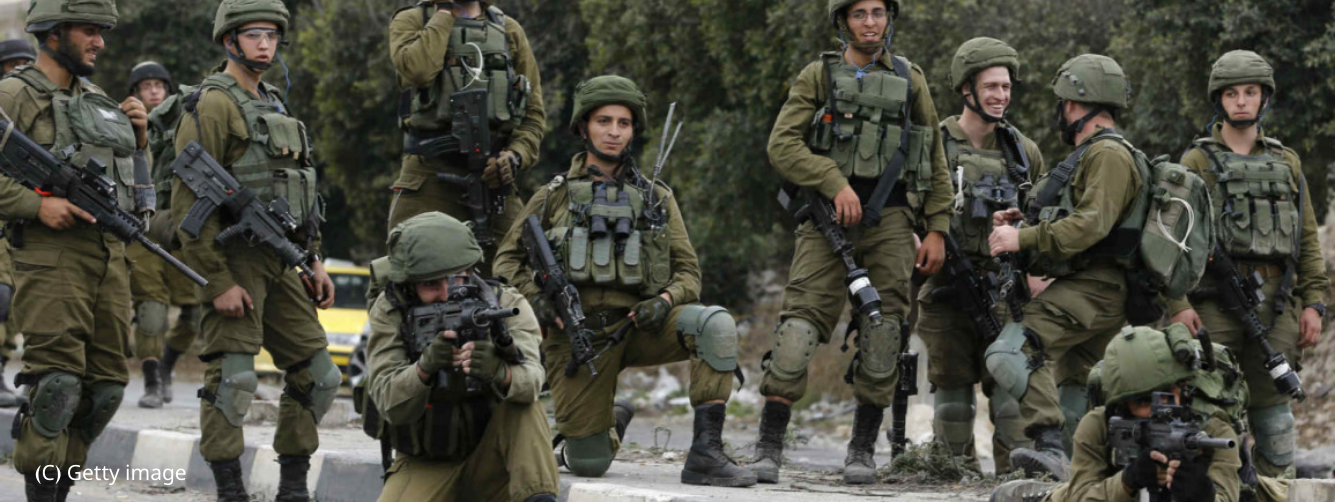
In the spring of 2021, the world once again watched in horror as Israeli occupying forces attacked defenceless Palestinian civilians in the Gaza Strip, in the West Bank, including East Jerusalem, and inside Israel. Palestinian civilians peacefully protesting against colonisation of their land were assaulted with live fire, rubber-coated steel bullets, sound bombs, tear gas and skunk water. Israel’s deadly military aggression against the Palestinian civilian population in the Gaza Strip was the fourth in a decade. Over 11 days, 248 Palestinians were killed, including 66 children. Thousands were wounded, and the reverberating effects of the use of explosive weapons on hospitals, schools, food security, water, electricity and shelter continue to affect millions.
This systematic brutality, perpetrated throughout the past seven decades of Israel’s colonialism, apartheid, pro-longed illegal belligerent occupation, persecution, and closure, is only possible because of the complicity of some governments and corporations around the world.
Symbolic statements of condemnation alone will not put an end to this suffering. In accordance with the relevant rules of the ATT, States Parties have legal obligations to put an end to irresponsible and often complicit trade of conventional arms that undermines international peace and security, facilitates commission of egregious crimes, and threatens the international legal order.
Under Article 6(3) of the ATT, States Parties undertook not to authorise any transfer of conventional arms if they have knowledge at the time of authorisation that arms or items would be used in the commission of genocide, crimes against humanity, grave breaches of the Geneva conventions of 1949, attacks directed against civilian objects or civilians protected as such, or other war crimes as defined by international agreements to which they are a Party.
Under Articles 7 and 11, they undertook not to authorise any export of conventional arms, munitions, parts and components that would, inter alia, undermine peace and security or be used to commit serious violations of international humanitarian law and human rights law.
It is clear that arms exports to Israel are inconsistent with these obligations. Invariably, Israel has shown that it uses arms to commit war crimes and crimes against humanity, as documented by countless United Nations bodies and civil society organisations worldwide. Military exports to Israel also clearly enabled, facilitated and maintained Israel’s decades-long settler-colonial and apartheid regime imposed over the Palestinian people as a whole.
Similarly, arms imports from Israel are wholly inconsistent with obligations under the ATT. Israeli military and industry sources openly boast that their weapons and technologies are “combat proven” – in other words, field-tested on Palestinian civilians “human test subjects”. When States import Israeli arms, they are encouraging it to keep bombing Palestinian civilians and persist in its unlawful practices. No one –neither Israel, nor arms manufacturers in ATT States parties– should be allowed to profit from the killing or maiming of Palestinian civilians.
It is thus abundantly clear that imposing a two-way arms embargo on Israel is both a legal and a moral obligation. ATT States Parties must immediately terminate any current, and prohibit any future transfers of conventional arms, munitions, parts and components referred to in Article 2(1), Article 3 or Article 4 of the ATT to Israel, until it ends its illegal belligerent occupation of the occupied Palestinian territory and complies fully with its obligations under international law. Pending such an embargo, all States must immediately suspend all transfers of military equipment, assistance and munitions to Israel.
A failure to take these actions entails a heavy responsibility for the grave suffering of civilians – more deaths, more suffering, as thousands of Palestinian men, women and children continue to bear the brutality of a colonial belligerent occupying force– which would result in discrediting the ATT itself. It also renders States parties complicit in internationally wrongful acts through the aiding or abetting of international crimes. A failure in taking action could also result in invoking the individual criminal responsibility of individuals of these States for aiding and abetting the commission of war crimes and crimes against humanity in accordance with Article 25(3)(c) of the Rome Statute of the International Criminal Court.
Justice will remain elusive so long as Israel’s unlawful occupation, settler-colonialism, apartheid regime, and persecution and institutionalised oppression of the Palestinian people are allowed to continue, and so long as States continue to be complicit in the occupying Power’s crimes by trading weapons with it.
In conclusion, we believe that the ATT can make a difference in the Palestinian civilians’ lives. It has the potential, if implemented in good faith, to spare countless protected persons from suffering. If our call to stop leaving the Palestinian people behind when it comes to implementation of the ATT is ignored, the raison d'être of the ATT will be shattered.
Joining organisations:
- Action Sécurité Ethique Républicaines
- Adalah Justice Project
- Addameer Prisoner Support and Human Rights Association
- AFPS 63
- Al Mezan Center for Human Rights
- Aldameer Association for Human Rights
- Al-Haq, Law in the Service of Man
- Alrowwad Cultural and Arts Society
- American Muslims for Palestine
- Anglican Pacifist Fellowship
- Applied Research Institute - Jerusalem (ARIJ)
- Arab Canadian Lawyers Association
- Arab Organization for Human Rights
- Argenteuil Solidarité Palestine
- Asociación Americana de Juristas
- Association Belgo-Palestinienne WB
- Association femmes plurielles
- Association France Palestine Solidarité (AFPS)
- AssoPacePalestina
- Australia Palestine Advocacy Network
- Australian Centre for International Justice
- Australians For Palestine
- Badayl
- BDS Australia
- Begian Campaign for Academic and Cultural Boycott of Israel
- Campagne BDS France
- Canadian BDS Coalition
- Canadians for Justice and Peace in the Middle East (CJPME)
- Center for Constitutional Rights
- Center for International Policy
- Centro Interdisciplinario de Estudios Estratégicos para la Seguridad y el Desarrollo Social CIESED A.C.
- CNAPD - Coordination Nationale d'Action pour la Paix et la Démocratie
- Coalition for Justice and Peace in Palestine
- Collectif 69 de Soutien au Peuple Palestinien
- Collectif BDS 57
- Collectif Judéo Arabe et Citoyen pour la Palestine
- Colombian Campaign to Ban Landmines
- Columban missionaries Britain
- Columbia Law Students for Palestine
- Combatants for Peace
- Comitato BDS Campania
- Comité de Solidaridad con la Causa Árabe
- Comité pour une Paix Juste au Proche-Orient asbl
- Community Action Center - Al-Quds University
- Confederación Intersindical Gallega (CIG)
- Cultura è Libertà, una campagna per la Palestina
- Dagropass
- De Palestijnse gemeenschap in Nederland
- Defense for Children -Palestine (DCI-Palestine)
- Democracy for the Arab World Now (DAWN)
- docP - BDS Netherlands
- Egyptian Initiative for Personal Rights
- European Coordination of Committees and Associations for Palestine (ECCP)
- European Legal Support Center
- Femmes Unies pour la Paix dans la région des Grands Lacs
- FILEF Sydney Federation of Italian Migrant Workers
- Finnish-Arab Friendship Society
- Friends of Palestine Tasmania Inc
- Gaza Action Ireland
- Gesellschaft Schweiz Palästina GSP/ASP
- Global Kairos Asia Pacific Solidarity For Palestine (GKAPS)
- Good Shepherd Collective
- Housing and Land Rights Network
- Human Rights and Democratic Participation Center “SHAMS”
- Human Rights Network Nigeria
- ICAHD Finland
- ICAHD UK
- Independent Jewish Voices Canada
- Indian Writers Forum
- Indo Palestine Solidarity Forum
- International Organization for the Elimination of All Forms of Racial Discrimination (EAFORD)
- International Women’s Rights Action Watch Asia Pacific
- Ireland-Palestine Solidarity Campaign
- Jewish Voice For Peace
- Jews for Palestinian Right of Return
- Just Peace Advocates/Mouvement Pour Une Paix Juste
- Karapatan
- Kenya Human Rights Commission
- Labor for Palestine
- Manushya Foundation
- National Association of Democratic Lawyers (South Africa)
- National Justice & Peace Network (NJPN)
- National Lawyers Guild, Palestine Subcommittee
- Nederlands Palestina Komitee
- Newweapons research group
- Niagara Movement for Justice in Palestine-Israel (NMJPI)
- North Notts Unite Community
- NOVACT
- Oakville Palestinian Rights Association
- Palestine Solidarity Network - Edmonton
- Palestinian and Jewish Unity
- Palestinian Centre for Human Rights (PCHR)
- Palestinian Grassroots Anti-Apartheid Wall Campaign (Stop the Wall)
- Palestinian Non-Governmental Organizations Network (PNGO)
- Pax Christi International
- Pax Christi, England and Wales
- Paz con Dignidad
- Platform of French NGOs for Palestine
- Salaam ragazzi dell'Olivo, comitato di Trieste
- Samidoun Palestinian Prisoner Solidarity Network
- SODePAZ
- Solutions Not Punishment Collaborative
- The Civic Coalition for Palestinians Right in Jérusalem
- The Israeli Committee Against House Demolitions (ICAHD)
- The Jerusalem Legal Aid and Human Rights Center (JLAC)
- The National Association of Human Rights Defenders
- The Oakville Palestinian Rights Association
- The Palestinian Human Rights Organizations Council (PHROC)
- The Palestinian Initiative for the Promotion of Global Dialogue and Democracy-MIFTAH
- UJFP French Jewish union for peace
- Union syndicale Solidaires
- US Campaign for Palestinian Rights
- US Campaign for the Academic and Cultural Boycott of Israel
- Visualizing Palestine
- Vrede vzw
- Vredesactie
- War on Want
- Women for Palestine
- Women in Black Vienna
- Women’s Centre for Legal Aid and Counselling
Joining individuals:
- Ahmed Ben
- Ahmed Reda Tolba
- Alaa Shalaby
- Alaaeddine Tatak
- Aline Shaban
- Amin Abbas
- Andrea Balduzzi
- Angie Mindel
- Ann McNicholas
- Anne Peacey
- Ashley Tellis
- Atamjit Singh
- Audrey J Bomse
- Badee M.T. Aldwaik
- Baruti Likoyi
- Bernadette McPhe
- Chirag Shah
- Claudia Karas
- Claudia Schiavelli
- Denise Peillon
- Denotter JJ
- Devaki Khanna
- Dr. Ibrahim Lada’a
- Dr. Nerina Cecchin
- Egbert Harmsen
- Marc Fayard
- Firoz Ahmad
- Flavia Lepre
- Françoise Abadie
- Frstot Marie-Paule
- Gabriel Mondragón Toledo
- Geeta Kapur
- Geeta Kapur
- Georges Franco
- Gillard Francois
- Gina Cardosi
- Githa Hariharan
- Gregory Kotoy
- Gyan Prakash
- Haidi Ali Muhammad Eltayeb
- Hélène Le Cacheux
- Herman De Ley
- Huwaida Arraf
- Ian Ampleford
- Ian Mc Cabe
- Indu Chandrasekhar
- Jake Javanshir
- James Dickins
- James Lafferty
- John King
- Joop Hoekstra
- Julia Auf Dem Brinke
- Julie Hart
- Kalyani Chaudhuri
- Karel Arnaut
- Karin Brothers
- Karin Verelst
- Kathryn Kelly
- Kellie Tranter
- Lauren Speiser
- Laurent De Wangen
- Lee Rhiannon
- Luisa Morgantini
- M.N. Harakeh
- Madeline Lutjeharms
- Maha Abdallah
- Maha Alami
- Malini Bhattacharya
- Mani Shankar Aiyar
- Marcy Newman
- Maria Bartolacci
- Marjorie Cohn
- Martin Mavenjina
- Massimiliano Masini
- Maxime Florentin
- Maya Devi
- Michael Letwin
- Michel Gevers
- Mohamad Arouki
- Mohamed Aboelazm
- Mohammad Al Nabulsi
- Mohan Rao
- Monique Vincent
- Muralidharan K
- Nalini Nayak
- Nandini Sundar
- Naresh Dadhich
- Nasir Tyabji
- Navdeep Mathur
- Nick Deane
- Nozomi Takahashi
- Oishik Sircar
- P A Azeez
- Pamela Blakelock
- Pamela Philipose
- Paola Manduca
- Patrick Lechopier
- Persis Ginwalla
- Pierre Bordone
- Pushpa Achanta
- Pushpamala N
- Raffaele Spiga
- Rajni Palriwala
- Rev Joseph Ryan
- Rey Asis
- Rudolf Knutti
- S. Raghunandana
- Salim Yusufji
- Sellin Jean-Christophe
- Shafey Kidwai
- Sharib Aqleem Ali
- Sigour Brigitte
- Sonia Fayman
- Stephen Flaherty
- Sue Ingham
- Sumanta Banerjee
- Terri Ginsberg
- Valter Mutt
- Vinay Bharadwaj
- Vincent Basabé
- Winfried Belz
- Yousuf Saeed
- YVes Goaer
- Yves Jardin