

|
For the first time since the previous intifada, more than 1000 Palestinians are being held in administrative detention. There are currently 1007 administrative detainees in IDF holding facilities – 881 are held in the Ketziot prison, 111 at the Ofer detention center and 15 in various local detention facilities. In addition, as of December 2002, there were 11 administrative detainees in various Prison Services’ facilities. In January 2002, there were 36 administrative detainees. B'Tselem urges the Israeli government to release all administrative detainees immediately, and to discontinue the extensive use of this measure. Detainees against whom there is evidence should be brought to a fair trial, and given the right to present their case. Background: Administrative detention is detention without charge or trial, authorized by a major general’s order rather than by judicial decree. Administrative detention is permitted under international law, but because of the serious injury to due process rights inherent in this measure and the obvious danger of abuse, international law has placed rigid restrictions on its application. Israel blatantly ignores these restrictions. Since operation Defensive Shield, the IDF has significantly increased the use of administrative detention. Each administrative detention warrant must undergo a military judicial review, yet this does not prevent the sweeping use of this measure. Most warrants are approved. Administrative detainees are not informed of the allegations against them and are not given a chance to present a defense. Administrative detainees do not know when they will be released, since in many cases as soon as the detention warrant expires, the major general signs another one. Read More...
By: MIFTAH
Date: 12/02/2026
×
MIFTAH Conference Closing Statement
MIFTAH recently held its conference entitled: “Participation and Complementarity as a Strategy of Governance amid crises”, attended by a wide spectrum of government representatives, local councils, civil society institutions, popular committees, researchers and academics, in addition to representatives from international institutions. The conference addressed how the Palestinian people’s existence is being targeted along with their ability to survive and remain steadfast amid the genocide in the Gaza Strip, escalating settlement policies and forced displacement from the West Bank, including Jerusalem. It showed how these complex crises exposed the diminishing effectiveness of the Palestinian institutional structure, the limitations of a centralized model of governance and its inability to singularly respond to the needs of society and protect the social fabric. The participants reiterated that participation and complementarity between the government, civil society, local councils and popular committees is no longer an administrative option or a procedural improvement, but a national and structural necessity to ensure steadfastness and the ability to manage crises, and preserve social unity and Palestinian geographic integrity in the face of the escalating colonialist onslaught. They indicated that the absence of the Palestinian Legislative Council (PLC) prompted CSO’s to reconsider public policies and contribute to the development of perspectives on governance, provide practical alternatives that promote national unity and reorganize the relationship between the state and society on the basis of participation and complementarity. The participants reiterated that experience in the field in the West Bank and Gaza Strip proved that local councils, popular committees and grassroots organizations, played a pivotal role in protecting citizens and providing basic services during times of government capacity collapse. They stressed that ignoring these roles or administratively confining them exacerbated fragility rather than hinder it. The conference concluded with general agreements over the following points: One: Adopting participation and complementarity as a National Government Policy
Two: Accountability and societal trust
Three: Promoting the role of local players in crisis management
Four: From the concept of governor to the strategy of governorate
The conference closed by emphasizing that confronting the escalating colonialist onslaught cannot be achieved through closed, centralized instruments or top-down approaches. Instead, it requires a model of national governance grounded in participation and complementarity. This model should be based on mutual recognition of roles and the revival of social structures. It must operate within a unifying national framework that protects the unity of society and geography and promotes Palestinian steadfastness. MIFTAH reiterated its commitment to continuing this discussion, based on its interest in contributing to the promotion of national dialogue. In this regard, MIFTAH does not position itself as an alternative to any legislative or executive body, nor does it seek to replace the role of any political player. Nonetheless, given the significance of the current context and dangers facing our causes, MIFTAH is keen on its commitment to a unifying national approach that promotes dialogue between Palestinians. MIFTAH looks forward to building on the outcomes of this conference and turning them into sustainable policy and dialogue pathways. The ultimate goal is for the Palestinian government to adopt a policy of participatory and complementary governance. This would lay the groundwork for a model of local governance that reflects the will of society and protects its unity, at one of the most dangerous and complex stages in contemporary Palestinian history. To view the Full Statement as PDF
By: MIFTAH
Date: 19/08/2025
×
MIFTAH Welcomes Historic UN Resolution on the Situation of Palestinian Women
MIFTAH welcomes the historic resolution adopted on July 30th by the United Nations Economic and Social Council on the situation of Palestinian women under occupation. We extend our deep gratitude to all member states that have voted in favor of this unprecedented and urgently needed resolution. For years, MIFTAH has consistently advocated for the rights of Palestinian women through a decolonial and rights-based lens, urging the international community to do the same. While we continue to address the internal challenges Palestinian women face, through close partnership with civil society organizations and government stakeholders, it remains clear that the single greatest threat to their freedom, safety, and survival is Israel’s ongoing military occupation. Nowhere is this more evident than in Gaza, where Palestinian women are enduring Israel’s relentless genocidal campaign. This resolution arrives at a critical moment, as the world begins to engage more seriously with the Palestinian issue, and as the UN concludes its high level international conference on a peaceful and just settlement, including the implementation of the two state solution. In this context, we must be unequivocal about what justice and peace demand:
While these conditions affect all Palestinians, Palestinian women face distinct and gender-specific harms under Israel’s occupation, realities that MIFTAH has documented extensively. From movement restrictions and political repression, to economic marginalization and targeted violence, the occupation entrenches systemic and multi-layered harm against Palestinian women. We believe that only once these conditions are addressed, can a viable and dignified future begin to emerge for Palestinian women and their communities, after over 77 years of occupation, violations, and aggression. As we celebrate this important step by the United Nations, we echo the call made by the Minister of Women's Affairs: words must now be translated into concrete action. We urge member states and UN bodies to implement the provisions of this resolution and to pursue sustained efforts toward ending the occupation, securing accountability, and upholding the full rights of Palestinian women, including their right to live free from violence, discrimination, and oppression.
By: MIFTAH
Date: 15/01/2025
×
Palestinian civil society condemns Poland’s double standards and failure to uphold international law by granting immunity to Israeli leadership
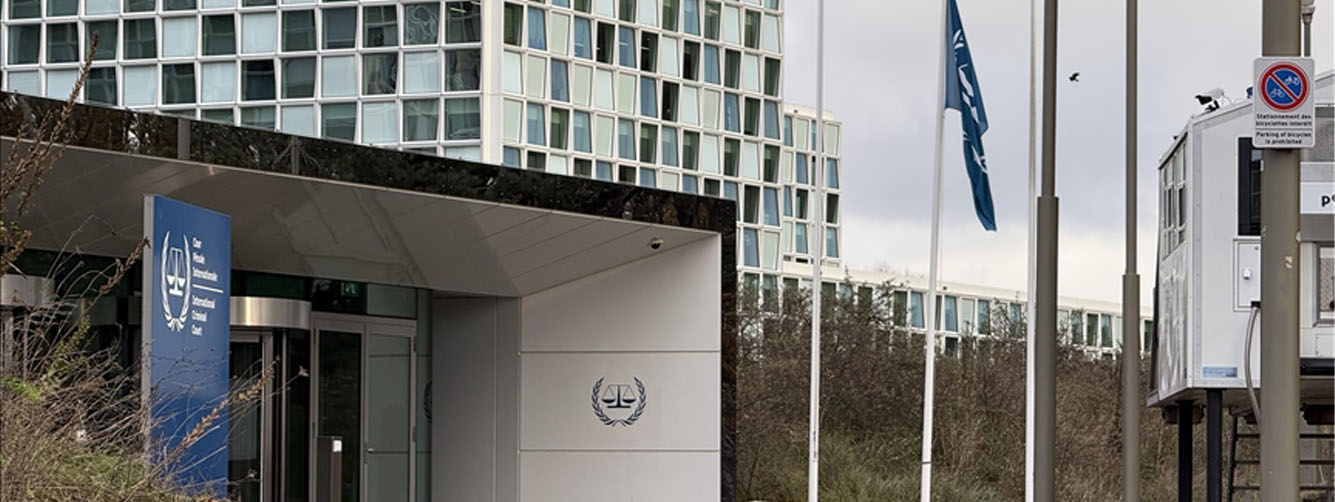
The undersigned Palestinian civil society organizations condemn the resolution passed by the Polish government and signed by Polish Prime Minister Donald Tusk stating that the highest level of the Israeli leadership, including Prime Minister Benjamin Netanyahu, can enter Poland freely. This comes despite the fact that the International Criminal Court (ICC) has issued an arrest warrant for Prime Minister Netanyahu (another arrest warrant has been issued for the former Minister of Defence, Yoav Gallant). Being a signatory to the Rome Statute, the founding document of the International Criminal Court, Poland is legally obligated to respect and abide by the Court’s decisions, including to carry out the arrest warrants for Israeli officials on charges of war crimes and crimes against humanity. The double standards with respect to the ongoing genocide in Gaza are clear as Poland recently protested Mongolia’s decision not to arrest Russian President Vladimir Putin. Respect and ensuring respect of international law and treaties is not a matter of political will. Adherence to the Rome Statute concerns fundamental obligations that must be respected by all State parties. Choosing to politicize international courts and cherry-picking which legal obligations to follow renders international law meaningless and poses a serious threat to the international law-based order. We call on Poland to reverse this decision to fully comply with its obligations under the Rome Statute, implement the arrest warrants issued by the ICC, and abide by the ICJ Advisory Opinion calling on all States to not recognize Israel’s unlawful presence in the occupied Palestinian territory and to not render aid or assistance in maintaining Israel’s illegal occupation, as well as as well as decisions and orders by other international courts and UN resolutions. We further call on the international community as a whole to support the ICC, the ICJ, and uphold the integrity of the international legal system by abiding by their rulings. Signatories:
By the Same Author
Date: 05/10/2004
×
41% of Fatalities in Northern Gaza Strip are Civilians
B’Tselem has completed an initial investigation into the IDF operation in the northern Gaza Strip. The investigation reveals that from the beginning of the operation until this afternoon (Monday October 4): * 75 Palestinians have been killed by IDF forces. This includes 31 civilians who took no part in the fighting. Among the dead are 19 children, ages 17 and under. * The IDF has completely demolished some 55 houses in the eastern neighborhoods of the Jabaliya refugee camp. * Some 50 additional houses have been severely damaged. * Some 50,000 people living in seven Palestinian neighborhoods in Beit Hanoun, Beit Lahiya and the Jabaliya refugee camp, are under complete siege. The water and electricity supplies have been cut off and food stocks are running out. Daud Asliya, a 33 year-old resident of the a-Sica neighborhood in the eastern part of the Jabaliya refugee camp, told B’Tselem: “Since the invasion began we have been under siege and cannot leave the house. A tank is positioned about 50 meters from my house and is intensively shelling all the time…. We have been surviving on the water that I had stored in barrels, but this has almost run out. Yesterday almost all of our food ran out, except for some bread and tea…. The children are panicked and cry around the clock.” The Qassam rocket attacks on Sderot carried out by Palestinian militants are illegal and constitute a war crime. However, the grief for the death of Israeli civilians cannot justify such extensive harm to Palestinian civilians uninvolved in the hostilities. B’Tselem calls on all sides involved in hostilities to respect the principles of international humanitarian law and to avoid all targeting of civilians. In addition, B’Tselem calls on the IDF to: * Avoid firing upon combatants if such firing is liable to cause widespread civilian casualties; * Avoid destruction of houses that is not necessitated by urgent military needs; * Ensure the continuous supply of water, food and medicine, in accordance with the High Court ruling regarding the IDF operation in Rafah in May 2004 Date: 10/08/2004
×
Forbidden Roads: The Discriminatory West Bank Road Regime
B'Tselem's report deals with one of the primary, albeit lesser known, elements of Israel's restrictions on Palestinian movement in the Occupied Territories: the prohibition on Palestinian travel along certain roads in the West Bank. The forbidden roads regime is a slippery policy, in part because its rules and regulations have never been set in writing: not in Knesset legislation, nor in decisions of the political echelon, nor in military orders, nor in press releases, nor even in road signs warning Palestinians that their travel on a road is prohibited or restricted. The regime is based on verbal orders given to soldiers, and in practices that the IDF has employed in the West Bank since the current intifada began. The Forbidden Roads B'Tselem's investigation indicates that the roads subject to the regime may be classified into three categories based on the severity of the restrictions on Palestinian travel on these roads: completely prohibited, partially prohibited, and restricted use roads. Completely prohibited roads - The first category consists of roads for the exclusive use of Israeli citizens. This includes what the IDF calls "sterile roads" where the prohibition against Palestinian travel is explicit and obvious: Israel places a staffed checkpoint through which only Israeli vehicles are allowed to pass. This category also includes roads on which travel is not possible, or pointless, because the access roads leading to and from Palestinian villages are blocked. Partially prohibited roads - The second category includes roads on which Palestinians are allowed to travel only if they have special permits issued by the Civil Administration, or if the identity cards of the driver and passengers indicate that they are residents of villages entirely dependent on the road on which they are traveling. Restricted use roads - The third category includes roads on which Palestinian vehicles are allowed to travel without a special permit, but access to the roads is restricted by concrete blocks and other obstacles. In most cases, a driver who wants to get onto the road has to go to an intersection where soldiers check the vehicles and persons wanting to use the road. The roads regime is enforced through a variety of means: an aggressive and discriminatory enforcement of the traffic laws against Palestinians only, prolonged delays of Palestinians, and confiscation of Palestinian vehicles with no due process. As a result, many Palestinian drivers refrain from using even those roads nominally open to them. Issuance of Permits The Civil Administration and the District Civil Liaison offices (DCLs) are responsible for providing Palestinians with the permits they require to travel on various roads. This bureaucracy lacks all transparency and acts in a patently arbitrary manner. There are no fixed criteria for granting or rejecting requests for permits, so the decision is based solely on the discretion of the DCL staff. Also, notice of rejection is given verbally and without explanation. Requests by Palestinians who are considered "prevented for security reasons" are automatically denied. Only the General Security Service can remove this ground for rejection. This being the case, the GSS exploits the applicants' need for the permits and pressures them to serve as collaborators. Disrupting All Aspects of Life The forbidden roads regime has forced West Bank Palestinians to use long and winding routes rather than roads that lead directly from one town or district to another. Travel on these alternate roads disrupts all aspects of daily life in the West Bank, in such areas as the economy, health, and education, and gravely affects social and family life. In addition, Palestinians suffer the insult and humiliation that are part and parcel of the measures used by Israeli security forces to enforce the discriminatory roads regime. Israel constructed an extensive road network in order to serve the Israeli settlements. To justify expropriating privately owned Palestinian land for these roads, Israel argued that the roads would also benefit the Palestinian population. Now these same roads are completely off-limits to Palestinians. Israel contends that the restrictions on Palestinian travel along these roads result from imperative security considerations and not from racist motivations. Indeed, since the outbreak of the intifada, in September 2000, there has been an increase in the number of attacks by Palestinian organizations against Israeli civilians inside Israel and in the Occupied Territories. More than 600 Israeli civilians, including over 100 minors, have been killed. Attacks aimed at civilians violate fundamental legal and moral norms, and constitute war crimes in international humanitarian law. The attacks are unjustifiable, regardless of the circumstances. Not only is Israel entitled to take measures to defend its citizens against such attacks, it is required to do so. However, its actions must comply with Israeli and international law. The roads regime infringes the Palestinians' right to freedom of movement and the right to equality. Israel is therefore in breach of fundamental principles of international law set forth in treaties to which Israel is party, such as the International Covenant on Civil and Political Rights, the Convention on the Elimination of All Forms of Racism, and the Fourth Geneva Convention. Discrimination-based separation � An Apartheid Practice The roads regime, which is based on separation through discrimination, bears clear similarities to the racist apartheid regime that existed in South Africa until 1994. An individual's national origin determines their right to use various roads. This policy is based on a racist premise: that all Palestinians are security risks, and it is therefore justifiable to restrict their movement. Thus the policy indiscriminately harms the entire Palestinian population, in violation of their human rights and of international law. B'Tselem demands that the government of Israel immediately end the forbidden roads regime and that it respect the right of Palestinians to freedom of movement on all roads inside the West Bank. Date: 10/08/2004
×
The Forbidden Road Regime in the West Bank - an Apartheid Practice
B'Tselem issues a new report today: The Forbidden Roads: The Discriminatory West Bank Road Regime. In its new report, B'Tselem finds that: Israel restricts Palestinian travel on forty-one roads and sections of roads throughout the West Bank, totaling more than 700 kilometers of roadway (the report includes a detailed map of the Forbidden Roads Regime). B'Tselem has divided the Forbidden Roads Regime into three categories of roads: "sterile roads" where Palestinian traffic is completely prohibited, roads where Palestinians require special permits, and roads with restricted access. The regime applies only to Palestinians. Israeli vehicles are allowed to travel freely along these roadways. Permits for Palestinians to travel on restricted roads are issued at the sole discretion of the Israeli security establishment. Rejections are given verbally and without explanation. According to the head of the Civil Administration, Brig. Gen. Ilan Paz, "There are no definitive clear criteria for examining requests for a permit." The Forbidden Roads Regime has been in operation for years, but the rules and regulations for its implementation have never been issued in writing. Thus, Israel frees itself of accountability and increases the arbitrariness with which it enforces the regime. The Forbidden Roads Regime operates under the premise that every Palestinian is a security risk. Based on this premise, the Roads Regime violates the rights to freedom of movement and to equality of hundreds of thousands of Palestinians in the West Bank. Israel has an obligation to safeguard the lives of its citizens. But this obligation does not allow it to cause such harsh, extensive, indiscriminate, and prolonged harm to the local population. By unlawfully discriminating against Palestinians based on their national origin, the Forbidden Roads Regime is reminiscent of the apartheid system that existed in South Africa. The regime violates fundamental principles of international law that are binding on the State of Israel. B'Tselem demands that the government of Israel immediately end the Forbidden Roads Regime and that it respect the right of Palestinians to move freely on all roads inside the West Bank. Date: 21/05/2004
×
21 May 2004 Update: IDF Demolished 62 Houses in Brazil and a-Slam neighborhoods in Rafah, 741 People Left Homeless
Israeli human rights group B'Tselem issued a report on Friday elaborating on the amount of destruction caused by Israel’s military raids into Rafah over the past five days. The report also elaborated on the discrepancies between the actual destruction caused by the Israeli army’s wanton military activity and its own representation of what transpired, clearly demonstrating an Israeli attempt to downplay the amount of destruction, in particular with regard to home demolition. According to B’Tselem’s research, at least 62 homes were demolished in the Brazil and a-Salam areas of Rafah between Thursday and Friday. Israeli army reports for the same period talk of only five buildings and hardly mention other types of destruction to local infra-structure or human casualties, focusing solely on perceived operational “success.” A senior Israeli military officer claimed that the destruction seen in “Palestinian” footage had actually been destroyed over the course of the past three and a half years. While talking to reporters at a briefing on Friday, Brig.-Gen. Shmuel Zakai, the Gaza division commander, described Palestinian reports of destruction in Rafah as a "well-oiled propaganda machine," adding that none of the residents were suffering from starvation. During the hearing, the IDF claimed that medical supplies and ambulances are able to enter the camp. The IDF announced it would allow a truckload of medical equipment sent by Physicians for Human Rights Israel into the camp. The truck, which had been waiting for clearance since yesterday, entered Rafah immediately after the hearing. The judges announced their decision would be given at a later date. Yesterday, Attorney General, Menachem Mazuz told the IDF to formulate an alternative to the plan prepared by the Southern Command for the expansion of the Philadelphi route. The original plan included the demolition of hundreds of houses along the route, which separates the Gaza Strip from Egypt. Mazuz demanded the IDF examine alternatives which would cause less harm to civilians in the area. Mazuz made these demands at a meeting he held with top IDF and Justice Ministry officials. He announced that he would convene additional meetings during the coming days to discuss the matter. This morning, the press reported that IDF forces were pulling out of the Tel a-Sultan, Brazil and a-Salam neighborhoods of Rafah. B'Tselem continues to receive reports of humanitarian distress in the neighborhoods which remain under siege. As the IDF continues to restrict movement into and around the Rafah, some the following reports are based solely on telephone testimonies. The information provided has been verified as extensively as possible under the present circumstances. The reports are intended as examples and do not purport to provide the whole picture or the most grave events taking place in Rafah. B'Tselem Research: IDF Destroys 62 Homes in the Brazil and a-Salam Neighborhoods B'Tselem research reveals: Over the last two days, the IDF has demolished 62 homes in the Brazil and a-Salam neighborhoods in which 741 people lived. 44 of the homes demolished were in the Brazil neighborhood and 18 in a-Salam. These figures contradict the numbers reported by the IDF to the media. As Tel a-Sultan is still under siege, B'Tselem has been unable to ascertain how many homes the IDF demolished in the neighborhood. An IDF bulldozer hit the house of the 'Azzam family in the Brazil neighborhood in the south of Rafah. The entire family was inside the house at the time. At around 12:30 P.M., 'Abd al-Fatah 'Azzam heard loud sounds of something being demolished nearby. The parents gathered their four children in the basement as the father reported to the Al-Mezan human rights organization and B'Tselem what was going on. Only after about three hours, did IDF soldiers allow the family to leave the house. The soldiers then blew it up. A day earlier, an IDF bulldozer hit the home of the Bradawil family in the Tel a-Sultan neighborhood. Bilal Bardawil, age 21, told B'Tselem: “I heard the sound of a bulldozer breaking the outer door and slamming into the walls. The entire house was shaking and I thought that it was going to crash down on top of us. We heard loud knocks on the door and my mother went to open it. Dozens of soldiers were standing at the entrance. They took the ID cards of all the males in the house and demanded we expose our stomach and chest. Then they confiscated our cellular phones and gathered us all in one room. There were fourteen of us in a room of 12 meters and one window. A soldier was sitting on a chair, pointing his gun at us. The electricity was out and we didn't have any food or water. After a few hours we felt like we were going to pass out from the lack of oxygen due to the over crowding. My father who is diabetic looked weak. My mother asked the soldier to let her open the window and get food and water for the kids. He shouted at her and refused. After a few hours, a soldier came and brought water, bread and tomatoes. He allowed the children to go to the bathroom...” At 4:00 A.M., close to twenty hours after their arrival, the soldiers left the house. Haidar Hasuna from Tel a-Sultan told B'Tselem today: “Since the army demolished our house two days ago, my family and I have been staying with our neighbors. The neighborhood's infrastructure is completely ruined. The water supply is down; the sewer system has been hit; the electricity, phone lines and roads are cut off and the asphalt has been “peeled” off the roads. The food in the houses has almost run out and all the shops are closed. Tel a-Sultan is completely surrounded. I can see tanks and bulldozers around 130 meters from my home. There are four ambulances there but they won't let them pass Now, I can see the ambulances turning around and going back.” Hani Kashta from the a-Salam neighborhood, age 17, said yesterday: “I live about 400 meters from the Egyptian border. Ever since the tanks came into the neighborhood it's been impossible to leave the house. The streets are empty and all you hear is shooting and tanks. From my window, I can see two bulldozers uprooting our neighbor's olive trees. We're using water from our water tank because there's no water in the taps. Soon we'll run out. What little food is left will also run out soon. We're under tremendous mental pressure. We're scared. I go to high school in Rafah. I was supposed to take my final exams today.” Woman in Labor Climbs Rope from 2nd Floor to Give Birth On Tuesday, Asmaa Abu Ghali, resident of the Canada neighborhood in Rafah, had to climb down from the second floor on a rope on her way to give birth. Her husband, Sami Abu Ghali told B'Tselem yesterday over the phone: “She couldn't take the pain anymore and was about to give birth. I didn't know what to do. I called an ambulance, but everyone said it wouldn't be able to make it to us.” Sami Abu Ghali spoke to nurses who live about 500 away who said they would help deliver the baby at their home. Abu Ghali said: “My wife couldn't leave the house and couldn't go down the stairs because the staircase is exposed to snipers. I had to get her down from the second floor using a rope. I got my 55-year-old mother down in the same way so she could go with her." Abu Ghali lost contact with his wife and found out only the next day that she had given birth to a girl. Yesterday, a Tel a-Sultan resident went into labor but could not leave her house to go to the hospital. Her sister called a local radio station and was put in touch with a physician who guided her through the labor live on air. The baby was born healthy. Muhammad Yunis, a resident of Tel a-Sultan, told B'Tselem yesterday that his diabetic mother's insulin supply had run out on Wednesday. According to Yunis, his mother is in terrible condition since she had not taken the medicine. Yesterday morning, they got some insulin from neighbors whose son is also diabetic, but the supply had already run out by later in the day. On Tuesday, we reported that a clinic in Tel a-Sultan had been surrounded by IDF soldiers who were preventing staff members from leaving. Later that day, staff members managed to leave the clinic on foot, leaving the ambulances behind. It was only this afternoon that coordination for the ambulances to leave was reached through the Red Cross and the Palestinian District Coordination Office. A Rafah municipality bulldozer removed the mounds of sand that had blocked the exit to the clinic's yard. At around 2:00 PM, IDF soldiers checked the ambulances and allowed them out of the complex. Three Siblings Wounded by IDF Gunfire. Ambulance Sent to Evacuate them Sinks in IDF Dirt Mound Yesterday at around 8:00 A.M, IDF soldiers ordered the Hassan family to leave their house in the Brazil neighborhood while waving white flags. As the family stepped onto the street, IDF soldiers fired at them from machine guns mounted on a tank. The Al-Mezan human rights organization reported that a 17-year-old daughter of the family was injured in the legs, her 15-year-old brother was hit by a bullet in the shoulder and a nine-year-old brother was lightly wounded by shrapnel. An ambulance that was on its way to evacuate the three siblings sank in a dirt mound used by the IDF to block the road near the Bakker Mosque. B'Tselem field researchers spoke on the phone with the ambulance driver as he and the two volunteers who were with him tried to get the ambulance out and get to the wounded. Israeli soldiers in an IDF tank present at the scene were aiming their guns at the ambulance team at the time. The ambulance was eventually released at around 2:45 P.M., but did not manage to get to the Hassan family. At present, the fate of the three injured siblings is unknown. The IDF Spokesperson claimed that the IDF had not cleared the way for the ambulance since its arrival had not been coordinated and that the passage of the ambulance was eventually made possible thanks to a tank that was present at the scene and cleared the roadblocks along the way. Now's the Time to Act The Attorney General has yet to finalize his decision.Write Mazuz (fax: +972-2-6274481) demanding he declares the planned house demolitions unlawful. Following is a sample letter: I write to express my deep concern at the government's plan to destroy hundreds of houses in the Rafah refugee camp, in order to widen the Philidelphi Route. This plan severely violates international humanitarian law, to which Israel is obligated. Israel, as the occupying force in the West Bank and the Gaza Strip, is obliged to protect the local population and ensure its safety and welfare. While Israel may derogate from its obligations for military necessity, it must nevertheless balance military needs with the rights of the residents of the occupied territory. The planned demolitions will render homeless thousands of civilians who have not taken part in hostilities. I therefore urge you to determine that these planned demolitions run contrary to Israel's legal obligations. Contact us
Rimawi Bldg, 3rd floor
14 Emil Touma Street, Al Massayef, Ramallah Postalcode P6058131
Mailing address:
P.O.Box 69647 Jerusalem
Palestine
972-2-298 9490/1 972-2-298 9492 info@miftah.org
All Rights Reserved © Copyright,MIFTAH 2023
Subscribe to MIFTAH's mailing list
|